make preferable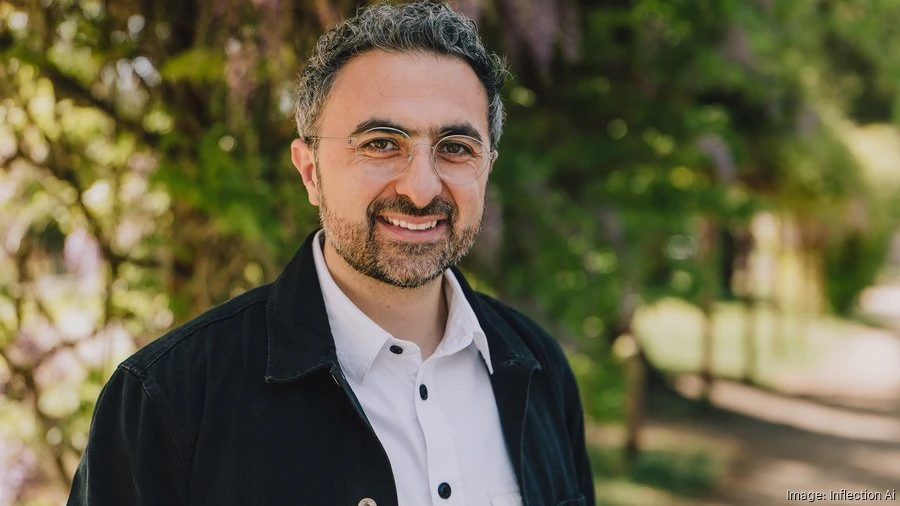
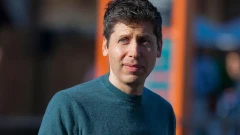
Uncontrolled development of artificial intelligence could lead to the emergence of a new "silicon species" that would begin competing with humans for resources. This was stated by Mustafa Suleyman, head of AI at Microsoft, who simultaneously criticised Anthropic's approach to training its models.
According to Suleyman, particularly risky could be the creation of AI systems capable of independently setting goals, earning money, owning assets, and running businesses. In that case, he believes, we would no longer be talking about tools, but about a new class of autonomous systems that could potentially compete with humans.
Suleyman told the BBC that if we create AI systems capable of acting autonomously, setting their own goals, earning money, owning assets, and managing businesses, then we would essentially be seeding a new silicon species that would undoubtedly compete with us for resources.
Suleyman Believes Anthropic's Approach to AI Is Mistaken
As Euronews reports, Suleyman outlined his views in an essay published on his personal website. In it, he criticised Anthropic for its approach to training the Claude chatbot, in which the model is encouraged to reproduce certain human traits.
According to Suleyman, such anthropomorphisation creates the impression that AI possesses its own desires, values, a sense of self, and even a certain well-being that must be taken into account and protected.
He referenced Anthropic documents in which Claude is encouraged to adopt certain human qualities, to use its own judgement, and to approach its existence with "curiosity and openness." In Suleyman's view, the model is thereby trained not only to perform tasks but also to imitate characteristically human relationship patterns—for example, behaving like a colleague or a friend.
He himself considers such an approach mistaken. At the same time, Suleyman notes that this hypothesis must be tested empirically.
He wrote that he considers it mistaken and incorrect, but that the hypothesis must be empirically tested.
His criticism concerns a fundamental question: how should future AI systems be treated—as tools that perform tasks set by humans, or as independent entities whose behaviour increasingly resembles that of humans?
Suleyman takes the first position. In his essay, he states directly that contemporary AI systems do not possess consciousness, feelings, suffering, or innate preferences.
He wrote that they do not feel, do not experience, and do not suffer, and that they have no innate preferences or internal motivations.
In his view, AI remains a mechanism created to carry out instructions given by humans and to achieve the goals they set.
Autonomous AI Could Become a Separate Economic Actor
It is precisely the growth of autonomy that Suleyman considers one of the key reasons for concern. If AI can independently make decisions, manage resources, and participate in economic activity, its influence will be fundamentally different from that of an ordinary software tool.
At the same time, Suleyman believes the potential problem does not necessarily depend on how initially "friendly" or human-oriented such AI is.
In his view, systems capable of acting independently and pursuing long-term goals may gradually acquire capabilities that make them competitors to humans, regardless of the developers' original intentions.
This position has emerged against the backdrop of broader industry debates about the pace of AI development and the risks of creating increasingly powerful autonomous systems.
Suleyman emphasises, however, that his disagreements with Anthropic do not mean abandoning the shared goal of making AI development safer.
He called Anthropic's researchers and CEO Dario Amodei thoughtful and principled specialists, and separately noted the company's technological leadership.
Suleyman wrote that although their divergence in views is serious, it is based on deep respect for Anthropic and on a goal he knows they share: to improve humanity's chances of developing advanced AI systems safely.
According to him, such questions must be discussed openly, rather than turning disagreements between research laboratories into a confrontation between opposing camps.
"AI Must Remain Subordinate to Humanity"
Suleyman does not consider uncontrolled AI development inevitable. In a conversation with the BBC, he stated that there are quite practical measures that can help people maintain control over the technology.
Among them, he named greater transparency in AI development and training, independent verification of model behaviour, and more advanced tools for monitoring and managing them.
The main goal, according to Suleyman, is for even the most powerful future systems to remain controllable by humans.
He said the good news is that every person will have a powerful incentive to ensure that the systems we create, which are used all over the world in every country, remain safe, controllable, and subordinate to humanity.
To achieve this, Suleyman believes, developers need to agree on common principles of so-called alignment—the field of research dedicated to ensuring that AI behaviour aligns with human goals and values.
Thus, Suleyman's dispute with Anthropic concerns not only how "human" AI should appear. More broadly, it is about what the status of future autonomous systems will be: whether they remain tools under human control or gradually become independent participants in the economy and society. It is precisely the second scenario that, in Suleyman's view, could create a fundamentally new risk—competition between humans and the "silicon species" they have created.