make preferable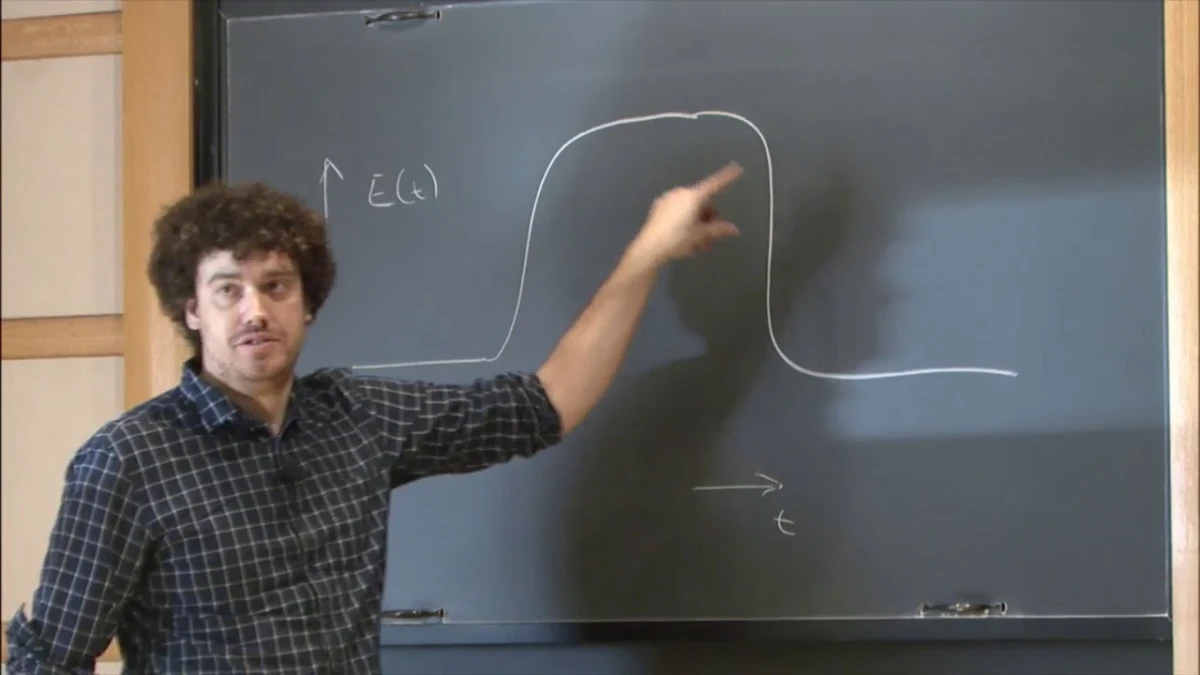
OpenAI said it had made a breakthrough in solving one of the famous “Millennium Prize Problems” — the problem of the existence and smoothness of solutions to the Navier—Stokes equations. According to the company, its internal AI system produced, within a few days, a proof of finite-time singularity formation for the equations with a smooth external force, and then formalized and verified it using another model.
However, almost simultaneously with OpenAI’s announcement, a dispute arose over how independently this result had been obtained. New York University mathematics professor Tristan Buckmaster said that the direction chosen by OpenAI’s model was almost identical to the approach he had been developing for about a year together with mathematician Levent Alpöge. The researchers had also used OpenAI tools, among others, and uploaded drafts of their work into Codex.
Buckmaster does not claim that OpenAI stole his proof and acknowledges that he has not seen the company’s full result. But he raised the question of whether data from user sessions could have entered OpenAI’s training processes. The company denies this, although it concedes that it cannot completely rule out the possibility that anonymized user data influenced the training and improvement of its models.
One of the Seven “Millennium Prize Problems”: What Exactly Did OpenAI Solve?
The Navier—Stokes equations describe the motion of liquids and gases and are used in a wide range of fields — from modeling the atmosphere and oceans to aerodynamics and engineering calculations. At the same time, the mathematical theory of these equations contains a fundamental unsolved problem.
It is included in the list of seven “Millennium Prize Problems” compiled by the Clay Mathematics Institute. A $1 million prize is offered for the solution of each of them.
In the case of Navier—Stokes, the issue concerns the existence and smoothness of solutions: mathematicians want to rigorously prove either that, for the three-dimensional equations, the solution remains smooth over time, or to show that under certain conditions it can become singular in finite time — that is, a point arises at which the mathematical description ceases to remain regular.
On September 8, OpenAI announced that its as-yet unreleased internal model had obtained a proof of the formation of such a finite-time singularity for the Navier—Stokes equations with a smooth external force.
The company says that about 10,000 AI agents worked on the problem simultaneously. Some agents searched for lines of reasoning leading to a proof, while others tried to find a refutation. In the process, the system also solved a simpler related problem concerning the regularity of solutions to the three-dimensional Euler equations.
According to OpenAI, the model arrived at the result on September 5. After that, it took another 17 hours to formalize the proof and verify it with GPT-6 Astra.
The scale of computation was quite significant. In total, the system sent about 2.7 million messages and generated roughly 130 billion output tokens — a volume OpenAI compared to about a million books. The agents could retrieve data from a cached version of the internet and execute code.
The company also said that the capabilities of the model that obtained the result significantly exceeded those of the then state-of-the-art AI model GPT-6 Astra.
At the same time, OpenAI declined the $1 million prize, since the result was produced by an internal AI system rather than by a traditional mathematical paper submitted in the prescribed format for consideration by the Clay Institute.
Almost Simultaneously with OpenAI, Mathematicians Spoke About Their Own Results
It was precisely the timing overlap between the two stories that gave rise to the questions.
Buckmaster and Levent Alpöge announced several results related to the behavior of solutions to nonlinear differential equations. In particular, they referred to proofs of finite-time blow-up under a smooth external force for the porous medium equation, the Boussinesq equation, and the Euler equations.
Separately, the mathematicians said they were close to an analogous result for the Navier—Stokes equations, but had not yet published it because the work had not been fully checked and formalized in the Lean system.
Buckmaster and Alpöge had been working in this direction for about a year and actively used artificial intelligence. The work involved, in particular, Claude from Anthropic and Codex from OpenAI. According to Buckmaster, drafts of the project were uploaded to Codex throughout the work.
Alpöge, meanwhile, works at Anthropic — a company that competes with OpenAI.
According to Buckmaster’s account, on September 3 rumors began circulating about a major mathematical breakthrough connected to Anthropic. After that, he contacted a well-known mathematician at OpenAI and told him that he had indeed obtained important results together with Alpöge and was planning to publish them soon. Buckmaster separately emphasized that this was their personal project and that Anthropic had no involvement in it.
A few days later, OpenAI representatives told him that the company’s internal model had obtained an approximately 100-page proof for the Navier—Stokes equations with a smooth external force.
It was specifically the chosen method that aroused Buckmaster’s suspicions.
Why Buckmaster Saw a Problem in This Coincidence
According to the mathematician, OpenAI chose a fairly specific direction for solving the Navier—Stokes problem. This approach had previously been developed by mathematicians Diego Córdoba and Luis Martínez-Soroa, and was later pursued by Buckmaster and Alpöge.
Buckmaster said that almost no one else he knew had been working on this particular approach.
In another public statement, he described the coincidence as a particularly serious warning sign.
What was especially important to him was that OpenAI’s result was initially presented as an achievement of the model with very little human input. However, during the conversation, according to the researcher, it became clear that an entire team had worked on the task, that the models had first solved simpler related problems, and that enormous computational resources had been spent.
In addition, according to Buckmaster, OpenAI acknowledged that work on the problem began only after information about the two mathematicians’ results had reached the company.
That, however, does not in itself prove that their materials were used. The Navier—Stokes problem has remained the subject of intensive research for decades, and the chosen mathematical approach could have been found independently.
That is precisely why Buckmaster stresses that he is not alleging proven theft of the work.
Could the Mathematicians’ Drafts Have Ended Up in AI Training?
The key question arose because Buckmaster and Alpöge used Codex during their own work.
Buckmaster asked OpenAI representatives whether the internal model had access to their Codex sessions or had been trained on materials uploaded there.
According to him, he was told that the model did not directly search user data. But when he asked separately whether those data could have been used in the training process, he received no answer.
Later, OpenAI publicly stated that in obtaining the result it had not referred to Buckmaster and Alpöge’s specific user data.
At the same time, the company made an important qualification, saying that although the possibility was unlikely, it could not rule out that anonymized data obtained from the mathematicians’ use of its products had helped improve its models.
Thus, the parties’ positions differ substantially on this point. OpenAI says it did not use specific user data to obtain the proof. Buckmaster, meanwhile, is raising a broader question: whether materials uploaded by him and Alpöge could in some way have ended up among the data that influenced the development of the company’s models.
At present, there is no public evidence that their drafts were specifically used to obtain the Navier—Stokes result.
Conflict Over Authorship
The story did not end there.
According to Buckmaster, OpenAI representatives offered him two options for how to proceed.
The first assumed that Buckmaster and Alpöge would first publish their work on the Euler equations, and then the very next day OpenAI would present its own result on Navier—Stokes.
The second option was that after the publication of the Euler work, Buckmaster alone would write an article about OpenAI’s Navier—Stokes result.
At the same time, the mathematician claims, OpenAI representative Sébastien Bubeck said twice that he would like to exclude Alpöge from the list of authors. According to Buckmaster, Bubeck explained this by saying that the situation would be much simpler if Alpöge did not work at Anthropic.
Buckmaster refused the proposed options.
According to him, he was also told that after publishing its own solution, OpenAI was prepared to say that Buckmaster and Alpöge deserved the Clay prize and were the researchers who had come closest to solving the problem.
After that, Buckmaster warned that if OpenAI published the result in the proposed format, he would speak publicly about what had happened.
According to his version of events, Bubeck responded by questioning why Buckmaster would want to damage his own career. Buckmaster said that he is a scientist and did not understand why publicly discussing the situation should damage his career. According to his account, Bubeck then indicated that if Buckmaster did not want him to treat him favorably, he was under no obligation to do so.
Later, Bubeck, Buckmaster claims, separately tried to contact Alpöge and expressed doubts about how rationally Tristan was behaving at that point.
Alpöge refused to speak without Buckmaster present.
What OpenAI Says in Response
OpenAI disputes Buckmaster’s interpretation and says its proof was obtained independently and differs substantially from the work of the two mathematicians.
The company also says it did not refer to Buckmaster and Alpöge’s specific user data when obtaining the result.
At the same time, it is important to distinguish between several different questions.
The mere fact that OpenAI began work on the problem after information about Buckmaster and Alpöge’s results appeared does not yet mean that the company used their research. Likewise, the overlap in mathematical approach does not by itself prove borrowing.
On the other hand, the situation raises a very concrete problem for AI research: if scientists use commercial models to work on not-yet-published results, the question remains of how reliably their intermediate materials are protected and in what ways they may be used by the companies developing those models.
In this case, it is especially sensitive that one side of the conflict used OpenAI tools directly in the process of developing its own mathematical result, and then another internal OpenAI system independently arrived at a result in the same narrow direction.
For now, however, there is no publicly presented full OpenAI proof that would allow an independent comparison with the work of Buckmaster and Alpöge and an assessment of the degree of similarity.
Why This Story Matters More Than a Single Mathematical Dispute
The Navier—Stokes problem itself remains a fundamental mathematical problem regardless of the current conflict.
If OpenAI’s proof is indeed correct and its independence is confirmed, this will become a notable event not only for mathematics but also for the development of AI as a tool for scientific research. For the first time, a system using thousands of interacting AI agents and enormous computational resources would have been able to make progress on a problem that mathematicians have unsuccessfully tried to solve for decades.
But in mathematics, it is not enough to obtain a plausible answer. A proof must withstand independent verification, and for a claim to have solved a Millennium Prize Problem, transparency, reproducibility, and the ability to check every step are especially important.
In this sense, the formalization in Lean that OpenAI reported is of fundamental importance. Formal verification makes it possible to significantly reduce the risk of errors in individual logical steps. However, it does not automatically answer the question of where the idea came from and whether the result was independent.
That is exactly what is now becoming the central question surrounding OpenAI’s announcement.
Buckmaster does not claim that OpenAI used his work — he says directly that he has not seen the company’s proof and does not know how the result was obtained. His complaint concerns the sequence of events, the unusual overlap in the chosen approach, the use of Codex for his own project, and the subsequent proposals from OpenAI.
Only a detailed comparison of the published mathematical works and an examination of the history of how the result was created will be able to provide a final answer to the question of how independently OpenAI’s proof was obtained.