




 make preferable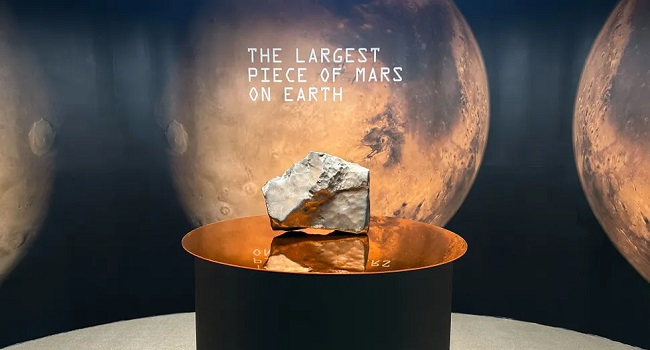
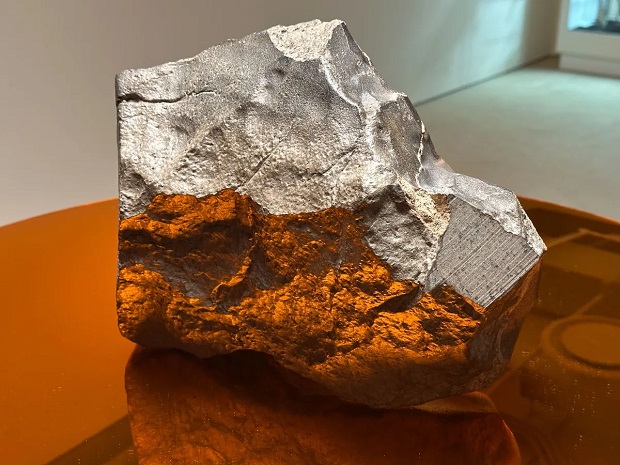
A rare and remarkable relic from space is up for grabs: the largest fragment of Mars ever discovered on Earth, the NWA 16788 meteorite, is being auctioned by Sotheby’s in New York. Weighing 25 kg, it was found in the Sahara in 2023 and is estimated to sell for between $2 and $4 million. Part of the Geek Week 2025 auction event, the sale has sparked debate among scientists and collectors alike: should such a valuable specimen reside in a museum—or in a private collection?
Discovery and Origins
NWA 16788 was unearthed in November 2023 by a meteorite hunter in a remote area of the Agadez region in Niger’s Sahara Desert. According to Sotheby’s, this 37.5 × 27.9 × 15.2 cm rock is about 70% larger than the next-biggest known Martian meteorite, accounting for roughly 6.5% of all known Martian material on Earth. Its Martian origin was confirmed by laboratory analysis, comparing its chemical composition with data from NASA’s Viking mission in 1976.
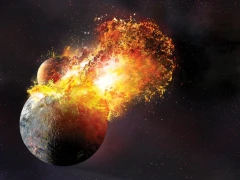
The meteorite is classified as an olivine microgabbro shergottite, a volcanic rock formed from slowly cooled Martian magma. Cassandra Hatton, Sotheby’s Vice President of Science and Natural History, called NWA 16788 the “find of the century,” noting that it was likely ejected from Mars by a massive asteroid impact, traveled 225 million kilometers, and eventually crashed into Earth. Its glossy fusion crust formed from intense heat during atmospheric entry, and its relatively unweathered surface indicates a recent fall.
Why Is It So Valuable?
Martian meteorites are incredibly rare. Out of over 77,000 officially recorded meteorites on Earth, only around 400 are Martian, with a total combined mass of just 375 kg. NWA 16788 alone weighs 24.67 kg, nearly 7% of that total. It’s not only significant in size but also in visual appeal, with a reddish-brown crust and furrows reminiscent of the Martian landscape. “You could use it as a prop in a Mars movie,” Hatton remarked in an interview with Space.com.
The auction estimate ranges from $2 to $4 million, with a starting bid of $1.6 million. For comparison, in 2021, a 1.4-gram Martian meteorite sold for $13,750 at Christie’s, and in 2022, a piece of the Hassi meteorite fetched $16,380. As the largest and most valuable Martian specimen, NWA 16788 could set a new record.
How Is a Martian Origin Confirmed?
Proving a meteorite comes from Mars is no simple task. Unlike Moon rocks—of which scientists have samples from Apollo missions—no Martian rock has yet been returned to Earth. NASA’s Mars Sample Return mission, intended to bring back samples collected by the Perseverance rover, is currently under threat due to budget cuts.
To identify NWA 16788’s origin, scientists analyzed gas bubbles trapped in the rock and found a match with the composition of Mars’ atmosphere, first measured by the Viking probes in the 1970s. The presence of maskelynite, a glassy mineral formed during high-energy impacts, further supports its Martian origin.
The Auction Context
Part of Sotheby’s Geek Week 2025, the July 16 auction includes 122 lots, featuring rare items such as a juvenile ceratosaurus skeleton (estimated at $4–6 million), as well as other meteorites, fossils, and minerals. NWA 16788 was on public display at Sotheby’s New York galleries until July 15, and previously at the Italian Space Agency in Rome.
However, the sale of such a rare specimen has prompted debate. Professor Steve Brusatte, a paleontologist at the University of Edinburgh, argued the meteorite belongs in a museum: “It would be a shame if it vanished into a private collection,” he told CNN.
Hatton, however, defended private ownership, stating that collectors often help preserve and fund scientific exploration. “Without private collectors, we wouldn’t have museums,” she said, adding that many collectors loan or donate specimens for research and exhibition. High prices, she believes, incentivize care and conservation.
Conclusion
NWA 16788 is more than just a rock—it’s a rare piece of Mars, a geological time capsule from another world. Its sale on July 16, 2025, will determine whether this “Martian visitor” finds a home in a public institution or a private collection. Either way, it underscores the extraordinary value and scarcity of Martian meteorites, and the enduring human fascination with the Red Planet. As Hatton said, auctions like this aren’t just about objects—they’re about the dreams they represent.