make preferable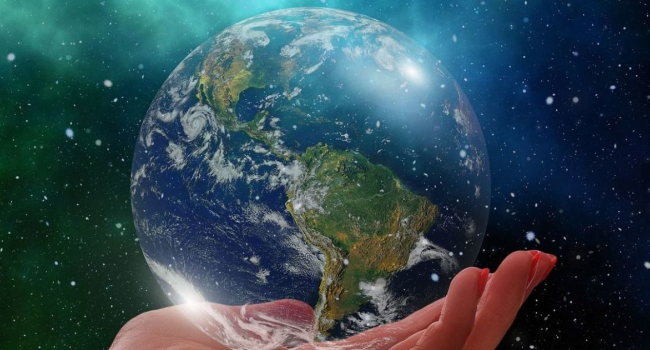
Scientists from NASA and Toho University in Japan have issued a stark warning: life on Earth could vanish by the year 1,000,002,021 due to the Sun’s increasing heat and a drastic drop in atmospheric oxygen. This forecast, based on a 2021 study published in Nature Geoscience, relies on supercomputer simulations. Here’s why Earth will become uninhabitable, how this ties to global warming, and what it means for the search for other habitable planets.
The End of the Oxygen Era: A Billion-Year Forecast
Led by Kazumi Ozaki and Christopher Reinhard, the research team used a supercomputer to model Earth’s future. Their findings indicate that in roughly one billion years, the planet’s atmosphere will lose the oxygen needed to sustain life, driven by the Sun’s gradual brightening, which increases by 1% every 100 million years.
Key Findings:
- Oxygen Depletion: Earth’s current atmosphere, with 21% oxygen, is a unique biosignature visible from space. In about one billion years, oxygen levels will plummet to below 1% as solar radiation breaks down molecules and alters atmospheric chemistry.
- Climate Shifts: Rising temperatures will accelerate ocean evaporation, and carbon dioxide (CO₂) will be absorbed by silicate rocks, disrupting photosynthesis. Without plants, oxygen production will cease.
- Model: The simulation combined biogeochemistry and climate models, factoring in carbon, oxygen, and phosphorus cycles, as well as the Sun’s evolution.
The researchers note: “An oxygen-rich atmosphere is not a permanent state. Our model shows Earth will lose it in a billion years, limiting the window for complex life.”
Pangea Ultima: Heat and Extinction
A parallel study from the University of Bristol, published in Nature Geoscience in 2023, adds grim details. In about 250 million years, global warming and tectonic shifts will form a new supercontinent, Pangea Ultima, as continents merge again, creating extreme conditions:
- Temperatures: Average temperatures will hit 40–50°C (104–122°F), with peaks higher due to humidity, making the planet unlivable for mammals, including humans, who can’t shed heat through sweat.
- Conditions: The supercontinent will amplify a continental effect (hot, dry climates far from oceans), with rising CO₂ and solar activity worsening the heat.
- Volcanism: Frequent eruptions will release greenhouse gases, hastening extinction.
- Outcome: Mass extinction of species, including humans, due to shortages of food, water, and habitable land.
Lead author Dr. Alexander Farnsworth explains: Pangea Ultima will create a triple threat: continental effects, a hotter Sun, and rising CO₂. This will make Earth hostile to mammalian life.
Why This Matters Now
Though a billion years is distant, these findings are relevant today:
- Exoplanet Search: Understanding the end of Earth’s oxygen era aids the hunt for habitable worlds. Telescopes like James Webb and the upcoming Nancy Roman (2026) target planets with biosignatures like oxygen.
- Climate Crisis: Current CO₂ increases from human activity accelerate warming, mirroring Pangea Ultima’s future conditions, underscoring the urgency of emission reductions.
- Human Survival: The studies highlight the need for humanity to colonize other planets, such as Mars or habitable exoplanets, for long-term survival.
What’s Next?
Scientists plan to:
- Refine models using data from telescopes studying stars in late evolutionary stages, like red giants.
- Investigate dark energy’s role, which could hasten the universe’s end via a Big Rip in ~10¹¹ years.
- Develop missions to study oxygen-rich exoplanets, like TRAPPIST-1e, with launches planned for the 2030s.
These efforts will clarify whether Earth is unique and how long humanity can rely on its resources.
In Summary
Supercomputer simulations predict life on Earth will end in about one billion years due to the Sun’s heating and oxygen loss, with Pangea Ultima rendering the planet a hellscape for mammals in 250 million years. These forecasts highlight Earth’s fragility and the need to explore new worlds. While the end is distant, today’s climate challenges demand urgent action. Do you think we’ll colonize Mars before Pangea Ultima? Share your thoughts!