make preferable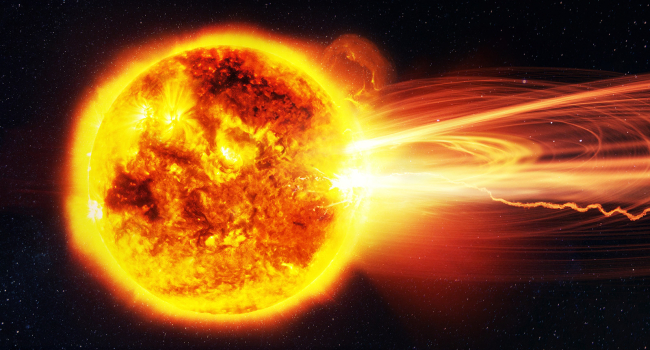
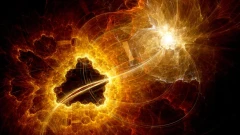
On May 13, 2025, the Sun unleashed an X1.2 solar flare, the first of its kind in over a month and a half. This event, originating from the Sun’s western edge, poses no threat to Earth. Here’s a breakdown of what occurred, why it matters, and how it fits into the current solar cycle.
Details of the X1.2 Flare
The X1.2 flare was recorded on May 13, 2025, with the following specifics:
- Start Time: 18:38 Moscow time (15:38 UTC).
- Peak Radiation: Around 00:37 JST on May 14 (15:37 UTC on May 13).
- Duration: Approximately 19 minutes.
- Location: Active region AR4086, located on the western edge of the solar disk, partially beyond the visible horizon.
- Associated Phenomena: A significant coronal mass ejection (CME) occurred, but it was directed away from Earth, ruling out geomagnetic storms.
Classification: Solar flares are categorized into five classes based on X-ray intensity: A, B, C, M, and X, with X being the most powerful. The number following X (1.2) indicates strength (X1 is moderate, X9 is extreme). The X1.2 flare is strong but not record-breaking. For context, the largest flare in the 25th solar cycle, an X9.0, occurred on October 3, 2024.
Background: This is the first X-class flare since March 28, 2025, when an X2.0 flare was recorded. The 45-day gap is unusual for the 25th solar cycle, which is now in its declining phase after peaking in mid-2024.
Why the Flare Poses No Threat to Earth
Scientists confirm the X1.2 flare is harmless to Earth for several reasons:
- Location: AR4086 is on the Sun’s western edge, partially obscured. The CME’s energy was directed away from Earth, as verified by telescopes.
- Moderate Intensity: While X1.2 is strong, it’s not extreme. For comparison, an X1.8 flare on October 11, 2024, triggered a G4-level magnetic storm (the second strongest in seven years), but that event originated closer to Earth’s line of sight.
- No Geomagnetic Impact: The CME will not reach Earth’s magnetosphere, so no magnetic storms, radio disruptions, or satellite risks are expected.
Sergey Bogachev, head of the Solar Astronomy Laboratory, noted: “The AR4086 sunspot group will soon disappear from view, further reducing risks.”
Current Solar Activity
The X1.2 flare is part of the 25th solar cycle (2018–2030), which peaked in 2024. Bogachev provided a comparison of activity from January–April 2025 versus 2024:
- X-class Flares: 5 in 2025, compared to 8 in 2024.
- M-class Flares: 150 vs. 170.
- C-class Flares: 921 vs. 965.
- Magnetic Storms: Their frequency has increased, despite fewer flares, due to coronal holes and plasma ejections.
In May 2025, solar activity is moderate. Flare activity dropped after early May, while coronal holes have grown more influential, typical of the cycle’s decline. Solar wind speeds range from 500–800 km/s, and Earth is currently in a region of open magnetic field lines, expected to exit in 3–4 days.
Recent Events in 2025:
- February 24: X2.0 flare, no Earth impact.
- March 11: M1.1 flare, lasting 3 minutes.
- May 5: Elevated solar wind speeds, but no major flares.
Impact of Solar Flares: Myths vs. Reality
Solar flares and CMEs can cause:
- Magnetic Storms: Ranging from G1 (minor) to G5 (extreme), strong storms (G4–G5) can affect power grids, satellites, and radio communications. The last G4 storm occurred on May 11, 2024.
- Radiation Storms: Proton streams pose risks to astronauts and polar flights, but X1.2 triggered no such effects.
- Health Effects: Some report headaches, blood pressure spikes, or insomnia during storms, though scientific evidence is mixed.
For the X1.2 flare, risks are negligible due to its direction. However, Bogachev warns that active regions like AR4086 could return in 27 days (a full solar rotation) and trigger new events. For instance, the region behind the X9.0 flare in October 2024 may reappear by late May.
What’s Next?
The Solar Astronomy Laboratory will continue monitoring:
- Short-Term Forecast: Until May 17, solar wind speeds will remain elevated (500–800 km/s), but no major flares are expected.
- Long-Term Forecast: Late May to June may see increased activity if large sunspot groups, like the one from the X9.0 flare, return. The cycle is expected to fully decline by 2027–2028.
- Observations: Telescopes like GOES (SUVI 131) and SDO track the solar disk.
To mitigate potential storm risks, satellites use shielding, and power grids employ backup systems. There’s no cause for public concern, but those sensitive to space weather should monitor forecasts from relevant institutes or NOAA.