make preferable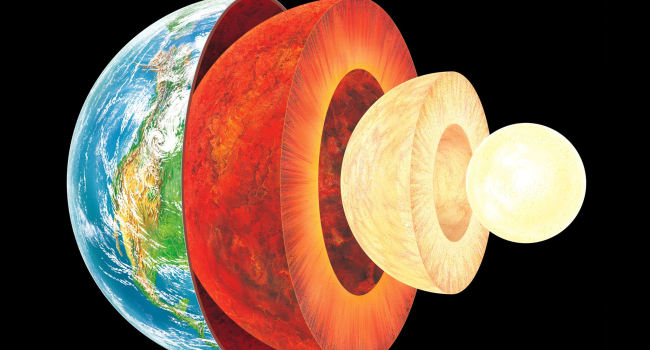
Seismologists from the Australian National University (ANU) have detected energy signals generated by winter storms in the North Atlantic that via two large spiral antenna arrays, each 50 by 50 km, located in remote parts of Australia. Published in Seismological Research Letters (SRL), this discovery not only deepens our understanding of Earth’s structure but also opens prospects for studying other Solar System bodies. We explain how scientists captured these signals, what they mean, and how they could transform science.
Signals from the Depths: How Storms Reach the Core
The ANU team used two spiral antenna arrays to record seismic waves originating from powerful North Atlantic cyclones. These waves travel through Earth’s liquid outer core and solid inner core (~1,300 km in diameter) and are detected in Australia during the southern summer (December–February). The primary signal sources are regions off the coasts of Greenland and Newfoundland.
The study focused on microseismic noise—faint vibrations caused by ocean waves interacting with Earth’s solid surface. Scientists identified two wave types:
- P-waves (compressional), which pass through the core and mantle.
- S-waves (shear), which attenuate in the liquid outer core but help map its boundaries.
“We’re literally seeing storm energy pierce through the Earth,” says lead author Hrvoje Tkalčić. “It’s like cosmic ping-pong, with signals reflecting and reaching the opposite side of the planet.”
What’s Next?
Scientists plan to:
- Expand antenna networks to improve microseism sensitivity.
- Apply the method to data from Mars’ InSight seismometer to study its core.
- Correlate signals with climate data to predict storm intensification due to global warming.
Future missions, like Europa Clipper (2024–2030), may adapt the technique to analyze the interiors of Jupiter’s moons, where ocean waves create similar vibrations.
Conclusion
The detection of seismic signals from North Atlantic storms traversing Earth’s core to Australia marks a breakthrough in understanding our planet’s interior. By leveraging microseismic noise, ANU’s method offers a non-invasive way to study Earth and other celestial bodies, while also shedding light on storm-driven energy transfer. This discovery could reshape seismology, planetary science, and climate research.