make preferable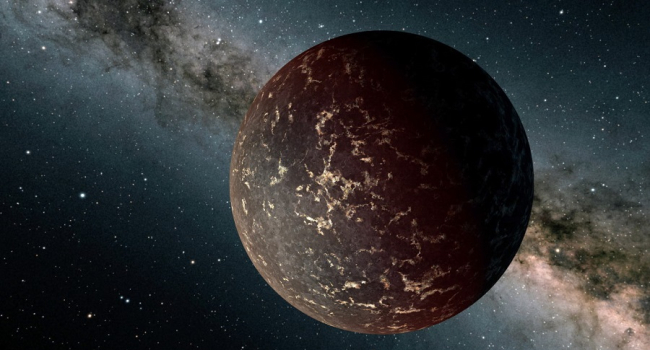
American scientists from NASA have devised an ambitious plan to search for rogue planets—enigmatic worlds drifting freely in the Milky Way without orbiting stars. The key tool will be the Nancy Roman Space Telescope, set to launch in October 2026, with its scientific program beginning in May 2027. The study, published on arXiv, promises a revolution in understanding these solitary objects, which may number in the trillions in our galaxy. We explore how the Nancy Roman Telescope will transform our knowledge of rogue planets and why these worlds are so significant.
What Are Rogue Planets?
Rogue planets, or free-floating planets (FFPs), are planetary-mass objects not gravitationally bound to any star. They may:
- Form in protoplanetary disks of young stellar systems but get ejected due to gravitational interactions with other planets or stars.
- Arise independently, like stars, from collapsing gas and dust clouds, but lack sufficient mass to ignite thermonuclear reactions (such objects are called sub-brown dwarfs).
Estimates suggest the Milky Way could host billions to trillions of such worlds—potentially 20 times more than stars (100–400 billion). They range from small, sub-Earth-mass objects (0.1 M⊕) to gas giants (>100 M⊕) like Jupiter. Smaller planets indicate “gentle” ejections from systems, while massive ones suggest catastrophic events, such as stellar collisions in clusters.
“These worlds are like cosmic wanderers, without a stellar home. Studying them will reveal how planetary systems form,” says Samson Johnson, a graduate student at Ohio State University.
Why Are They Hard to Find?
Rogue planets emit no light and reflect minimal starlight, making them nearly invisible to traditional telescopes. The only effective detection method is gravitational microlensing, based on Einstein’s theory:
- When a planet passes in front of a background star, its mass warps space-time, briefly amplifying the star’s light (from hours to days).
- Such events are rare, unique (non-repeating), and require monitoring millions of stars.
Ground-based projects like OGLE (Optical Gravitational Lensing Experiment) and MOA (Microlensing Observations in Astrophysics) have detected only about a dozen rogue planets, including OGLE-2016-BLG-1928, a Mars-sized object found in 2020. Short microlensing events (41.5 minutes for OGLE-2016-BLG-1928) are difficult to capture due to atmospheric interference.
The Role of the Nancy Roman Telescope
Named after Nancy Grace Roman, the “mother of Hubble,” the Nancy Roman Space Telescope features a 2.4-meter mirror and two instruments:
- Wide Field Instrument (WFI): A 300.8-megapixel camera with a 0.28-square-degree field of view (100 times larger than Hubble’s), operating in visible and near-infrared wavelengths (0.48–2.3 μm).
- Coronagraph Instrument (CGI): For direct exoplanet imaging, though less relevant for rogue planet searches.
Positioned at the L2 Lagrange point (1.5 million km from Earth), the telescope will survey the galactic bulge—the Milky Way’s central region with the highest star density. Its advantages include:
- Clarity from Space: No atmospheric distortions, unlike ground-based telescopes.
- Wide Field of View: Simultaneous observation of millions of stars.
- Continuity: Months of uninterrupted scanning of a single sky region.
The telescope is expected to detect 250–400 rogue planets, with masses ranging from Mars (0.1 M⊕) to Jupiter, including ~60 Earth-mass objects. This is 10 times more precise than current estimates, which range from tens of billions to trillions.
How It Works
The telescope will search for microlensing events during the Galactic Bulge Time Domain Survey:
- Events: Brightness flares in stars, lasting from hours (for small planets) to tens of days (for gas giants).
- Measurements: Event duration and light curve shape reveal the object’s mass. Joint observations with ground-based telescopes, like PRIME (1.8-meter telescope in South Africa), will refine distance and mass estimates using the parallax effect.
- AI: NASA’s RAMjET program will filter data in real-time, isolating significant events from millions of stars.
The CLEoPATRA mission, launching alongside Roman, will enhance mass measurement accuracy, potentially determining a rogue planet’s mass with high precision for the first time.
Why Study Rogue Planets?
These worlds are key to understanding planetary system formation:
- Ejection Mechanisms: The frequency of low-mass rogues will show how common “gentle” gravitational interactions are in young systems.
- Catastrophes: Massive rogues point to stellar mergers or dynamic system disruptions.
- Cosmic Demographics: Roman’s data will refine the mass function of free-floating planets, revealing dominant masses and their galactic distribution.
- Life?: Some scientists, like Irina Romanovskaya, suggest that moons of large rogues could retain liquid water through internal heating, similar to Jupiter’s Europa.
Additionally, the telescope will test the hypothesis that primordial black holes cause microlensing, potentially explaining part of dark matter.
What’s Next?
After its 2026 launch, the Nancy Roman Telescope will begin a 5-year mission to:
- Discover hundreds of rogue planets, refining their numbers and masses.
- Compare findings with the James Webb Space Telescope, which has already identified rogues in the Orion Nebula.
- Check for distant companion stars (>8 AU) to rule out “false” rogues.
The mission’s results will rewrite planetary science textbooks, revealing how unique our Solar System is. As Naoki Koshimoto from Osaka University notes: “Roman will let us study these worlds in unprecedented detail.”
Conclusion
The Nancy Roman Telescope will usher in a new era of rogue planet research, detecting hundreds of solitary worlds in the Milky Way. Using microlensing, AI, and coordinated ground observations, it will uncover their masses, distribution, and origins, answering questions about planet formation and possibly dark matter. These dark wanderers hold the key to our cosmic history.