make preferable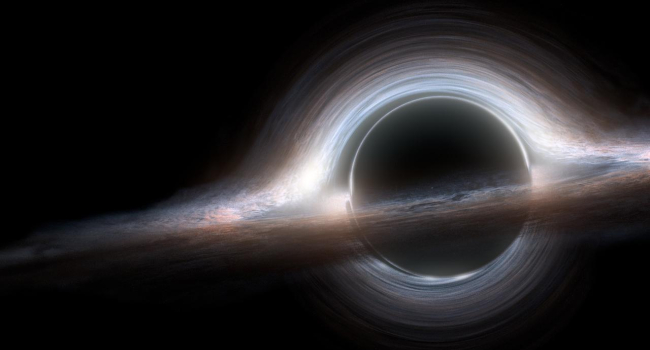
American astrophysicists from the Massachusetts Institute of Technology (MIT) have discovered supermassive black holes in quasars from the early universe that defy current theories of their formation. These cosmic giants, existing less than a billion years after the Big Bang, boast masses of billions of suns and baffle scientists with their astonishing growth rates. The study, published on arXiv, details the phenomenon and proposes new hypotheses. We explain why these black holes are upending astrophysics and what this means for science.
Black Holes That Shouldn’t Exist
Quasars—among the brightest objects in the universe—are powered by supermassive black holes at the centers of galaxies. Their luminosity can outshine entire galaxies, making them ideal for studying the early universe. MIT scientists examined quasars with a redshift of z≳6, corresponding to a time when the universe was less than 1 billion years old (about 13% of its current age).
The discovered black holes, with masses of billions of solar masses, caused a shock:
- According to the standard accretion model, black holes grow gradually by absorbing gas and dust. Reaching billions of solar masses requires hundreds of millions of years, but the early universe lacked sufficient time.
- Even more astonishingly, some quasars were active for only 1,000 to 1 million years, ruling out prolonged growth through stable accretion.
“These black holes are like skyscrapers built in a week. We don’t understand how it’s possible,” noted one of the study’s authors.
Observations: MUSE and Lyman-Alpha Nebulae
The team used the MUSE (Multi Unit Spectroscopic Explorer) spectrograph on the Very Large Telescope (VLT) in Chile to study quasars with anomalously small proximity zones—regions of ionized gas around a quasar where ultraviolet radiation suppresses hydrogen emission. Small zones indicate short-lived black hole activity.
A key focus was Lyman-alpha nebulae—giant clouds of glowing hydrogen surrounding quasars. Their analysis revealed:
- Black holes are in the early stages of active accretion, meaning their billions-of-solar-mass sizes formed before intense accretion began.
- Asymmetry in the nebulae suggests powerful gas flows or jets, which may accelerate growth.
These findings contradict models where black holes grow slowly via an accretion disk, similar to the star HW2 in the constellation Cepheus A (Astronomy & Astrophysics).
Alternative Growth Hypotheses
To explain the phenomenon, scientists proposed three scenarios:
- Black Hole Mergers: In the dense early universe, intermediate-mass black holes (100–100,000 solar masses) could have rapidly merged, forming supermassive objects.
- Super-Eddington Accretion: Black holes may have absorbed matter faster than the theoretical Eddington limit, possibly through episodic “bursts” of accretion when dense gas clouds fell into the galaxy’s center.
- Powerful Jets: Relativistic jets of material ejected by the quasar could enhance gas inflow, accelerating black hole growth.
Each hypothesis requires testing, as none fully explains how black holes achieved such masses almost immediately after the Big Bang.
Why It’s a Mystery
The standard model of black hole formation assumes:
- Formation from “seeds”—stellar-mass black holes (5–50 solar masses) created by the explosions of the first stars (Population III) about 100 million years after the Big Bang.
- Slow growth through accretion with ~10% efficiency (the rest of the energy is radiated).
However, quasars with z≳6, such as J0100+2802 (12 billion solar masses at z=6.3), require either extraordinarily massive seeds (10,000 solar masses) or accretion at 100% efficiency, which is physically impossible. Their short activity period (1,000 years) makes these scenarios even less plausible.
What’s Next?
Scientists plan to:
- Use the James Webb Space Telescope to study quasars with z>10, searching for even earlier black holes.
- Model super-Eddington accretion with jets using supercomputers.
- Search for traces of black hole mergers through gravitational waves with LIGO and the future LISA observatory.
These efforts may reveal whether black hole seeds were massive from the start or if the early universe had unique conditions accelerating growth.
Conclusion
Supermassive black holes in early universe quasars challenge astrophysics, showing that our models of their formation are outdated. Mergers, super-Eddington accretion, or unknown mechanisms may have created these cosmic “powerhouses” in mere millions of years. The discovery forces a rethinking of galaxy evolution and, possibly, physics itself.