make preferable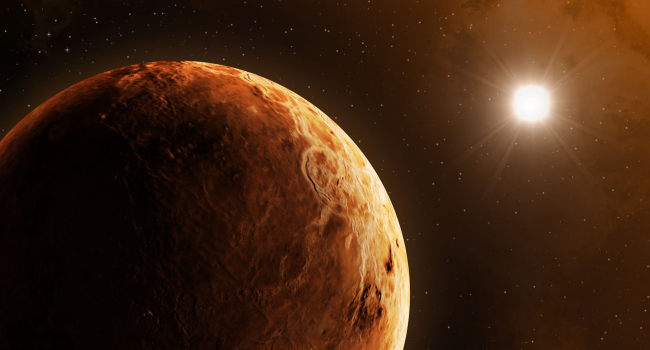
An international team of scientists from Poland, the United Kingdom, and the United States has found that a molecule similar to DNA could exist in the clouds of Venus, where concentrated sulfuric acid and extreme conditions prevail. Peptide nucleic acid (PNA) remains stable in a 98% sulfuric acid solution, opening the possibility for extraterrestrial life based not on water but on acid. The study, published in Science Advances, challenges existing notions of biology and offers hope for the search for life in space. We explain what the scientists discovered and how it changes our perspective on Venus.
PNA: A Molecule Resistant to Sulfuric Acid
Venus’s atmosphere is one of the harshest environments in the Solar System: temperatures reach 460°C at the surface, pressure is 92 times higher than Earth’s, and clouds at 50–70 km altitude consist of nearly pure sulfuric acid. Life in such conditions seemed impossible, but this new study reshapes that view.
Key Findings
- PNA Stability: Peptide nucleic acid, structurally similar to DNA, remains intact in a 98% sulfuric acid solution at room temperature (20–25°C) for two weeks.
- Acid as a Solvent: Unlike Earth’s water-dependent life, hypothetical Venusian life could use sulfuric acid as a medium for biochemical processes.
- Limitations: At temperatures above 50°C, PNA becomes unstable, and Venus’s cloud temperatures range from 0°C to 100°C, complicating the hypothesis.
“Concentrated sulfuric acid is considered deadly to organic matter, but we’ve shown that’s not always the case,” said Dr. Janusz Jurand Petkowski from Wrocław University of Science and Technology. His team demonstrated that PNA could serve as the basis for a molecular system similar to DNA in extreme conditions.
Why Venus?
Interest in Venus as a potentially habitable planet has grown following several discoveries:
- Phosphine (2020): Detected in Venus’s atmosphere at levels associated with microbial activity on Earth. Though its origin remains controversial, it sparked scientific curiosity.
- Ammonia (2023): Another substance linked to biology was found in Venus’s clouds. Ammonia could neutralize acid, creating localized less aggressive zones.
- Cloud Layer: At 50–70 km altitude, temperatures (0–100°C) and pressure are close to Earth’s, making this layer hypothetically suitable for life.
The new study adds a molecular foundation to these hypotheses. “If PNA, a DNA-like molecule, can survive in sulfuric acid, that’s astonishing. It could be key to understanding what life beyond Earth might look like,” noted Dr. William Bains from Cardiff University.
What’s Next?
Scientists acknowledge that PNA is not yet a perfect candidate for “Venusian DNA”:
- Temperature Barrier: PNA loses stability above 50°C, while Venus’s clouds can reach 100°C. A polymer stable across this range is needed.
- Functionality: It’s unclear whether PNA can encode information and self-replicate like DNA. This requires further experiments.
- Search for Traces: Future missions, such as NASA’s DAVINCI+ (launch in 2029) and Venus Life Finder (2025), will study Venus’s atmosphere, searching for organic compounds and biomarkers.
The next step is developing acid-resistant polymers capable of functioning at 0–100°C and serving as carriers of genetic information. This could lay the groundwork for modeling extraterrestrial life.
Why Does It Matter?
The discovery has implications beyond Venus:
- New Biochemistry: The idea of life using acid instead of water expands the boundaries of astrobiology. This is relevant for exoplanets with extreme conditions (e.g., studies of TOI-421 b).
- Search for Life: PNA’s success encourages the search for biomarkers in acidic environments, such as Jupiter’s or Saturn’s moons.
- Cosmic Evolution: Just as the Pyrenees were a trade hub 20,000 years ago (JASR), Venus could be key to understanding the evolution of life in the cosmos.
Conclusion
The discovery of PNA, stable in sulfuric acid, opens the door to the hypothesis of life in Venus’s clouds. This DNA-like molecule survives in 98% acid, but its stability at high temperatures needs improvement. The study reshapes our understanding of life’s possibilities in space and inspires new missions to Venus.