make preferable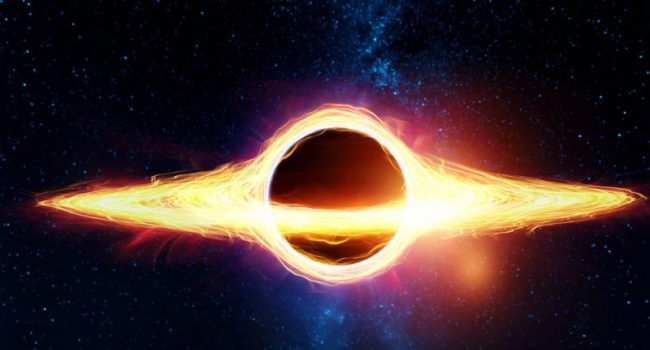
Black holes are among the universe’s most enigmatic objects, but two new studies bring us closer to unraveling their mysteries. An international team of astronomers, using NASA’s IXPE observatory, discovered how black holes in blazars generate X-ray radiation, while physicists led by Stefano Liberati proposed models of black holes without singularities. Published in Astrophysical Journal Letters (AJL) and Journal of Cosmology and Astroparticle Physics (JCAP), these works resolve long-standing debates and pave the way for a quantum theory of gravity. Here’s what the scientists learned and how it will reshape our understanding of the cosmos.
X-Ray Radiation: Electrons, Not Protons
Blazars are active galactic nuclei with jets—streams of matter ejected at near-light speeds—pointed toward Earth. One such blazar, BL Lacertae in the constellation Lacerta (1,400 million light-years away), was studied using the IXPE X-ray observatory. In November 2023, scientists recorded a record-breaking optical polarization in its jet—47.5%—but X-ray polarization was below 7.6%.
This helped settle a decades-long debate about the nature of black hole X-ray emissions. Two competing hypotheses existed:
- Proton Model: X-rays are generated by protons accelerated in the jet’s magnetic field.
- Electron Model: Radiation arises from Compton scattering, where ultra-fast electrons (near light speed) collide with photons, transferring energy.
IXPE data confirmed the electron model. The low X-ray polarization indicates chaotic electron motion, typical of Compton scattering, rather than the ordered proton emission. “We’ve finally understood how blazars produce X-rays,” says lead author Ivan Agudo. “This was one of astrophysics’ biggest mysteries.”
The team plans to study other blazars, like Mrk 421, to verify if this mechanism is universal, potentially explaining how black holes power the universe’s brightest objects.
Black Holes Without Singularities: New Physics
The second study, published in JCAP, challenges the traditional view of black holes. According to Einstein’s general theory of relativity (GTR), a black hole’s center hosts a singularity—a point of infinite density where physics breaks down. However, Stefano Liberati’s team from the International Institute for Fundamental Physics proposed models that eliminate this anomaly:
- Standard Black Hole: Features an event horizon and singularity, as predicted by GTR.
- Regular Black Hole: Has an event horizon but replaces the singularity with a region of finite density due to quantum effects.
- Black Hole Mimicker: An object resembling a black hole externally but lacking an event horizon or singularity, such as a hypothetical “graviton condensate.”
These models hinge on the idea that quantum gravity eliminates singularities, replacing them with stable structures. While direct evidence is lacking, differences between models can be detected indirectly:
- Gravitational Waves: Mergers of regular black holes or mimickers produce unique signals, distinct from standard ones, as shown by LIGO data (since 2015).
- Light Profile: The shadow of a black hole, captured by the Event Horizon Telescope (EHT) in 2019 and 2022 for M87* and Sagittarius A*, may reveal deviations from GTR.
- Accretion Disks: Matter falling onto a mimicker behaves differently than in classical models, observable in X-ray spectra (as with BL Lacertae).
“We’re on the brink of new physics,” says Liberati. “If singularities don’t exist, this is a bridge to a quantum theory of gravity, uniting Einstein and quantum mechanics.”
Why It Matters
Both discoveries address fundamental questions:
- Blazar Radiation: Understanding Compton scattering in jets explains how black holes, with masses billions of times the Sun’s, generate energy surpassing entire galaxies. This is key to studying active nuclei, like quasars.
- Singularity: Eliminating singularities completes the theory of gravity, resolving GTR’s “blind spot.” This could clarify what happens inside black holes and during the Big Bang.
- Cosmic Evolution: Both studies tie to the formation of massive stars, whose explosions create black holes, and to exoplanet research (e.g., TOI-421 b), where gravity plays a central role.
What’s Next?
The scientists plan to:
- Observe other blazars using IXPE and the James Webb Telescope to confirm the role of electrons in jets.
- Use the EHT and the future Next Generation EHT (set for the 2030s) to image black hole shadows with resolution sufficient to distinguish models.
- Simulate mimicker mergers on supercomputers to predict signals for LIGO-Virgo-KAGRA.
These steps could lead to a quantum theory of gravity, unifying all forces of nature, a dream of physicists since Einstein’s time.