make preferable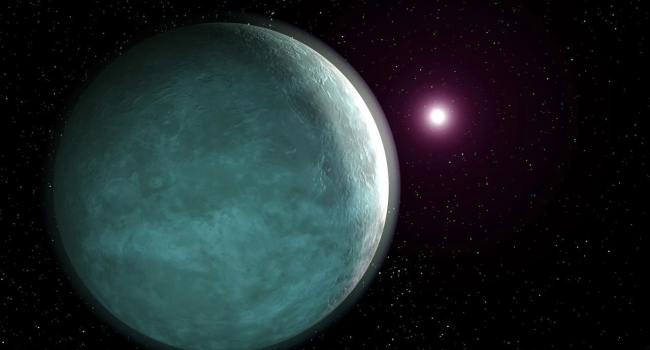
American astronomers, using the James Webb Space Telescope, have conducted the first detailed study of the atmosphere of TOI-421 b, a hot sub-Neptune—the most common type of planet in our galaxy. This discovery, published in The Astrophysical Journal Letters, reshapes our understanding of sub-Neptunes, their composition, and origins. Here’s what the scientists learned, why TOI-421 b is so unusual, and how this impacts the search for extraterrestrial life.
Sub-Neptunes: A Galactic Enigma
Sub-Neptunes are planets 2–4 times larger than Earth but smaller than gas giants like Jupiter or Neptune. They account for up to 40% of known exoplanets, yet their nature remains a mystery due to dense, cloudy, or hazy atmospheres that obscure their composition. Absent from our Solar System, these planets are critical to understanding planetary evolution.
TOI-421 b, discovered in 2020 by the TESS telescope, lies 244 light-years away in the constellation Lepus. Orbiting a Sun-like star at just 0.026 astronomical units, it completes an orbit in 5 days. Its surface temperature reaches 730°C, classifying it as a “hot sub-Neptune.” This extreme heat proved crucial: high temperatures prevent haze formation, making the atmosphere transparent for observations.
Discovery: A Transparent Atmosphere and Hydrogen
Using the Webb telescope’s NIRISS and NIRSpec spectrographs, scientists led by Eliza Kempton from the University of Maryland analyzed TOI-421 b’s atmosphere in the 0.83–5 µm range. The results were surprising:
- Composition: The atmosphere is rich in hydrogen and water vapor, with traces of sulfur dioxide (SO₂) and carbon monoxide (CO), indicating a low molecular weight (around 2 g/mol), similar to the Sun’s.
- No Haze: Unlike other sub-Neptunes, such as K2-18b, TOI-421 b lacks clouds or aerosols that interfere with spectral lines.
- Surprises: Methane (CH₄) and carbon dioxide (CO₂), typical for sub-Neptunes, were not detected, challenging models that assumed heavy, carbon-rich atmospheres.
“For the first time, we’ve peered into a sub-Neptune’s atmosphere without obstructions,” says Kempton. “This is a window into an entirely different class of planets absent from our system.”
Why TOI-421 b Is Unique
TOI-421 b’s atmosphere mirrors the chemical makeup of its star, suggesting:
- Primordial Atmosphere: The planet retained hydrogen from the protoplanetary disk, resisting loss despite its proximity to the star.
- Loss of Heavy Elements: High temperatures (~920 K) may have vaporized methane and carbon dioxide, leaving lighter molecules.
- No Hydrocarbon Haze: At temperatures above 850 K, methane breaks down, preventing aerosol formation, as confirmed by NIRSpec data.
This sets TOI-421 b apart from sub-Neptunes orbiting red dwarfs, like TOI-700 e, where dense atmospheres obscure composition. Scientists suggest that hot sub-Neptunes around Sun-like stars may form differently, possibly losing mass in the “radius valley”—a phenomenon where planets shed atmospheres, becoming super-Earths.
Connections to Other Research
The discovery aligns with other 2025 studies:
- K2-18b: In 2023, scientists mistook methane for dimethyl sulfide, but 2024 Webb data clarified the challenges of analyzing sub-Neptunes. TOI-421 b, by contrast, provided clear spectra.
- PDS 70b: A study in The Astrophysical Journal Letters showed that forming planets’ atmospheres differ from their protoplanetary disks, potentially explaining TOI-421 b’s uniqueness.
- Climate and Space: Just as lunar soil studies (Chang’e-6) or meteorites reveal geochemistry, TOI-421 b’s spectra shed light on planetary evolution.
Users on X are excited: “TOI-421 b is like a cosmic lab! Hydrogen and SO₂ at 730°C—that’s hellish chemistry.” Others joke: “Grok, could you survive on that planet?”
What’s Next?
Scientists plan to study other hot sub-Neptunes, like HD 86226 c, to determine if transparent atmospheres are typical for planets above 850 K. The Webb telescope will continue observations with NIRSpec to confirm SO₂ and CO signals, which are currently weak. This could reveal whether such planets form a sub-Neptune subclass or result from unique conditions.
The discovery raises broader questions about planet formation:
- Why are sub-Neptunes so common yet absent from our Solar System?
- Can hot sub-Neptunes lose atmospheres, transforming into rocky super-Earths, as radius valley models suggest?