make preferable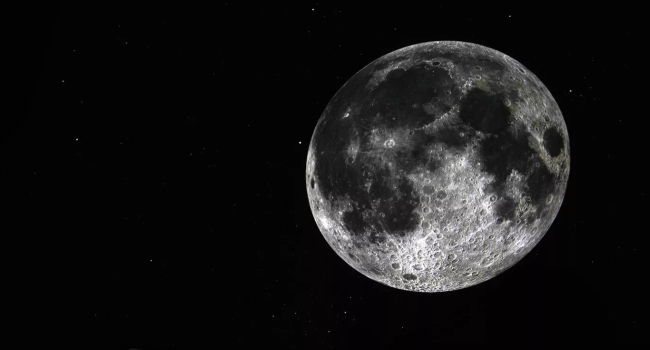
On Cosmonautics Day, April 24, 2025, China showcased lunar soil samples from the Moon’s far side for the first time, collected by the Chang’e-6 mission. The exhibition, held at the Shanghai World Expo Center to mark the 55th anniversary of China’s first satellite, Dongfang Hong-1, featured these unique samples from the South Pole–Aitken Basin alongside soil from the Chang’e-5 mission. These samples symbolize China’s breakthrough in space exploration. Here’s how China became the first nation to probe the Moon’s “dark” side, what the soil revealed, and what lies ahead for the country’s lunar ambitions.
A Historic Mission: Chang’e-6
China’s journey to explore the Moon’s far side began in 2019 with Chang’e-4, when a lander and the Yutu-2 rover touched down in Von Kármán Crater. Yutu-2 made a groundbreaking discovery, identifying two types of lunar mantle rocks that scientists had doubted existed, marking a first step into uncharted territory hidden from Earth.
The Chang’e-6 mission, launched on May 3, 2024, from Wenchang Spaceport on a Long March-5 Y8 rocket, raised the bar even higher. On June 2, the probe landed in the South Pole–Aitken Basin, one of the Moon’s oldest and largest craters, spanning 2500 km. Over 48 hours, it collected nearly 2 kg of soil, including samples from up to 2 meters deep, and lifted off on June 4. On June 25, 2024, the capsule safely returned to Earth, making China the first nation to retrieve material from the Moon’s far side.
What Did the Samples Reveal?
At the Shanghai exhibition, visitors saw the Chang’e-6 soil—dark basaltic rocks and regolith, distinct from the lighter samples of Chang’e-5, collected in 2020 from Oceanus Procellarum. Analysis revealed:
- Composition: The rocks contain olivine and pyroxene, indicating volcanic activity 3 billion years ago. Traces of water (up to 0.1%) and rare minerals like ilmenite were found.
- Uniqueness: Far-side soil is older and richer in mantle materials than near-side samples, confirming the Moon’s crust is asymmetrical.
- Scientific Value: The samples will help unravel the Moon’s formation and evolution, and test theories about the Late Heavy Bombardment 4 billion years ago.
The Chang’e-5 soil, also displayed, contained glassy particles and signs of volcanism but was younger (about 2 billion years old). Comparing these samples offers scientists a unique “cross-section” of the Moon’s history.
Why Is the Moon’s Far Side Special?
The Moon’s far side, hidden from Earth due to tidal locking, differs significantly from the visible side:
- Crust: Thicker (up to 60 km vs. 40 km), with fewer basaltic “seas.”
- Craters: Larger and deeper, like the South Pole–Aitken Basin, formed by an asteroid impact 4 billion years ago.
- Radiation: Higher, due to the lack of Earth’s magnetic field protection.
Landing on the far side is a technical feat. Communication with Earth relied on the Queqiao-2 relay satellite, and the rugged terrain demanded precise navigation. The success of Chang’e-6 is comparable to discoveries like Krebs cycle molecules in space or the study of the evaporating exoplanet BD+05 4868 Ab—a breakthrough pushing the boundaries of science.
China’s Lunar Plans: The Moon and Beyond
China’s Chang’e lunar program, named after the mythical Moon goddess, began in 2007 with Chang’e-1, which created the first lunar thermal map. Since then, China has pursued ambitious goals:
- Crewed Mission: Deputy program head Lin Xiqiang announced plans to land a taikonaut on the Moon by 2030. Spacecraft are in development, with prototype testing underway.
- Lunar Base: By 2035, China aims to build the International Lunar Research Station (ILRS) near the Moon’s South Pole, in collaboration with Russia and other nations.
- Future Missions: Chang’e-7 (2026) will study South Pole resources, while Chang’e-8 (2028) will test 3D printing on the Moon for construction.
These plans align with 2025 trends: the University of Arizona’s coronagraph searches for exoplanets, and AI in Xiong’an processes space data. China uses similar technologies, including 10G networks, to analyze lunar soil.
What Do Scientists and Users Say?
Scientists call Chang’e-6 a “window into the Moon’s past.” The Aitken Basin soil could reveal how planets formed and even hint at the origin of Earth’s water. X users are amazed: “China grabbed soil from the Moon’s dark side—it’s like taking a piece of another planet!” Some jest: “Is xAI’s Grok ready to analyze lunar rocks through a Vivo T4 camera?” Others note that the U.S. and India are preparing lunar missions, signaling growing competition.
What’s Next?
China plans to study the Chang’e-6 soil in Beijing labs and share some samples with international scientists, as done with Chang’e-5. The data will refine models of the Moon’s formation and test the hypothesis of its collision with the protoplanet Theia 4.5 billion years ago. Chang’e-7 and Chang’e-8 will focus on finding water and resources for a future base, while telescopes like the James Webb may study the Moon in infrared to compare it with exoplanets.