make preferable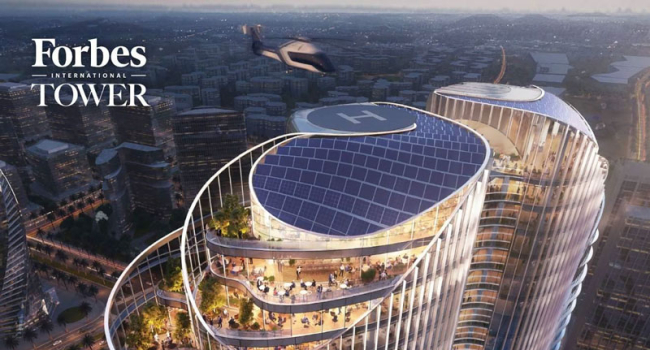
According to Reuters, a Saudi Arabian-controlled company plans to begin construction in early 2025 of a first-of-its-kind 55-story office tower in Egypt’s new capital. The skyscraper will derive most of its energy from the utilization of clean hydrogen, which will be supplied in liquid form. The project is estimated to cost $1 billion and will serve as an example of a sustainable economy, life, and production.
The framework agreement for the project was signed on the last day of the 53rd World Economic Forum in Davos in January 2023. The construction work will be overseen by Saudi company Magnom Properties, a subsidiary of the Rawabi Holding industrial group. The client for the tower is the media group Forbes. The working title of the project is the Forbes International Tower, which will be Forbes’ first commercial tower. The media group expects to profit from renting office space in Egypt’s new administrative capital, which began construction a few years ago to the east of Cairo.
Solar panels integrated into the facade of the tower will meet 25% of its electricity needs, while the rest of the electricity will come from hydrogen. The project does not involve any cooperation with Egypt’s utilities, which sometimes experience power outages. For Magnom Properties, this project will be a test case, with similar towers planned for Dubai and Riyadh in the future.
The building will feature two high-speed VIP elevators and a helipad on the roof. Security will be ensured by the latest systems to prevent both physical and cyber intrusions. Automation, artificial intelligence, new approaches to office space organization, and other cutting-edge technologies will all be included, driving up the project’s cost. For comparison, around 20 similar towers nearby were built by the Chinese — practically an entire district, which cost the Egyptian authorities only $3 billion.
The detailed design of the building has been entrusted to the architectural group AS+GG from Chicago (architect Adrian Smith and the firm Gordon Gill Architecture). Construction is scheduled to begin in early 2025 and is expected to be completed by 2030.