make preferable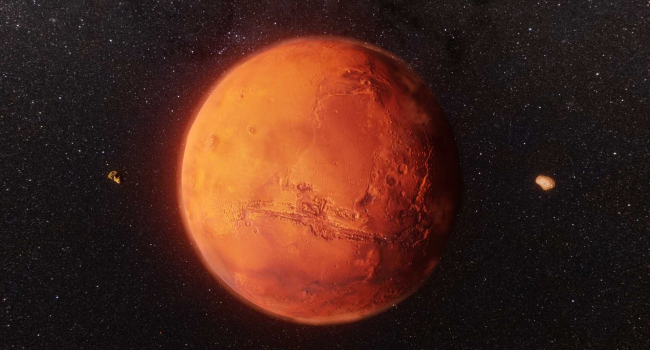
American geophysicists from the University of California have discovered a giant ocean hidden deep beneath the surface of Mars. The research was published in the scientific journal Proceedings of the National Academy of Sciences (PNAS).
The enormous reservoir was detected using seismic data obtained by NASA's InSight Lander. The study of the deeper crust revealed that it likely consists of fragments of shattered magmatic rock containing enough liquid water to fill Martian oceans, covering the entire planet with a layer 1–2 km thick.
However, accessing these colossal water reserves is challenging due to their depth, which ranges from 11.5 to 20 km. To confirm the presence of water and search for potential signs of microbial life, additional equipment, including drilling rigs, will be required, the scientists noted.
In early August, the European Space Agency (ESA) released new images of the remnants of what was once the largest lake on Mars—Lake Eridania. The images were captured by the Mars Express spacecraft using a high-resolution camera. This lake once contained more water than all other Martian lakes combined. It was larger than any known lake on Earth and held enough water to fill the Caspian Sea three times over.