make preferable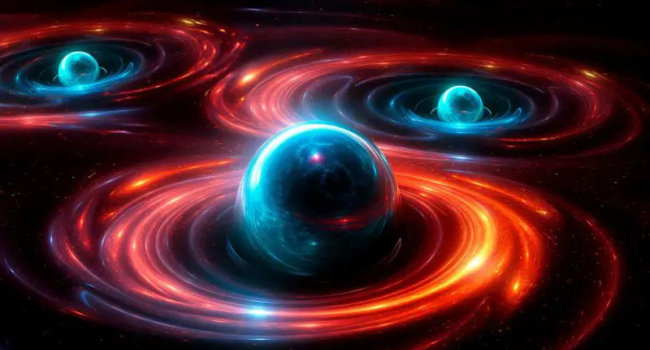
New discovery about triple star systems that will change the science of stellar evolution
Researchers from the University of Leeds have made a groundbreaking discovery, suggesting a much more common occurrence of triple star systems in the universe than previously thought. This revelation, made possible by astrometric data from the European satellite "Gaia," provides new insights into the evolution of stars and the structure of the universe.
The "Gaia" satellite actively collects astrometric data, creating a three-dimensional dynamic map of the stellar sky and tracking the trajectories of each star. These data reveal the slightest deviations of stars from their usual paths, indicating the presence of invisible objects in systems, from gas giants to undetected stars and their remnants, such as neutron stars.
Researchers focused on analyzing distortions in the trajectories of B and Be stars. Based on the assumption that gas disks around Be stars, reminiscent of Saturn's rings, form due to mass transfer from companion stars, scientists looked for changes in star trajectories. The studies covered various scenarios, including close relationships where distortions were clearly visible and distant ones where they were barely noticeable.
Scientists hypothesized that larger stars in triple systems could be siphoning mass from their companions, making them less noticeable and weaker. As a result, their gravitational impact on larger stars became less pronounced. This assumption changes the understanding of how stars evolve, and if confirmed, it will lead to a reassessment of current notions in astronomy.