make preferable
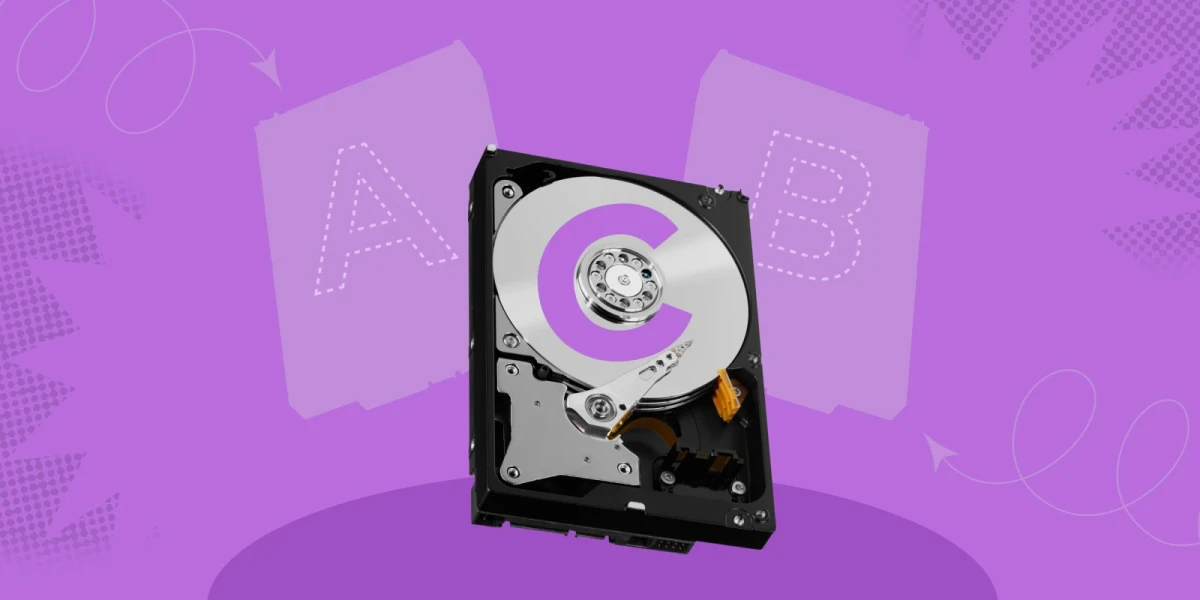
On Windows computers, the system drive is usually labeled C:. At first glance, this seems illogical: why was the main drive assigned the third letter of the alphabet while the first two were left unused? The answer lies in the history of personal computers and the floppy disks used long before familiar hard drives came along.
Where drives A and B came from
The first IBM PCs booted from floppy disks. Letters of the Latin alphabet were used to identify the floppy drives: the first was assigned A:, and the second B:.
Having two floppy drives was convenient because it allowed tasks to be split between them. One floppy disk could be used to boot the operating system, while the other could be used to run programs and work with data. As a result, the letters A and B became associated with floppy disk drives.
Why the hard drive was assigned the letter C
Hard drives later appeared in personal computers. Floppy drives remained in use, however, as they were still a convenient way to transfer and store information.
The next available letter, C, was chosen for the new type of storage device. This gave the hard drive the designation that would later become familiar to Windows users.
Incidentally, the term “hard disk” itself is also rooted in the history of storage media: it was coined to distinguish these disks from flexible floppy disks.
Why Windows kept this tradition
When Windows operating systems replaced DOS, the familiar drive-letter system was left unchanged. This helped maintain compatibility with older programs and settings that relied on the existing drive letters.
Over time, C: became the standard designation for the Windows system partition. However, there is no technical requirement to install the operating system there: Windows can also be installed on drive D:, E:, or another available drive letter.
Today, the letters A and B are no longer reserved exclusively for floppy drives either—they can be assigned to regular storage drives. But this historical convention has proved so enduring that C: remains the standard designation for the system drive.