make preferable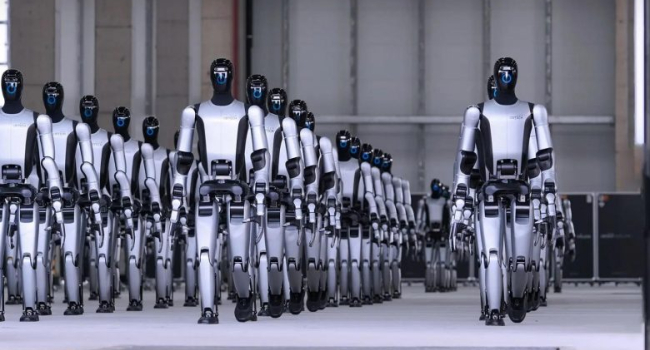
Humanoid robots capable of walking independently over rough terrain and recognising people could in the future help patrol the southern border of the United States. This was stated by Sankaeet Patak, founder and CEO of the company Foundation. According to him, the technology has already been demonstrated to representatives of the Department of Homeland Security, reports Foxnews.com.
What talks are about
Patak said that Foundation is in discussions with several national security agencies—the Air Force, Navy, Army, and DHS.
He noted that negotiations are underway with nearly all government national security bodies, and that they are beginning to discuss contracts and potential applications.
DHS itself, however, emphasised that no formal agreements have been reached yet—there are no pilot projects or active prime contracts with the company.
What the robots would do
The Phantom robot, according to its developers, can conduct reconnaissance and surveillance in areas where humans, vehicles, drones, and fixed cameras struggle to operate. It can distinguish people from other objects, move across uneven terrain, and map its surroundings.
The goal is for the robots to patrol the area autonomously and simply alert human operators to possible border crossings. The decision on further action would remain with people.
Patak separately mentioned possible tasks in tunnels. The company's main argument is the safety of personnel.
He said the main priority is to keep officers in a safe location, with robots able to carry out round‑the‑clock surveillance.
In his estimation, a pilot project could theoretically be launched as early as "tomorrow," and a larger‑scale deployment in the coming months.
Limitations and controversial issues
One of the Phantom's current weaknesses is its resilience to weather. The second generation, expected in the coming months, is intended to be water‑ and dust‑proof and significantly more durable for outdoor operations.
Speaking about the future, Patak suggested that the company would be willing to consider arming the robots if such a requirement came from the authorities. At the same time, he stressed that in the near term, the machines should not make autonomous decisions about using force.
He clarified that they would detect and transmit signals, while a human would decide what to do next.
In brief
The company Foundation is offering to use humanoid robots for surveillance on the US southern border. The robots would patrol difficult terrain autonomously and report suspicious activity to humans. The technology has already been shown to DHS, but no official contracts have been signed. The developers say a pilot could be launched in the near future and are preparing a more rugged version of the robot.