




 make preferable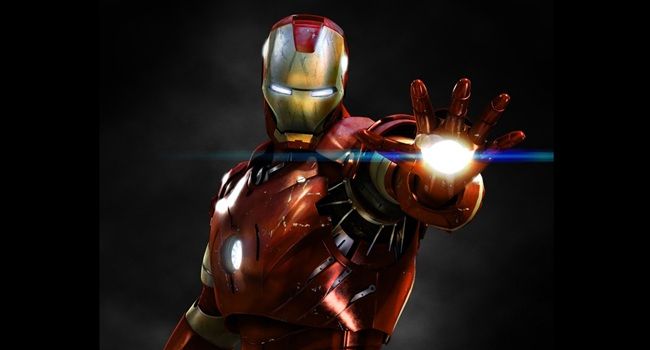
Science fiction has always been a powerful source of inspiration, sparking the imagination of millions of people. Space travel, superhuman abilities, and revolutionary gadgets—these elements of the genre invariably captivate audiences. Many of them once seemed like pure fiction, but reality is rapidly catching up with imagination.
Iron Man suit: combat and medical exoskeletons
One of the most coveted gadgets is Tony Stark's legendary suit: superfast flight, powerful weaponry, and a smart AI assistant. In the 2010s, Raytheon introduced the XOS 2 exoskeleton, which significantly increased human strength.
Today, the technology has stepped far forward. Modern exoskeletons (such as TALOS and developments by Sarcos Robotics and Ekso Bionics) allow soldiers to carry heavy equipment, tire less, and move faster. In medicine, they help paralyzed people walk again, and in manufacturing, they reduce strain on the back. A fully functional flying Iron Man does not exist yet, but integration with AI, powerful batteries, and lightweight materials is bringing the dream closer to reality.
Invisibility cloak based on metamaterials
In Predator and Harry Potter, an invisibility cloak completely hides a person or object. The first real versions, created in laboratories in the 2010s, worked only with specific wavelengths of light.
By 2026, progress has become more noticeable. Metamaterials are already being used in satellite antennas, radars, and stealth drones. In 2025, scientists from KAIST (South Korea) presented a "smart stretchable invisibility cloak" based on liquid metal ink—it effectively hides electromagnetic waves even during movement and stretching. Prototypes have appeared for microwaves, sound, and partially visible light. Full all-wave invisibility does not exist yet, but the technology is moving from laboratories to practical products.
Teleporter: quantum teleportation
Everyone who watched Star Trek has dreamed at least once of instantly appearing in another place. Unfortunately, in reality, we are not yet talking about the ability to transport people, but only about the quantum teleportation of information.
By 2026, quantum teleportation has become a reality. Scientists have successfully transmitted quantum states of photons over real fiber-optic networks over distances exceeding 30 km (even through regular internet traffic), as well as between quantum dots over hundreds of meters in free space. Fidelity reaches 82–95%. This is the foundation for quantum internet, ultra-secure communication, and future computing systems. Ethical questions about preserving identity during a hypothetical teleportation of a human remain a subject of discussion, but for data, the technology works.
Tractor beam
A technology from Star Trek that allows capturing and moving objects using a beam of light is also entering real life.
Laboratory experiments confirm its feasibility. Scientists create spiral light beams that move microscopic objects. NASA is studying its application for sample collection in space and clearing orbit of debris. Although the power is not yet sufficient for large objects, progress continues and could become an important tool for future space missions.
Laser blaster: combat laser systems
The Empire's Stormtroopers with blasters are no longer alone. The military has long been working on directed energy.
The US Navy has deployed HELIOS systems (with power exceeding 60 kW) on destroyers, which successfully strike drones, missiles, and artillery shells. Tests for LOCUST and the Joint Laser Weapon System (up to 150–300 kW) took place in 2025–2026. Laser weapons feature a low cost per "shot" (around 1 dollar) and high precision. Large-scale deployment is planned by 2028. This is no longer an experiment, but a real tool of modern defense.
Hoverboard: levitating board
Popularized by Back to the Future Part II, this gadget is also becoming a reality. Lexus and Hendo created working prototypes in the 2010s.
The Lexus Hoverboard used superconductors cooled by liquid nitrogen and hovered over a magnetic surface (flight time was about 10 minutes). Hendo worked on electromagnets over a conductive coating. These devices exist as demonstration prototypes but have not gained widespread adoption due to the need for a specialized surface, weight, and limited operation time. They remain a vivid example of imagination brought to life, inspiring further developments in magnetic levitation.
Biomedical scanner: genomics and full-body scanning
In the movie Elysium, a medical pod instantly diagnosed and cured diseases.
Human Longevity offers comprehensive diagnostics: whole-genome sequencing, whole-body MRI, analysis of hundreds of biomarkers, and AI data processing. In 2026, an affordable clinical report for $599 became available. The technology identifies thousands of rare genetic variants, early signs of cancer, and other risks. Although a "healing" scanner in the fullest sense does not exist yet, preventive medicine based on this data is already significantly increasing life expectancy and quality.
Hibernation pod: therapeutic hypothermia
An integral attribute of long-term space flight in Prometheus, Interstellar, and Passengers is the hibernation pod.
SpaceWorks Enterprises is developing personal stasis pods based on therapeutic hypothermia. Body temperature decreases, and metabolism drops by 50–70%, saving resources. The technology is being tested for missions to Mars with sleep periods lasting several months. Medical applications are already being used to stabilize trauma patients. Full multi-year hibernation remains a future prospect, but short-term "torpor" is becoming a reality for space.