make preferable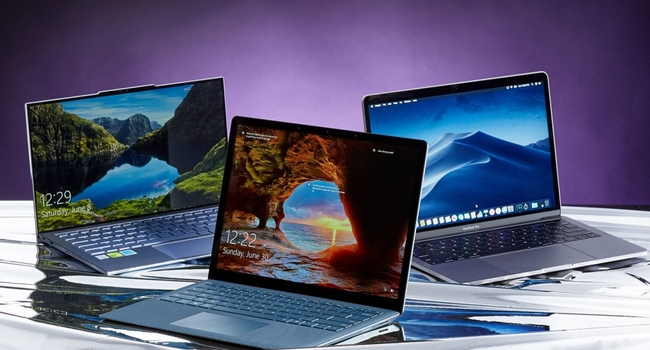
Samsung Electronics and LG Electronics have each raised laptop prices twice within a three-month period, resulting in some models becoming nearly 50% more expensive than last year—as the global memory chip shortage continues to impact the consumer electronics market.
The flagship Samsung Galaxy Book 6 Pro (32GB RAM / 1TB SSD) is now retailing in South Korea for 4.19 million won (approx. $2,847), compared to 2.81 million won for a comparable model a year ago, according to the Korea Herald. Samsung set higher launch prices in January and implemented a second hike this month, adding up to 900,000 won ($613) to the price tag.
The top-tier Galaxy Book 6 Ultra now starts at 5.53 million won ($3,767). In the U.S., the Galaxy Book 6 Pro’s price rose from $1,599 to $1,799, while the Galaxy Book 6 Ultra jumped from $2,449 to $2,899.
LG has followed a similar trajectory. Its 2026 Gram Pro 16-inch model launched in January at 3.14 million won—roughly 500,000 won more than its predecessor—before increasing by another 400,000 won in April to reach 3.54 million won ($2,411). According to the Seoul Economic Daily, this model’s price has climbed by nearly 1 million won ($740) in a single year.
AI-Driven Memory Shortage
The root cause is the diversion of global memory production capacity toward Artificial Intelligence needs. Samsung, SK Hynix, and Micron—which control over 90% of the global memory market—have prioritized High Bandwidth Memory (HBM) for AI data centers at the expense of standard chips used in consumer devices. According to Counterpoint Research, prices for general-purpose memory surged 80–90% quarter-on-quarter in early 2026. Omdia reports that the price of 16GB DDR5 modules rose from $72.20 in Q4 2025 to $119.20 in Q1 2026, with forecasts reaching $167.60 by year-end.
Smartphones Under Fire
The pressure is felt far beyond the laptop market. Samsung released the Galaxy S26 series in February, with the base S26 and S26+ models priced $100 higher than their predecessors. Since then, the company has quietly raised prices for higher-storage versions of the Galaxy Z Fold 7, Galaxy Z Flip 7, and nearly all Galaxy tablets currently on sale—some by more than $280.
IDC forecasts that global smartphone shipments in 2026 will decline by 12.9% to 1.12 billion units—the lowest in over a decade—while average selling prices (ASPs) will rise by 14% to a record $523.
Industry experts in South Korea have coined the term "memflation" to describe this phenomenon. "The impact of these factors is likely to persist until the second half of 2027," noted Counterpoint Research's senior analyst Jan Stryjak.