make preferable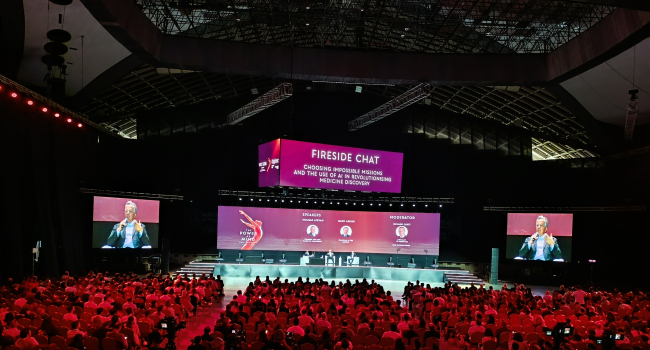
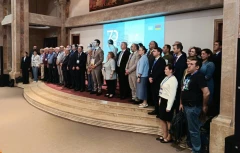
The panel discussion at the World Congress on Information Technology (WCIT) addressed the role of artificial intelligence (AI) in science and medicine, the challenges it presents globally, the problems it solves, and Armenia’s potential in the AI field.
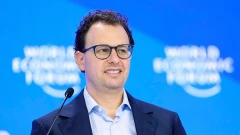
Participants included Nubar Afeyan, an Armenian-American entrepreneur and co-founder of Moderna, and Karô Armen, an Armenian-American entrepreneur and founder of the Children of Armenia Fund (COAF). The discussion was moderated by CNN journalist Richard Quest.
The Role of AI in Transforming Medicine
Both panelists agreed that AI is already a part of our lives, rapidly evolving, and becoming an increasingly integral element across various sectors. Nubar Afeyan, a veteran in biotechnology, shared his early experiences with AI in the 1980s. Back then, AI was at a very early stage, operating through "expert systems" that aimed to mimic human decision-making processes. Today, he noted, AI’s applications have greatly expanded, especially in biotechnology, where it can accelerate medical discoveries and develop personalized treatments.
Afeyan recalled how six years ago his team began to ask if it was possible to predict a protein’s function just by looking at its DNA sequence. He pointed out that today, AI can analyze vast amounts of biological data, and this capability continues to improve daily. This breakthrough enabled his team to create entirely new proteins without relying on traditional methods, significantly speeding up the discovery process in the medical field. He emphasized that it is now possible to design pathways, cells, and much more based on data-driven models, highlighting AI’s transformative impact on medicine.
Karô Armen, who had personally engaged in cancer research when his mother was diagnosed with the disease, shared that his life’s work had been focused on harnessing the human immune system to treat diseases like cancer. He stressed that AI could continue this mission by enhancing treatment outcome predictions. He raised the question of whether 100% accuracy could be achieved through AI and expressed confidence in its potential, noting that AI could predict which patients are most likely to respond to specific treatments, advancing personalized medicine.
Ethical Issues
Despite the potential of AI, both speakers highlighted the ethical challenges that come with its widespread use. Nubar Afeyan remarked that while AI is a unique technology that expands our ability to acquire knowledge, it also carries significant risks. AI can make decisions traditionally made by humans, decisions with serious consequences. For example, AI could be used to determine which patients should receive life-saving treatment based on calculated probabilities of success. This raises ethical concerns about fairness and human accountability.
Moderator Richard Quest noted the fear that one day AI might decide who should live and who should not, based on economic, social, or other factors. Afeyan responded by stating that while AI can improve decision-making processes, the ultimate responsibility must remain with humans. He explained that AI doesn’t need to be perfect; it just needs to be as good as or better than humans in complementing our capabilities. However, the responsibility should still rest with people.
Afeyan believed this was crucial for maintaining accountability in a world increasingly reliant on machine-made decisions.
Karô Armen added that empathy is the key feature that should be integrated into AI systems. He stressed that by incorporating compassion into the equation, kindness would dominate AI’s outcomes. This, he argued, underscores the importance of human values in steering the development of AI technology in the right direction.
The Battle Between Good and Evil
During the discussion, the participants also touched on the topic of AI being a tool that, like any other, can be used for both good and evil. Karô Armen compared the emergence of AI to the early days of the Internet, when there were concerns about its misuse. While the Internet has certainly been used for harmful purposes, its benefits have far outweighed the negative aspects. Armen expressed his belief that AI would follow a similar trajectory.
He acknowledged that people could use AI for malicious purposes to assert their power. However, he believed that the positive use of AI could ultimately prevail, depending on the scale of its application. He hoped that the good aspects of AI would outweigh the bad.
The moderator gave the example of the proliferation of nuclear weapons, asking whether AI faces a similar dilemma. Nubar Afeyan agreed that regulation alone would not solve AI’s ethical problems, especially since not everyone plays by the same rules. He stressed the need to proactively guard against AI’s harmful potential, likening it to how U.S. intelligence agencies had to anticipate worst-case scenarios after 9/11 to prevent future threats.
Afeyan emphasized that society must envision the capabilities of bad actors and suggested that the best way to protect against the misuse of AI is to always stay one step ahead of those with malicious intentions.