


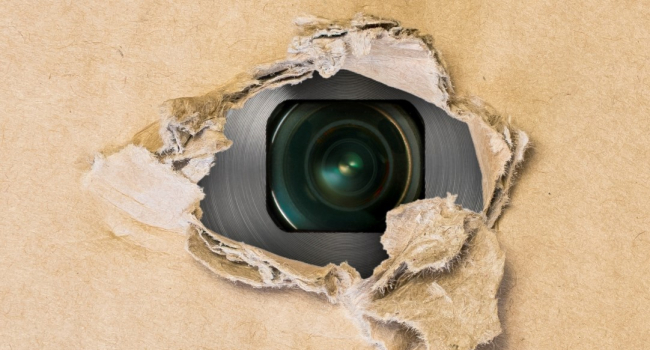
Smartphone learns to find hidden cameras in five seconds
Engineers at the Korea Advanced Institute of Science and Technology (KAIST) have developed SweepLED, a system that turns an ordinary smartphone into a hidden-camera detector. The device uses a specialised case equipped with LEDs and machine learning algorithms to identify spy lenses in rental apartments and hotels.
Why Conventional Methods Fall Short
Traditional ways of locating hidden cameras often prove unreliable. The usual approach involves scanning a room and looking for bright reflections from lenses. The problem is that glossy buttons, metallic furniture fittings, and other shiny surfaces reflect light almost as effectively as camera lenses. As a result, sensors regularly produce false positives, leaving users without full confidence in the room's safety.
How SweepLED Works
The new system addresses this problem with a case fitted with an array of LEDs. The user points the smartphone camera at a suspicious object and holds the device steady at three different angles. Meanwhile, the LEDs scan the surface with varying illumination, and the phone's camera captures the subtlest changes in reflected light.
A neural network analyses the series of images and identifies spatiotemporal reflection patterns. Hidden camera lenses have complex internal structures, so they respond to changes in lighting angle differently from ordinary shiny objects. It is precisely this distinction that allows the system to tell a genuine lens from an everyday reflection.
How Effective Is It
In tests on 30 objects, the system achieved 94% accuracy during manual scanning. The entire process takes less than five seconds. The developers emphasise that this approach significantly reduces false alarms compared with conventional detectors.
Why This Matters
The issue of hidden cameras in rental accommodation has reached global proportions. Travellers regularly face the risk of illegal recording, and short-term rental platforms cannot always guarantee safety. Cameras are concealed in clocks, power sockets, smoke detectors, and other household items.
SweepLED allows guests to check a room using a familiar smartphone and an additional case. This makes inspection simpler and more accessible for ordinary travellers.
In Brief
Engineers at KAIST have created SweepLED—a case with LEDs and a machine learning algorithm that turns a smartphone into a hidden-camera detector. The device scans a surface from different angles and, based on reflection patterns, distinguishes camera lenses from ordinary shiny objects. In tests, accuracy reached 94%, and a scan takes less than five seconds. The development is intended to help travellers find spy cameras in rented accommodation more quickly.
- Tech Jobs
- Most read
month
week
day
- Top tablets of August 2026: Experts name the best five 1676
- Top flagships of August 2026: Experts name the five best smartphones 1513
- 50,000 subscriptions and AI for schools: How Armenia plans to use artificial intelligence in education 849
- Samsung unveils monitor with record-breaking 1100 Hz refresh rate 695
- WhatsApp to introduce full passwords instead of PIN codes 650
- Scientists have learned to predict how muscles will adapt to lunar gravity 603
- Two comets will be visible in Autumn 2026 599
- Foldable iPhone appeals to almost no one: Three-quarters of Americans don't want one 599
- A simple way to spend less time on your phone: Choosing your own goals? 584
- Would a nuclear explosion stop a city-killer asteroid? 576
- Archive