


Molecule-sized technologies։ How nanorobots are reshaping medicine
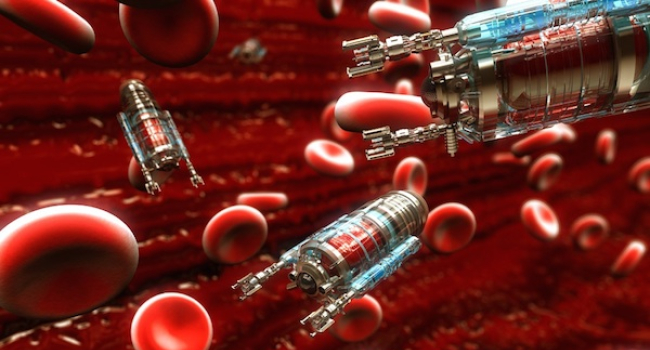
Until recently, nanorobots operating inside the human body seemed to belong exclusively to the realm of science fiction. Today, the landscape is gradually shifting. Although the widespread clinical application of such technologies remains a distant milestone, many developments have already transcended theoretical frameworks to undergo laboratory testing, and a few have been successfully trialed in animals. Experts consider nanomedicine to be one of the most promising frontiers of modern science, capable of fundamentally altering our approaches to treating oncological, cardiovascular, and other severe conditions in the future.
Robots without gears
In reality, modern nanorobots bear no resemblance to miniature replicas of conventional machinery. At the scale of one-billionth of a meter, the laws of physics behave differently, prompting researchers to utilize programmable nanostructures instead of micromotors. The most mature sector is DNA origami technology.
Scientists fold DNA molecules into three-dimensional architectures designed to transport medication to target cells and release the payload only upon coming into contact with a specific biomarker. Concurrently, progress is being made in magnetic nanoparticles controlled from external sources, alongside synthetic nanomotors that utilize the body's internal chemical energy for locomotion.
Where they can be applied
The primary application for these systems is targeted drug delivery, particularly within oncology. This enables localized treatment of a tumor while minimizing the strain exerted on surrounding healthy tissues, thereby mitigating the severe side effects associated with conventional therapies. Equally promising are innovations engineered to break down blood clots and atherosclerotic plaques, as well as systems for internal physiological monitoring. In the foreseeable future, miniature sensors could permanently track glucose levels, inflammatory processes, and other vital indicators, transmitting data to physicians in virtually real time.
The overarching challenge lies not in fabricating the nanorobots themselves, but in ensuring their safe operation inside the body. Researchers must solve several complex challenges simultaneously: preventing an immune response, ensuring the complete biocompatibility of materials, learning to accurately steer nanoparticle movement, and guaranteeing their safe excretion once their function is fulfilled.
The future is closer than it appears
A handful of technologies have already demonstrated encouraging breakthroughs. Programmable DNA nanorobots successfully cut off the blood supply to tumors in laboratory animals, while micromotors designed for antibiotic delivery proved more effective at combating the Helicobacter pylori bacterium than traditional medical treatments.
For now, the vast majority of these projects remain in the preclinical stage or are navigating early-phase trials. However, the sheer velocity of nanomedical development suggests that it could emerge as one of the most vital pathways in modern medicine in the coming years, unlocking entirely new opportunities for treating cancer, cardiovascular disorders, and other life-threatening illnesses.
- Related News
- Beijing opens "Kindergarten" for robots: Machines learn from their own mistakes
- Robot knocks out teeth of five year old girl: Incident at Chinese museum leads to lengthy compensation dispute
- Humanoid robots could appear on the US border: company has already shown the technology to law enforcement
- Morgan Stanley nearly doubles China humanoid robot forecast
- AI-powered robots could pose a threat: Researchers warn of new risks
- Robot.com introduces R-noid: A wheeled humanoid for warehouses and restaurants
- Tech Jobs
- Most read
month
week
day
- Top tablets of August 2026: Experts name the best five 1723
- Top flagships of August 2026: Experts name the five best smartphones 1581
- 50,000 subscriptions and AI for schools: How Armenia plans to use artificial intelligence in education 872
- Samsung unveils monitor with record-breaking 1100 Hz refresh rate 732
- Two comets will be visible in Autumn 2026 725
- WhatsApp to introduce full passwords instead of PIN codes 659
- Foldable iPhone appeals to almost no one: Three-quarters of Americans don't want one 621
- A simple way to spend less time on your phone: Choosing your own goals? 607
- Would a nuclear explosion stop a city-killer asteroid? 601
- How to work with neural networks properly: 5 rules that actually help 584
- Archive