




 make preferable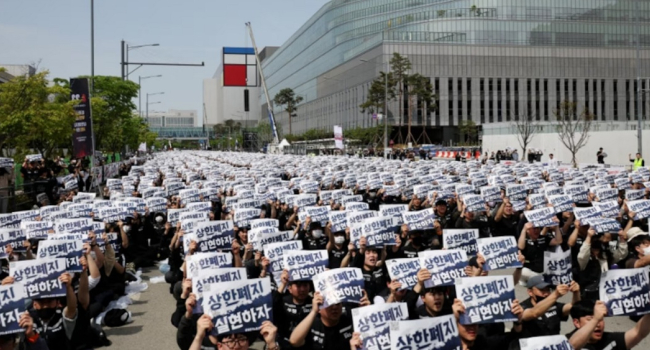
South Korean tech giant Samsung Electronics is facing a serious internal crisis. More than 45,000 employees are threatening to launch an 18-day strike beginning on May 21 — potentially the largest walkout in the company’s history. The conflict centers on the uneven distribution of massive profits generated by the artificial intelligence boom, Reuters reports.
Dispute over bonuses
Samsung has proposed generous employee bonuses, but with major disparities between divisions. Workers in the memory-chip business — currently the company’s most profitable segment thanks to soaring demand for AI hardware — could receive bonuses worth up to 607% of their annual salary.
At the same time, employees working in logic-chip development and manufacturing, including the System LSI and foundry divisions that produce chips for companies such as Tesla and NVIDIA, are expected to receive only 50–100%.
The labor union argues that the gap is unfair. Employees from different divisions often work in the same facilities, and although the foundry business is currently struggling financially, it remains strategically critical for Samsung’s long-term ambitions.
A deepening internal divide
Negotiations have exposed growing tensions between Samsung’s semiconductor divisions. The company has long aimed to become the world’s only fully integrated semiconductor giant, covering everything from memory chips to foundry manufacturing. But that strategy is now creating internal friction.
Many employees are already leaving the company. The foundry division has been particularly affected, with engineers reportedly transferring either to Samsung’s more lucrative memory business or to competitors — especially SK Hynix, which has removed bonus caps and is offering significantly higher compensation.
Union leader Choi Seung Ho reportedly warned during negotiations that employees would have little motivation to remain in foundry operations if memory-division workers received bonuses worth 500 million won while foundry employees received only around 80 million won.
Consequences for Samsung — and the wider industry
Analysts at JPMorgan Chase estimate that a prolonged strike could cost Samsung between $14 billion and $21 billion in lost profits. Production of memory chips critical for AI data centers, smartphones, and laptops could all be affected.
Samsung management, the South Korean government, and foreign investors are reportedly deeply concerned. According to internal communications, the company’s chairman warned that the dispute could trigger capital outflows, reduce tax revenues, and weaken the South Korean won.
In brief
Samsung is facing what could become the largest strike in its history, with employees threatening to walk out on May 21. The dispute stems from fierce disagreements over how to distribute enormous AI-driven profits: memory-chip employees are being offered massive bonuses, while workers in the logic and foundry divisions feel left behind. The conflict has exposed deep internal divisions, accelerated talent losses, and raised concerns about global semiconductor supply chains. It also puts Samsung’s strategy of becoming a fully integrated semiconductor powerhouse under increasing pressure.