




 make preferable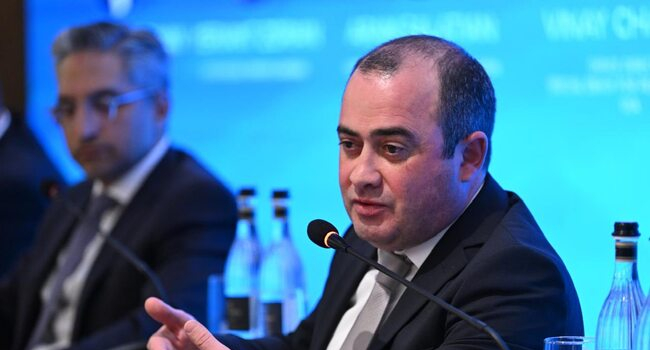
Armenia's Deputy Minister of High-Tech Industry, Ruben Simonyan, announced that the country is in the final stages of developing a new high-tech strategy. According to him, the document will be ready within the next two months and is expected to set a new direction for the country's economic development. The key emphasis is a shift away from the raw-material-based model. "Today, the value lies not in the minerals themselves, but in the technologies of their application and the final products," Simonyan emphasized.
Added Value Over Resources
Despite possessing a resource base, Armenia does not intend to limit itself to the role of a raw material supplier. According to the Deputy Minister, the modern economy is built around the processing and technological utilization of resources. He cited electric vehicles as an example: up to 30% of their cost comes from batteries based on critical minerals, primarily lithium. It is around new materials for batteries that global competition is unfolding today. The same logic, he said, applies to other components—from inverters to semiconductors. "Even if you want to create a cheaper and higher-quality product, you inevitably come back to the topic of minerals—but already in the context of technology," he noted.
Strategy: Deep Tech Instead of Outsourcing
Armenia's main goal is to transform from an IT services outsourcing country into a producer of high-tech products. Simonyan described this as a transition to a "deep tech" model—an economy based on complex engineering and scientific solutions. This is not about competing with global industrial giants. "We are not going to compete with mass production. Armenia has strong positions in niche segments," he noted. One such direction is participation in the global semiconductor supply chain.
Limitation as a Strategy: Why Armenia Isn't Building Fabs
Despite the active development of the semiconductor ecosystem, Armenia is not betting on its own chip manufacturing. The country hosts major international companies—Synopsys, AMD, Microchip Technology, Cisco, National Instruments—but most of them operate on a "fabless" model, focusing on design and research. Manufacturing, meanwhile, is outsourced to giants like TSMC and GlobalFoundries. The reason lies in the high cost and complexity of building foundries, as well as the need to remain flexible.
Armenia as a Technological Crossroads
At the same time, as Simonyan emphasized, the link between "minerals + technology" does not mean simply developing cheap manufacturing. It is about creating new products and solutions where Armenia can act either as a source of technology or as a supplier of specialized materials. "There are many areas where we maintain a strong position," he noted. Overall, the country's strategy is formulated as turning Armenia into a "deep tech crossroads"—a point where resources, technology, and innovation converge. This involves the development of not only industry but also science, the startup ecosystem, and international cooperation.