make preferable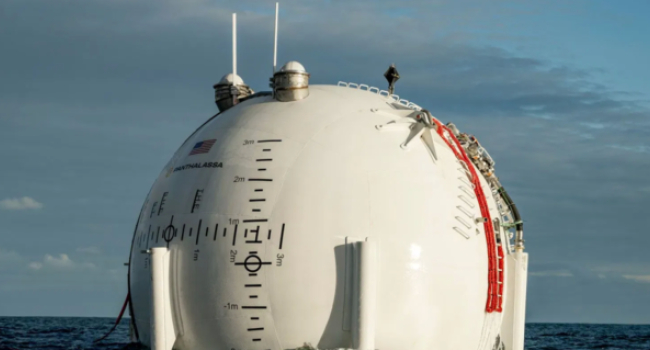
Panthalassa, a Portland, Oregon-based renewable energy and maritime technology company, announced on Monday that it has raised $140 million in a Series B round led by Peter Thiel. The funds will be used to manufacture and deploy autonomous, wave-powered computing systems designed to run AI workloads in the open ocean.
Participants in the round include several prominent tech investors: John Doerr, Marc Benioff’s TIME Ventures, Max Levchin’s SciFi Ventures, Susquehanna Sustainable Investments, Hanwha Group, Fortescue Ventures, Super Micro Computer, and Figma co-founder Dylan Field, among others. Returning investors include Founders Fund, Gigascale Capital, Lowercarbon Capital, and WovenEarth.
From Waves to Tokens
The funding will complete a pilot manufacturing facility near Portland and accelerate the deployment of Panthalassa’s Ocean-3 series nodes—autonomous floating platforms mass-produced from sheet steel that generate 24/7 power from ocean waves. Rather than transmitting electricity to shore, the nodes are equipped with onboard AI inference chips, with data processing results beamed back to land via satellite. The surrounding seawater provides free super-cooling, solving one of the most pressing engineering challenges for land-based data centers.
"There are three energy sources on the planet with the potential for tens of terawatts of new capacity: solar, nuclear, and the open ocean," said Garth Sheldon-Coulson, co-founder and CEO of Panthalassa. "We are now ready to build factories, deploy fleets, and provide humanity with a resilient new source of power." Thiel framed the investment in a broad context: "Offshore solutions are no longer science fiction," he said. "Panthalassa has opened the ocean frontier."
The Race to Meet AI Power Demands
The funding round comes amid growing constraints for terrestrial data centers, including power grid capacity shortages, water scarcity for cooling, permitting delays, and community pushback. According to the Financial Times, the round valued Panthalassa at $1 billion.
John Doerr described the technology as a "triple win: workers win, local communities win, and we gain a strategic asset that strengthens America’s technological leadership."