make preferable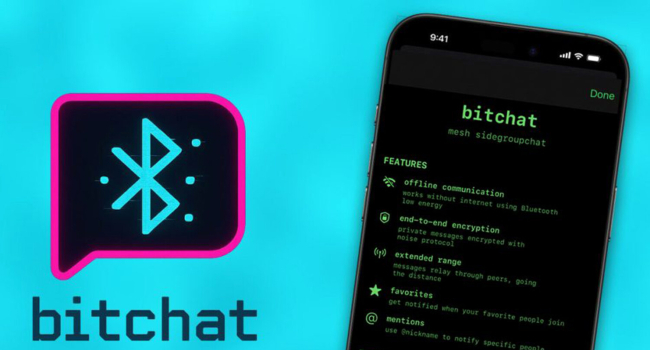
Bitchat Mesh, a new messenger developed by Jack Dorsey, co-founder of Twitter and CEO of Block, has been released on the App Store. This app, which uses Bluetooth Low Energy (BLE) mesh networks to exchange messages without the internet, has already drawn attention for its decentralized architecture and focus on privacy.
Key Features of Bitchat Mesh
- Works Without Internet: The messenger uses Bluetooth to connect devices directly, requiring no Wi-Fi, mobile network, or servers. This makes it ideal for places with poor connectivity, such as festivals, subways, airplanes, or areas with internet outages during protests or natural disasters.
- Decentralization and Privacy: Bitchat does not require registration, phone numbers, emails, or other identifiers. Messages are stored only in the device's memory and are automatically deleted after delivery. The app does not collect user data.
- End-to-End Encryption: All messages are protected by end-to-end encryption, and metadata is minimized to prevent tracking.
- Mesh Network: Messages are relayed through nearby devices, extending the range up to 300 meters (compared to the standard 100 meters for Bluetooth), thanks to a “hopping” mechanism between nodes. If the recipient is temporarily unavailable, messages are cached on intermediate devices and delivered later (store-and-forward).
- Functionality: Supports group chats (“rooms”) with password protection, mentions using @nickname, and IRC-style commands (/join, /msg). There’s a “panic mode” — triple tapping the logo deletes all app data.
- Compact Size: The app size is only 2 MB, simplifying installation and use.
- Open Source: The code is available on GitHub, allowing the community to review and improve the project.
How Bitchat Mesh Works
Bitchat uses Bluetooth Low Energy (BLE) to create a mesh network where each device acts as a node that transmits and receives messages. If the recipient is out of Bluetooth range (about 30–100 meters), the message “hops” through other devices with the app installed until it reaches the destination. This is especially useful in mass gatherings or when there’s no connection.
Upon launch, the user is assigned a random nickname (e.g., @anon1234), which can be changed. The interface is minimalistic: swiping left or tapping the “Users” icon opens the list of nearby devices. The app supports both direct messages and group chats with password protection.
Unique Features and Applications
- Offline Bitcoin Payments: Bitchat allows transmission of signed Bitcoin transaction data through the mesh network, enabling offline payments using digital wallets such as Cashu. This highlights Dorsey's interest in decentralized technologies, aligning with his support of Bitcoin and projects like Bluesky.
- Usage Scenarios: The messenger is ideal in situations where the internet is unavailable: festivals, hikes, protests, emergencies. For example, similar apps like Bridgefy were actively used during the 2019 Hong Kong protests to bypass censorship.
- Power Efficiency: BLE ensures low power consumption, and adaptive modes (from ultra-low power to performance) optimize battery usage.
Current Status and Limitations
Bitchat Mesh officially launched on the App Store on July 28, 2025, after a short beta test via TestFlight, where it quickly reached the 10,000-user limit. However:
- Bug in iOS Version: At launch, the app does not support connections with Android devices due to a bug. A fix has already been submitted to Apple for review.
- Limited Availability: The app is not yet available in all App Store regions, and there is no official Google Play version. Android users can download it via GitHub, but Dorsey warns against using unofficial sources due to the risk of malware.
- Security Concerns: Despite a focus on privacy, the project has not yet undergone an external security audit. Early beta versions revealed vulnerabilities such as spoofable contacts and issues with forward secrecy. After implementing the Noise Protocol (a framework for cryptographic protocols), some issues may have been resolved, but Dorsey advises against sharing sensitive data until the audit is complete.
Comparison with Alternatives
Bitchat is not the first messenger to use Bluetooth mesh networks. Apps like Bridgefy and the now-defunct FireChat have been used for offline communication, but they faced security issues, including encryption flaws and user tracking. Bitchat stands out with:
- Complete lack of servers and identifiers.
- Improved encryption and minimal metadata.
- Extended range (up to 300 meters).
Prospects and Future Plans
Dorsey calls Bitchat “an experiment” created over a weekend to explore mesh networking, encryption, and store-and-forward models. Future plans include:
- Support for Wi-Fi Direct to increase speed and transmission range.
- Development of an Android version, though no exact timeline has been announced.
- Possible integration with solar relays to expand coverage.
Why It Matters
Bitchat Mesh reflects Dorsey’s philosophy focused on decentralization and privacy, aligning with his work on Bitcoin and Bluesky. In times of rising censorship and internet disruptions (e.g., during protests or natural disasters), such apps provide resilient communication. Additionally, the ability to transmit Bitcoin transactions offline opens new prospects for decentralized finance.
However, the project remains experimental, and its success will depend on fixing technical issues, passing a security audit, and attracting a broad user base. Despite its limitations, Bitchat is already gaining interest as an alternative to traditional messengers like WhatsApp or Telegram and could inspire new developments in IoT and edge computing.
How to Try It
- iOS: Download Bitchat Mesh from the App Store (not available in all countries).
- Android: Download the app via the official GitHub repository, avoiding third-party sources.
- Check Bluetooth Settings: Ensure Bluetooth is enabled and that other users with the app are nearby to form the mesh network.
Bitchat Mesh is a step toward independent, secure, and decentralized communication that could change the way messages are exchanged under limited connectivity.