





 make preferable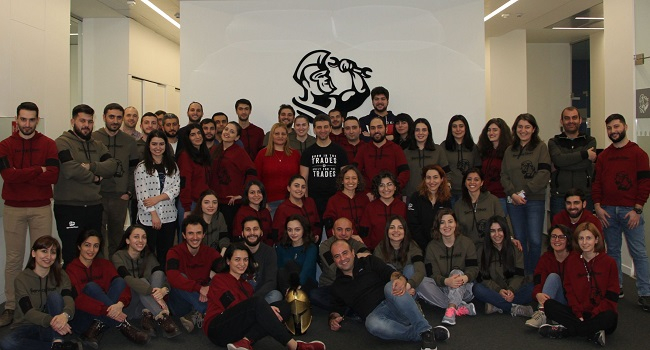
ServiceTitan recently debuted on Nasdaq, with its shares quickly rising from the initial price of $71 to $105 per share. Currently, the price has reached $108.25. Many experts believe this IPO marks a turning point for Armenia's tech ecosystem, potentially drawing more global attention to the country.
Armenia's Growing Tech Potential
ServiceTitan, which provides software for financial and customer management in trades, is the first Armenian-founded tech company to go public on Nasdaq. The company's headquarters is in Glendale, home to the largest Armenian diaspora in the United States, while its Yerevan office employs over 400 people—about half of its workforce.
As reported by benzinga.com, Armenia, a landlocked country bordering Turkey and Azerbaijan, faces challenges in exporting goods. With a population of under 3 million, nearly 10% are scientists and engineers. Furthermore, Armenia boasts over 4,000 tech companies and startups, an impressive figure given its size.
Armenia showcased its technological capabilities in October by hosting the World Congress on Innovation and Technology (WCIT). This event coincided with the local tech conference Digitec, both drawing significant attention to the country's growing startup landscape. WCIT and Armenia even caught the attention of Elon Musk, who plans to launch Starlink in the country in 2025.
Armenia’s tech legacy dates back to the Soviet era when it supplied 70% of the USSR’s military equipment. Post-independence, the country experienced a tech renaissance driven by the identification and development of local talent by Armenian Americans. This growth spurred advancements in telecommunications, IT outsourcing, and eventually the thriving startup ecosystem.
Today, major tech companies like NVIDIA, Adobe, and Microsoft have established operations in Armenia, drawn by its skilled and promising workforce. Startups like Picsart, which achieved unicorn status, and recent funding successes of companies like Podcastle and EasyDMARC further solidify Armenia's reputation as an emerging tech hub.
Currently, Armenia ranks 57th among the world’s top tech hubs, while its capital, Yerevan, quietly grows as a startup center. According to the Startup Blink 2024 Global Ecosystem Index, Yerevan climbed 21 spots to 200th globally.
Armenia’s global diaspora, which exceeds the domestic population by over twofold, also contributes to the country’s tech development. Companies like ServiceTitan exemplify how the diaspora connects talent and resources between Armenia and the global market.
Challenges and Opportunities
Despite its deep technical expertise, Armenia faces challenges in business development and global market integration, according to benzinga.com. Experts argue that limited global awareness hinders the country’s progress.
Matthew Zane, founder of Life in Armenia, believes that Armenia needs more strategic positioning to enhance its global visibility. This is essential for the regional ecosystem to attract investments and create more opportunities for partnerships.
The conflict between Ukraine and Russia has brought an influx of relocators from Russia to Armenia. Many experts see this as a chance to open new opportunities, but the challenge lies in retaining these individuals and attracting even more new residents.
Outsourcing is not highly advantageous for Armenia, especially given the strong local currency. Many experts believe the most promising path forward is transitioning from outsourcing to creating innovative products. This shift would position Armenia as a prominent player in the global startup ecosystem.
“Armenia is going through a transformation, leaving the outsourcing model to product and innovation because of the limited amount of labor and the exchange rate appreciation over the last couple of years,” said Samson Avetian, founder of Eqwefy, a platform enabling investment into Armenian startups.
“In such cases, we are less cost competitive and need to work on higher value products. This would always be the case, but over the past couple of years, it has moved more acceleratedly,” Avetian says.