make preferable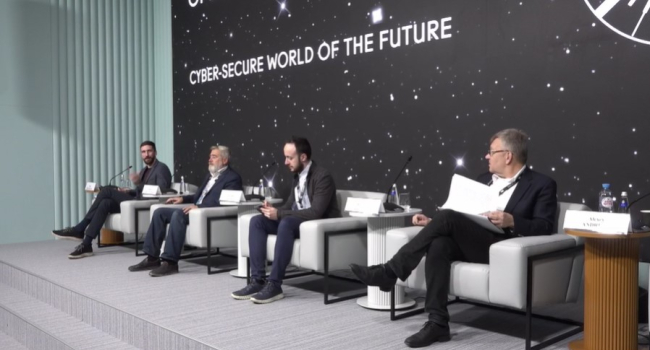
How will security threats evolve in the virtual world of the future, how can artificial intelligence (AI) strengthen cyber security and what risks does it pose, which global cooperation models are most effective for security management and what innovations will help protect critical infrastructure in 2050. The panel discussion under the title "Cyber-secure world of the future" organized within the framework of the "Creating the Future" symposium held in Moscow on November 4-6 was dedicated to these topics.
Andrey Masalovich, the founder of the modern school of internet intelligence in Russia, the creator of the Avalanche search system, the president of the Inforus consortium, referring to issues related to cyber security in the future, presented several possible technological trends, which, according to him, will be relevant in the near future. The first is that by the summer of 2025 ChatGPT will have problems because there will not be enough data to teach the neural network new things. Secondly, there will be a large number of attacks on important information infrastructures in the future.
According to Andrey Masalovich's next scenario, artificial intelligence (AI) integration will take place in the future and AI will be prepared for hacking attacks. Fourth, AI will be integrated into intelligence. Fifth, an autonomous weapon will appear, which will work with AI. According to him, such experience already exists. Sixth, multi-agent AI systems and swarm (group) AI systems will emerge (swarm intelligence - studies the collective behavior of a decentralized self-organizing system). Seventh, the necessary environment for development and use of AI will be created.
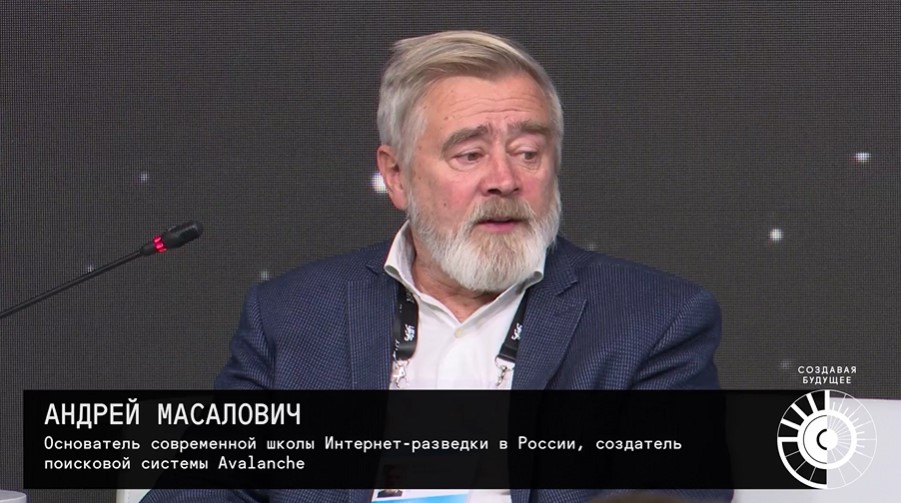
In addition, according to him, algorithms will appear in the future that will analyze the reliability of data, this will also apply to the cases of deepfake. Ninth, there will be a transition to Kolmogorov-Arnold type neural networks. According to Masalovich, those who will be able to build neural networks on this model now will see that they are several times more compact and fast. The tenth and most important trend, according to him, will be the loss of digital privacy, which AI will bring with it. "Get over it," he said.
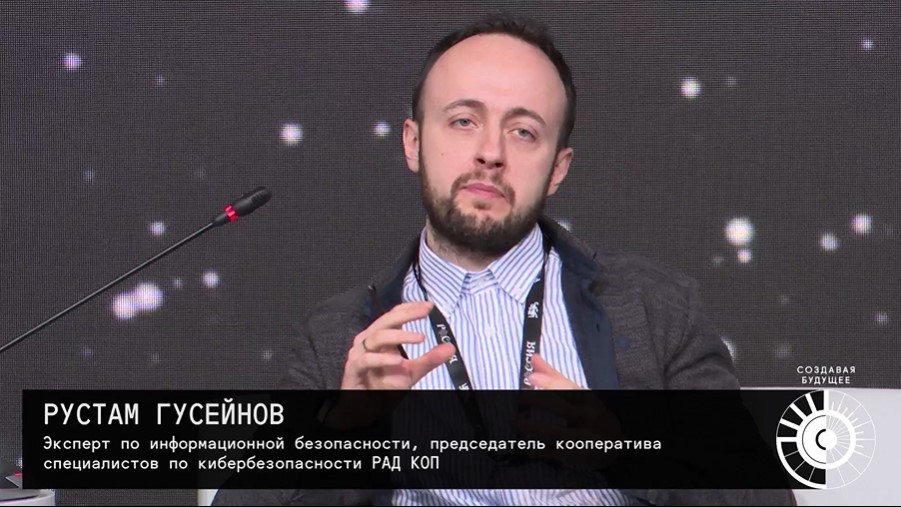
Rustam Huseinov, an information security expert and the president of the RAD KOP cyber security specialists' cooperative, says that in each period there are trends characteristic of a specific region, and the capabilities of humanity are often overestimated. For example, judging by the sentiments of a few decades ago, it was possible to predict that in the 2000s, humanity should have set foot on the planet Mars, but this is not the case, because predictions do not always come true.
Rustam Huseinov says that considering the kind of changeable, complicated and complicated world we live in now, he will refrain from making predictions about either positive or negative scenarios. According to him, it should also be taken into account that there is no sector that operates separately and independently. all are interrelated, and when making any forecast, different areas should be taken into account, because there may be independently observable developments in this or that area, which will affect our forecast. According to him, it should be remembered that if any prediction about the future is made based on one or two spheres, there is a high probability that it will be wrong, it will not come true. "And we often forget about it," he said.
Predrag Čeranić, Doctor of Defense and Security Sciences, Dean of the Security Faculty of the University of Banja Luka presented the possible scenarios for the future. According to him, in the future, when technologies develop even more, more realistic virtual individuals appear, the theft of personal data may take on a different nature. According to him, since the prices of virtual property and digital assets are increasing, they will become the main target of cyber crimes.
"In a virtual world, where people communicate and exchange information with virtual avatars, the threats of social engineering will increase, which will aim to exploit people's emotions, behavior and trust," he said.
According to Predrag Čeranić, malicious software and "intelligent cyber threats" can appear thanks to advanced AI. As people begin to work in virtual environments, participate in social interactions and daily activities, the data collection process will include biometrics, eye tracking, movement models and personal interactions.
"The virtual world can offer new possibilities that can be used to track and taunt people. Criminals can use the immersive functions of technology to create dangerous situations for other people," he said.
In the future, he said, attackers could attack the underlying infrastructure of virtual worlds by launching DDoS attacks or malware that destabilize the network of servers that host massive interconnected virtual environments users see or hear in real life As businesses operate in virtual worlds, espionage and corporate espionage can target digital areas to gain competitive advantage.

In the future, according to Predrag Čeranić, AI will be used even more to increase cyber security. However, along with it, AI can bring risks with it, for example, cyber attacks using AI itself, or sometimes sophisticated AI algorithms can raise a false alarm. According to him, states should be involved in the fight against cyber security, exchange programs of experts in the field should be implemented, legislative mechanisms should be implemented and new ones should be developed if necessary.
Speaking about what innovations could be used to protect critical infrastructure by 2050, he noted that quantum computing is expected to change traditional encryption methods, which is why quantum stable cryptographic algorithms will be crucial. Blockchain technology will offer a reliable way to ensure the protection of critical infrastructure.
Writer, futurist, senior technical marketing manager of Kaspersky Lab, Aleksey Andreev, says that perhaps the main problem with cyber security is widespread access to the Internet, the ability to be constantly connected. He compared the situation to the last century, when they began to gradually use more sugar in various products, and as a result, the sugar industry developed. However, it brought with it a number of diseases, as a result of which a separate industry in medicine developed, which began to deal with these diseases.
Alexey Andreev singled out three trends of the future, which, according to him, are important. The first is universal spying. If in the past people were spied on by the special services, now who knows? The second trend, according to him, will be that people will be carried away by AI technologies. "The AI boom has been over for a long time, around the last century, because all the AI algorithms that are used now were created in the last century. The last 25 years are the marketing period of AI. AI is served to us with different sauces, and basically no one knows what AI is," he said.

According to him, people should be ready to live in an era where AI will be widely used, including in the field of cyber security. However, the same AI will regularly reveal problems that will not always be real and will cause unnecessary inconvenience to people. According to Alexey Andreev, in the next 20 years, people will live in a world where the AI will make many decisions. For example, a person will go to a bank, an embassy, they will not give him a loan, a visa, and no one can answer why, because the decisions will be made by the AI, which takes into account thousands and millions of parameters. "You have to be psychologically ready for it," he added.
The third trend, he says, will be that the Internet we use today will one day no longer exist, instead there will be several different Internets, and from a cybersecurity perspective, that's probably for the better, because if a problem occurs today with today's Internet, there will be no alternative.
"If everyone has a Microsoft Windows operating system installed, if there's a vulnerability in it, all the people's computers running Microsoft Windows will crash," he said, citing an incident this year when Counter Strike updated its code. , and computers running on Windows failed, as a result, the work of a number of airports and factories stopped. Therefore, according to him, it is much better to have different networks, different security systems.
It should be noted that NEWS.am is the information sponsor of the "Creating the Future" symposium.