


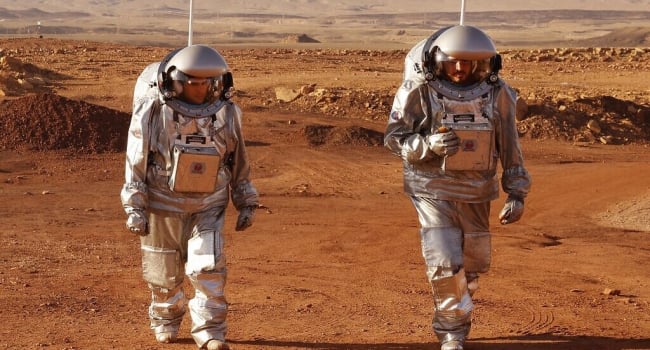
What will happen to the human body on Mars?
Mars may prove to be too light for the human body. We are accustomed to living under Earth’s gravity, and over millions of years of evolution, our bones, muscles, heart, and balance system have adapted to it. But as soon as a person arrives on the Red Planet, the familiar physical conditions will change dramatically: Martian gravity is only about 38% of that on Earth.
At first, this may seem like an advantage. Jumping will become easier, and lifting heavy objects will require less effort. But for the human body, this kind of “weightlessness” is far from harmless. If a person spends months or years on Mars, their body will begin adapting to the new environment — and not necessarily in a beneficial way. In his study Towards Sustainable Horizons: A Comprehensive Blueprint for Mars Colonization, researcher Florian Neukart examines the changes the human body may undergo in such an unfamiliar environment.
Bones will begin to lose strength
On Earth, the skeleton is constantly subjected to mechanical stress. Every step, climb up a staircase, run, or even simply standing upright forces bone tissue to work against gravity.
On Mars, this load will decrease dramatically. According to the study, reduced mechanical stress on the bones may lead to a decline in bone mineral density. Over time, this could result in osteopenia and, in more severe cases, osteoporosis, in which bones become weaker and more fragile.
This is one of the fundamental paradoxes of life on Mars: physically, it will be easier for people to move their own bodies, but the absence of the familiar load will itself become a threat to the skeleton.
And even if this does not become a major problem while living on Mars, it could become a serious issue upon returning to Earth. Neukart’s study does not provide a specific prediction of how quickly or how severely the bone tissue of a Martian settler might change. However, the need for further research into the consequences of low gravity suggests that returning to Earth’s conditions will not be a simple process.
The proposed strategy relies primarily on artificially creating mechanical stress. The study considers regular weight-bearing exercise, as well as pharmaceutical approaches and a diet containing sufficient calcium and vitamin D. In practice, future Mars residents may have to deliberately create the physical stresses their bodies experience naturally on Earth.
This means that a gym in a Martian settlement will not simply be a place for recreation or staying in shape. It will be part of the life-support system. Exercise will become as essential as monitoring blood pressure, temperature, or air composition.
Muscles will work less — and become weaker
The same problem applies to the muscular system. On Earth, muscles are constantly working against gravity. Even ordinary standing requires the coordinated effort of numerous muscles. On Mars, body weight will be significantly lower, meaning that part of the usual muscular load will disappear. The study suggests that reduced physical loading in low-gravity conditions can lead to muscle weakness and atrophy.
This means the changes will not necessarily occur because a person becomes less physically active. Even with ordinary levels of activity on Mars, their body will be exposed to a fundamentally different type of physical stress.
For future settlers, this could have direct practical consequences. A Martian colony will require people to have enough physical strength to repair equipment, operate machinery, move cargo, build structures, and respond to emergencies. If muscles gradually lose mass and strength, this will become not only a medical issue but also an operational one.
The colony could become dependent on the physical capabilities of every individual, particularly during the early stages, when the population is still small.
The heart and circulatory system will also face a new gravitational environment
Even more complex changes may occur inside the body. Reduced gravity affects the distribution of fluids. On Earth, gravity contributes to the way blood is distributed between the upper and lower parts of the body. When the gravitational load changes, this system has to function under very different conditions.
The study discusses the possibility of fluid redistribution, changes in blood volume, and the development of orthostatic intolerance — a condition in which the body has greater difficulty responding normally to changes in posture.
This is particularly important when a person moves between different levels of activity. The body must constantly maintain adequate blood flow to the brain and other organs. If the cardiovascular system adapts to living at 0.38 g, returning to Earth’s gravity could become a significant physiological challenge.
The study proposes several ways to counteract these changes, including compression garments, cardiovascular exercise, and careful hydration management.
In other words, monitoring the body’s condition will become a constant part of life in a Martian settlement. It will not be enough to simply measure temperature or blood pressure from time to time. For people living for years in reduced gravity, it will be necessary to track physiological changes that develop gradually.
This points to another distinctive feature of Martian medicine: doctors will not simply have to treat diseases after they appear. They will have to constantly prevent physiological deterioration.
Vision may change due to fluid redistribution
One of the most unexpected consequences of low gravity involves vision. Changes in eyesight have already been documented in many astronauts, and on Mars this could become a chronic problem: blurred vision, swelling of the optic nerve, and changes in intraocular pressure.
The study links potential visual problems to changes in intracranial pressure caused by fluid redistribution under reduced gravity.
In other words, the problem may not originate directly in the eyes. Changes in the gravitational environment affect the movement of fluids throughout the body, which in turn can affect the visual system.
For a Martian settler, good vision will be critical. On Earth, deteriorating eyesight can be managed with glasses, contact lenses, or medical treatment. On Mars, the situation will be more complicated: a person could be hundreds of millions of kilometers away from the nearest full-scale medical infrastructure. The condition of their eyes will therefore need to be monitored regularly.
The study considers eye-health monitoring, specialized vision-correction methods, and regulation of pressure inside living quarters as possible ways to reduce the risk.
It won’t just be the body that changes — physical sensations will change too
Martian gravity will also alter the mechanics of movement itself. The study notes that Mars has approximately 0.375 times Earth’s gravity, which affects traction, stability, and the behavior of equipment on the planet’s surface.
For humans, this will mean an entirely different experience of movement. Their bodies will weigh significantly less, their movements will feel different, and familiar Earth-based assumptions about speed, effort, and balance will no longer work in quite the same way.
However, it is important not to confuse the sensation of lightness with physiological safety. The fact that a person can lift a heavy object more easily or jump higher does not mean that their body is receiving enough physical stress to remain healthy.
This is one of the defining features of life on Mars: externally, a person may feel physically freer, while internally, their body may gradually suffer from a lack of the mechanical load it evolved to withstand.
What will happen to children born on Mars?
The most difficult question arises when we stop talking about adults who have traveled from Earth and start thinking about the next generation.
Neukart’s study examines the potential health consequences of reduced gravity, but it does not provide sufficient evidence to determine exactly how a child born and raised on Mars would develop. Therefore, claims that such people would necessarily develop fundamentally different skeletons, muscles, or body proportions would go beyond the evidence provided by this particular study and would be speculative.
This is one of the most fundamental unknowns of future colonization. An adult human body develops under Earth’s gravity and then adapts to a new environment. A child whose body develops from the very beginning under Martian gravity would face a completely different situation. But exactly how different that development would be remains impossible to determine reliably on the basis of the study in question.
Radiation will add another layer of risk
Low gravity is far from the only threat to the human body.
Mars is poorly protected from cosmic radiation. The planet has no global magnetic field, and its atmosphere is much thinner than Earth’s. The study identifies radiation as one of the key factors that must be considered when designing permanent settlements. In particular, the author provides estimates of radiation exposure during interplanetary travel and while living on the Martian surface.
As a result, the future Martian human body will face two fundamentally different types of stress at the same time.
On one hand, there will be insufficient gravity, gradually altering the functioning of the bones, muscles, and cardiovascular system. On the other, there will be increased exposure to radiation, creating a separate and potentially serious health risk.
This is why the author considers underground settlements to be one possible form of protection: Martian soil could serve both as a construction material and as a radiation shield.
- Related News
- Dark matter detector captures the weakest neutrinos ever detected
- NASA successfully launches Nancy Grace Roman space telescope – "Hubble's successor"
- Antarctic microbes survived in open space
- Two comets will be visible in Autumn 2026
- Would a nuclear explosion stop a city-killer asteroid?
- What would a person see if they fell into a black hole?
- Tech Jobs
- Most read
month
week
day
- Top tablets of August 2026: Experts name the best five 1578
- Top flagships of August 2026: Experts name the five best smartphones 1330
- From Excel to AI: A startup by specialists who relocated from Iran to Armenia helps businesses make sense of their data 1145
- The anniversary iPhone 20 will be as thin as the Air: what the insider revealed 831
- Why Bill Gates is no longer an AI optimist: Three major threats of AI 804
- 50,000 subscriptions and AI for schools: How Armenia plans to use artificial intelligence in education 771
- 10,000 tiny probes to Saturn's rings and robots in lunar caves: NASA funds 18 visionary ideas 701
- Apple prepares to raise iPhone prices following Samsung and Google 659
- The Roman space telescope will reveal the Universe as Hubble and JWST cannot 648
- A ninth planet may be hiding in the Solar System 625
- Archive