


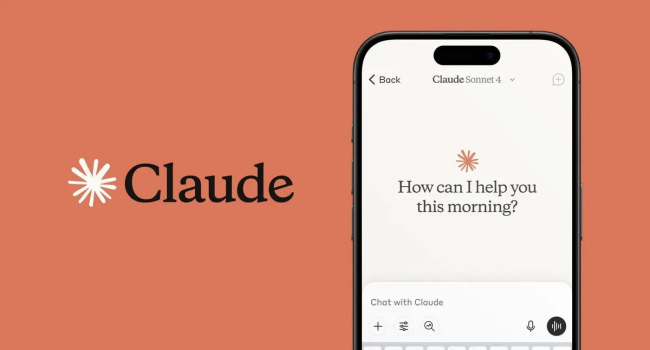
Anthropic turns Claude into a full-fledged colleague: AI will now be constantly present in Slack work chats
Anthropic has introduced a new feature called Claude Tag — a service that transforms the Claude chatbot into a permanent participant in internal Slack communications. The company calls the new feature an "always-on Claude," capable of not only responding to employee requests but also independently monitoring discussions, executing tasks, and maintaining team workflow context. The new capability will be available in beta for Claude Enterprise and Claude Team customers using Slack, according Techcrunch.
From an on-demand assistant to a digital colleague
Until now, Slack users could already interact with Claude in several ways. For instance, they could send direct messages to the bot or mention it in channels via @Claude to get help with specific questions. Additionally, the Claude Code integration allows users to hand off programming tasks from Slack to full development sessions via a web interface, with the results subsequently posted back into the discussion. Claude Tag takes this concept further. Now, it is no longer just about one-off requests to the AI, but about a digital team member who is constantly present in the workspace and accumulating knowledge about what is happening. As Anthropic notes, as Claude follows discussions in a channel, it gradually gains a better understanding of the team's specific workflows.
Moreover, if granted the necessary permissions, the system can automatically gather information from other channels within the organization. The company states: "As Claude follows its channel, it learns more and more about the work. Claude can also automatically gather facts from other parts of the organization, provided it is given access to other channels."
Shared memory for the entire team
One of the key differences between Claude Tag and previous integrations is the concept of a shared AI identity within a channel. In fact, the entire channel works with the exact same instance of Claude. This means that any team member can see what the bot was previously working on and resume the interaction right from where another employee left off. This approach aims to eliminate one of the traditional problems of corporate AI tools — the loss of context between separate requests from different users.
At the same time, Anthropic emphasizes that Claude's access to data will be strictly controlled by administrators. They are the ones who determine which channels, documents, and tools are accessible to a specific AI instance. For example, a Claude instance configured for the legal department will not be able to transfer its accumulated information into the company's engineering channels.
Independent task execution
When an employee assigns a specific task to Claude, the system can independently break it down into several steps and execute the work using available tools. Upon completing each step, the bot posts the results directly into the Slack discussion thread. In essence, Claude Tag acts as an agent capable of not only generating text responses but also organizing its own workflow to solve the assigned task. This aligns with the broader trend toward developing autonomous AI agents capable of performing sequences of actions without constant human intervention.
An AI that joins the conversation on its own
The most unusual feature of Claude Tag is its so-called "ambient mode." In this mode, the AI does not wait to be mentioned via @Claude. Instead, it independently analyzes what is happening in the channel and steps into the discussion when necessary. The system can: inform the team about important updates; draw attention to events in other departments of the company; remind about forgotten tasks; bring participants back to discussions that were left without follow-up.
Thus, Claude transforms from an on-demand tool into an active participant in workflows. Anthropic believes this approach makes interaction with the system feel more natural. The company claims it creates the feeling of working "with a real colleague — one who can do work in plain sight of the entire team and possesses a significantly broader context and understanding of what is happening."
Context becomes the primary resource for corporate AI
The launch of Claude Tag reflects a larger trend in the enterprise AI market. While previously the key advantage of language models was considered to be the quality of text generation, today more and more attention is paid to the AI's ability to understand the organization's context: company structure, project history, internal documents, correspondence, and the accumulated knowledge of employees. It is access to this very context that becomes the foundation for creating more useful digital assistants. Anthropic is by no means the only company working in this direction. Microsoft is developing a similar concept through Graph and Copilot, utilizing data from the Microsoft 365 corporate ecosystem.
Platforms like Snowflake and Databricks aim to become repositories of organizational knowledge that intelligent agents can query. A similar layer of corporate context is being developed by Glean, which creates a system that helps AI understand companies' internal data. Against this backdrop, Claude Tag looks like the next step toward the emergence of a new generation of corporate AI systems that do not just answer employee questions but become full-fledged participants in workflows.
In Brief
Anthropic has introduced Claude Tag — a new feature for Slack that transforms Claude into an always-present digital colleague. The AI will be able to follow discussions, accumulate knowledge about the team's work, execute tasks, utilize corporate context, and even independently join conversations when it deems it useful. This innovation reflects a growing industry trend: the competition among AI developers is increasingly shifting from the quality of individual answers to the models' ability to understand and utilize the knowledge of the entire organization.
- Related News
- WhatsApp to introduce full passwords instead of PIN codes
- Google now forces a 24-hour wait before APK installation: Android’s new defense against malware
- Expert explains why smartphone storage quietly fills up
- WhatsApp may soon automatically sort business messages into a separate folder
- What are some lesser-known ways to clear storage on Android smartphones?
- A full-fledged DLSS equivalent is coming to smartphones
- Tech Jobs
- Most read
month
week
day
- From Excel to AI: A startup by specialists who relocated from Iran to Armenia helps businesses make sense of their data 616
- The anniversary iPhone 20 will be as thin as the Air: what the insider revealed 598
- How NASA's primary training centre is changing in the era of commercial space stations 573
- Robot knocks out teeth of five year old girl: Incident at Chinese museum leads to lengthy compensation dispute 535
- Why Bill Gates is no longer an AI optimist: Three major threats of AI 532
- Top flagships of August 2026: Experts name the five best smartphones 520
- How to make your new smartphone more secure: expert tips 474
- 10,000 tiny probes to Saturn's rings and robots in lunar caves: NASA funds 18 visionary ideas 472
- "Dark photons" back in play: scientists revise constraints on dark matter 456
- Apple prepares to raise iPhone prices following Samsung and Google 450
- Archive