


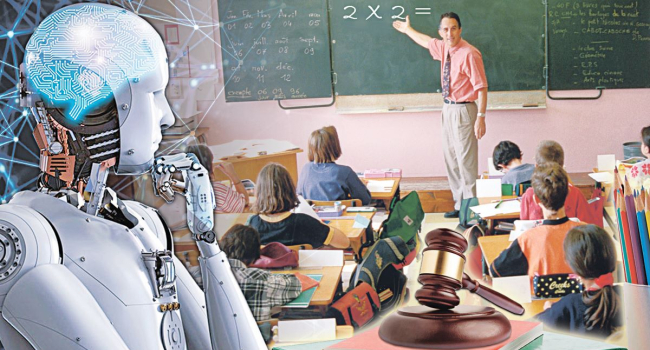
China has closed over 12,000 university majors due to AI development
China is carrying out a large-scale reform of higher education, actively cutting traditional programs and placing its bets on specialties related to artificial intelligence and high technology. Between 2021 and 2025, approximately 12,200 bachelor's degree programs were closed or suspended at the country's universities. At the same time, about 10,200 new directions were opened. In total, the changes affected more than 30% of all educational programs.
The South China Morning Post reported this, citing data from China's Ministry of Education.
Which specialties are disappearing
The greatest cuts affected humanities disciplines, the arts, foreign languages, and management. These fields are increasingly recognized as oversaturated and less in demand in the labor market. With the rapid development of AI and automation, many traditional professions are losing relevance, forcing universities to revise their curricula.
Reasons for the reform
One of the key factors was high youth unemployment, which in China exceeds 16%. The government is striving to better adapt the education system to the real needs of an economy focused on technological leadership.
In place of the closed programs, new specialties are emerging related to artificial intelligence, robotics, and digital transformation. In particular, a number of universities have already launched programs in "embodied intelligence" — a field that deals with integrating AI into physical devices, industrial systems, and robotics.
A strategic shift
The reform reflects China's long-term state strategy to transform the country into a global leader in AI. Instead of training a large number of generalists, universities are increasingly focusing on training personnel for high-tech industries, where demand for qualified workers is growing especially rapidly.
In brief
Between 2021 and 2025, Chinese universities closed or suspended over 12,000 educational programs, mostly in the humanities and management fields. At the same time, more than 10,000 new directions focused on AI and high technology were opened. The reform is linked to the need to adapt higher education to the changing labor market and the country's strategy of technological leadership. The changes affected more than 30% of all bachelor's degree programs.
- Related News
- 50,000 subscriptions and AI for schools: How Armenia plans to use artificial intelligence in education
- How to work with neural networks properly: 5 rules that actually help
- Why Bill Gates is no longer an AI optimist: Three major threats of AI
- Firebird AI Joins UATE as a Strategic Member
- Neural networks can't read minds: 4 key rules for working effectively with AI
- OpenAI prepares to go public in 2027
- Tech Jobs
- Most read
month
week
day
- Top tablets of August 2026: Experts name the best five 893
- Top flagships of August 2026: Experts name the five best smartphones 843
- From Excel to AI: A startup by specialists who relocated from Iran to Armenia helps businesses make sense of their data 830
- The anniversary iPhone 20 will be as thin as the Air: what the insider revealed 701
- Why Bill Gates is no longer an AI optimist: Three major threats of AI 638
- Robot knocks out teeth of five year old girl: Incident at Chinese museum leads to lengthy compensation dispute 594
- How NASA's primary training centre is changing in the era of commercial space stations 590
- 10,000 tiny probes to Saturn's rings and robots in lunar caves: NASA funds 18 visionary ideas 575
- Apple prepares to raise iPhone prices following Samsung and Google 546
- How to make your new smartphone more secure: expert tips 498
- Archive