


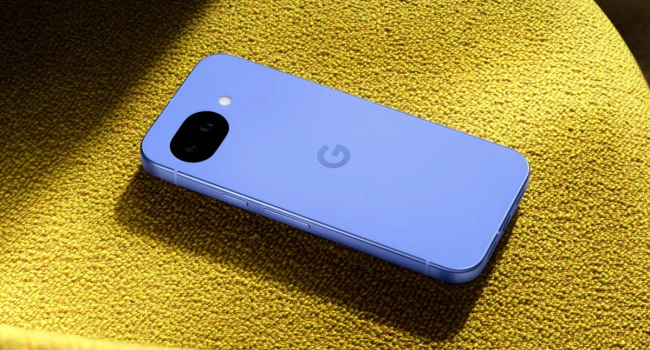
Thousands of discarded Google Pixel smartphones will be turned into a Linux-based data center
Researchers at the University of California, San Diego, in collaboration with Google, have proposed an original solution to the problem of electronic waste. Instead of disposing of outdated smartphones, they plan to turn them into compact and energy-efficient computing nodes for university data centers and scientific clusters.
A new approach to recycling
According to the project's authors, a significant portion of the environmental damage caused by smartphones comes not from the usage phase but from their production and subsequent disposal. Reusing devices can substantially reduce this carbon footprint and provide additional computing resources without manufacturing new hardware.
The conversion process is quite radical: the smartphones are stripped of their screens, batteries, cameras, speakers, and other components unnecessary for server tasks. Only the motherboard with the processor, memory, and network interfaces remains. Instead of Android, a specially adapted version of Linux is installed on the devices.
Real-world results
Testing has shown that even three-year-old smartphones are fully capable of efficiently handling a variety of server tasks. According to the developers' estimates, a cluster of 25–50 such devices can deliver performance comparable to a modern high-performance server processor.
The technology is already being actively used in the university's educational projects. For example, a cluster of 20 discarded smartphones completely replaced a traditional server and successfully supports a course in which over 75 students are enrolled.
Large-scale plans
The next stage will be the creation of a full-scale university data center based on approximately 2,000 used Google Pixel smartphones. According to the authors' calculations, such an infrastructure would be able to simultaneously support about a hundred educational and research programs.
The launch of the experimental next-generation data center is scheduled for the end of 2026.
In brief
Researchers at the University of California, San Diego, are developing a data center from 2,000 discarded Google Pixel smartphones. The devices are modified by removing unnecessary components and installing an optimized version of Linux on them. This approach extends the life cycle of electronics, reduces waste volumes, and provides low-cost computing power for the university. The project demonstrates a promising way to combat the growing problem of electronic waste and could serve as a model for other educational and scientific institutions.
- Related News
- Blue light from screens: Is it really dangerous for eyes, and what should you know?
- Top flagships of August 2026: Experts name the five best smartphones
- A simple way to spend less time on your phone: Choosing your own goals?
- Foldable iPhone appeals to almost no one: Three-quarters of Americans don't want one
- The anniversary iPhone 20 will be as thin as the Air: what the insider revealed
- Apple prepares to raise iPhone prices following Samsung and Google
- Tech Jobs
- Most read
month
week
day
- Two comets will be visible in Autumn 2026 1255
- DeepSeek or ChatGPT: Which is better in 2026? 1033
- NASA successfully launches Nancy Grace Roman space telescope – "Hubble's successor" 666
- Anthropic teaches AI to control real-world machines 650
- New Apple CEO to refresh top management team: What we know 634
- Scientists have learned to transmit data by laser through atmospheric disturbances 621
- Cosmonaut Harutyun Kiviryan passes pre-flight exam on ISS simulator 621
- Beijing opens "Kindergarten" for robots: Machines learn from their own mistakes 601
- What will happen to the human body on Mars? 586
- Dark matter detector captures the weakest neutrinos ever detected 547
- Archive