


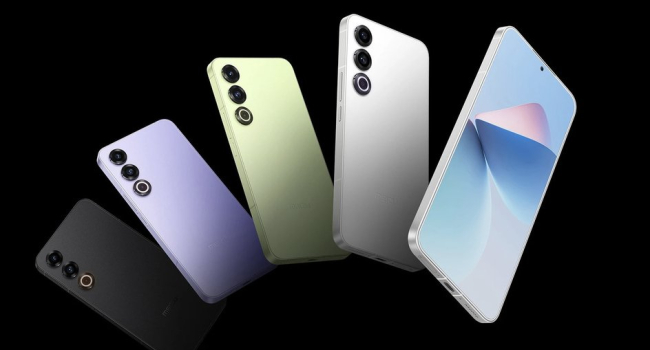
Meizu suspends smartphone development: From cult flagships to an AI ecosystem
Chinese company Meizu, once known for producing some of the most recognizable and beloved smartphones in China, has announced major changes to its business strategy. The division responsible for developing new models for the domestic market has been temporarily frozen. Instead of relying on in-house smartphone development, Meizu will now turn to external ODM and OEM partners, while focusing its core efforts on software and artificial intelligence solutions. The news was reported by iXBT, citing the company’s official statement.
A Forced Exit from Internal R&D?
Meizu emphasizes that this is not a complete withdrawal from the smartphone market. Key business operations will continue as usual. However, in-house development of new smartphone models for China has been suspended.
The company describes the move as part of a long-term strategic transformation: shifting focus from hardware to software.
At the center of the new strategy is the Flyme ecosystem. It is expected to serve as the foundation for scaling Meizu’s AI capabilities — not only in smartphones, but beyond them. Plans include adapting Flyme for a broader range of devices and industry solutions, from automotive systems to smart home and industrial applications.
A Cult Brand Changing Course
Founded in 2003, Meizu initially produced MP3 players. It entered the smartphone market in 2007 and gained widespread recognition with its flagship MX series — particularly the MX2 to MX4 models — known for their Flyme OS and near-bezel-less designs, as well as with its popular M-series budget devices.
In 2022, a controlling stake in Meizu was acquired by Geely, one of China’s largest automotive groups. Since then, Flyme Auto — the automotive version of the operating system — has been installed in dozens of vehicles from Geely, Zeekr, and other brands within the group.
Now Meizu is betting on software and AI — an area with lower competition and higher margins compared to the saturated smartphone hardware market. The shift from hardware manufacturing to software development appears to be an attempt to adapt and grow in a landscape dominated by Chinese brands such as Xiaomi, Oppo, Vivo, and Honor.
What Happens to Existing Meizu Smartphones
The company assures users that support for already released models will continue in full. Flyme updates, security patches, and service support will remain in place.
However, new smartphones developed entirely through Meizu’s internal R&D should not be expected in the near future — at least for the Chinese market.
For global markets, the situation may differ. Partner-developed (ODM/OEM) models under the Meizu brand could still appear, though without the company’s traditional in-house engineering approach.
In Brief
Meizu is suspending its in-house smartphone development for the Chinese market and shifting to collaboration with external ODM/OEM partners. The company is focusing on expanding its Flyme AI ecosystem and software solutions. Support for existing devices will continue, but new models developed internally are not expected soon. This marks a strategic pivot from hardware to software amid intense competition in the smartphone industry.
- Related News
- Top flagships of August 2026: Experts name the five best smartphones
- A simple way to spend less time on your phone: Choosing your own goals?
- Foldable iPhone appeals to almost no one: Three-quarters of Americans don't want one
- The anniversary iPhone 20 will be as thin as the Air: what the insider revealed
- Apple prepares to raise iPhone prices following Samsung and Google
- What you must do before disposing of or selling your smartphone: useful tips
- Tech Jobs
- Most read
month
week
day
- Top tablets of August 2026: Experts name the best five 893
- Top flagships of August 2026: Experts name the five best smartphones 843
- From Excel to AI: A startup by specialists who relocated from Iran to Armenia helps businesses make sense of their data 830
- The anniversary iPhone 20 will be as thin as the Air: what the insider revealed 701
- Why Bill Gates is no longer an AI optimist: Three major threats of AI 638
- Robot knocks out teeth of five year old girl: Incident at Chinese museum leads to lengthy compensation dispute 594
- How NASA's primary training centre is changing in the era of commercial space stations 590
- 10,000 tiny probes to Saturn's rings and robots in lunar caves: NASA funds 18 visionary ideas 575
- Apple prepares to raise iPhone prices following Samsung and Google 546
- How to make your new smartphone more secure: expert tips 498
- Archive