


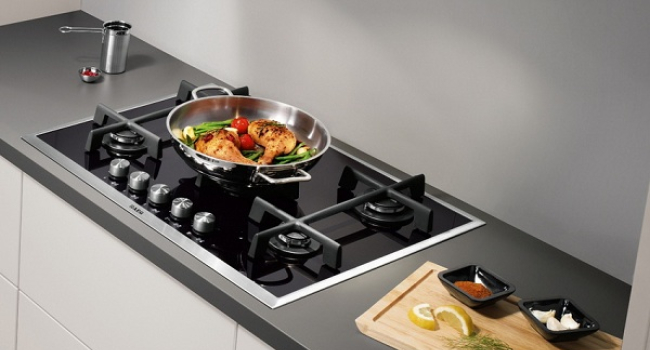
Gas stove vs electric stove: Which is better
Choosing between a gas and an electric stove is not only about taste but also about safety, convenience, and your budget. In 2025 gas remains a classic choice for millions of kitchens, while electric models, especially induction, dominate in new buildings. Here is a comparison across key parameters to help you understand which option suits you best.
Design and How They Work
A gas stove is a simple system. Gas is supplied through valves to the burners and oven, ignited with piezo or electric ignition. Modern models include flame failure protection that shuts off the gas if the flame goes out. A gas stove works independently of electricity.
An electric stove heats through elements beneath the surface: cast iron plates, Hi Light zones in glass ceramic, or induction coils. Controls can be sensor based or mechanical with timers. Induction heats only the cookware with a magnetic field, keeping the surface cool.
Gas is simpler and more reliable in basic use; electric stoves are more advanced but rely on the power grid.
Control and Response Speed
With gas, turning the knob gives instant flame. Heat is adjusted by eye, from minimum to maximum. It is perfect for woks, sauces, and frying, because reactions happen within seconds.
Electric stoves use sensors or dials with precise temperature settings. Induction responds almost as quickly as gas but needs compatible cookware. Features include Booster mode, timers, and keep warm functions. If the power goes out, it becomes unusable.
Gas wins in intuitive control; electric models win in accuracy and automation.
Modes and Functionality
Gas offers a single heat source open flame. Ovens typically use bottom heating, sometimes grill or convection. Precise temperature control is impossible.
Electric ovens offer five to twelve modes including upper and lower heat, convection, grill, steam, and sous vide. Cooktops offer expanded zones, auto shutoff, and cookware detection. Induction has about ninety percent efficiency and can boil water in two to three minutes.
Electric appliances are best for baking and experimentation; gas is ideal for straightforward cooking.
Safety
Gas carries risks of leaks, carbon monoxide, and explosions. Flame failure protection and spark ignition reduce these risks, but you need ventilation and regular checks. The surface cools quickly, reducing burn risk.
Electric stoves avoid gas risks but retain heat for a long time, especially glass ceramic surfaces. Induction is the safest because the surface stays cool. It does require proper wiring; old buildings may pose electrical hazards.
Induction leads in safety, while gas is safe when used correctly.
Installation and Connection
Gas requires a pipeline or a tank, official installation, and proper spacing. New buildings often do not include gas lines.
Electric appliances require a dedicated thirty two amp line and grounding. Older homes often need rewiring. Induction units can consume up to ten kilowatts.
Infrastructure usually decides the choice: gas in older buildings, electricity in modern apartments.
Maintenance
Gas stoves have removable grates; enamel and stainless steel are easy to clean. Burner jets need annual cleaning.
Electric stoves with glass ceramic tops require special cleaners and no abrasives. Spills can burn onto the surface. Cast iron plates are easier but outdated.
Gas is more practical for maintenance; electric stoves look more modern but are more delicate.
Price and Operating Costs
Gas is usually cheaper than electricity, and cooking on gas is thirty to fifty percent more efficient in cost. Electric installation is also more expensive. Induction saves energy due to high efficiency but electricity prices are increasing.
Overall, gas is considered more economical long term, while electric stoves are an investment in convenience.
Which Should You Choose
Choose gas if
• You have a gas line and proper ventilation.
• You like real flame and speed.
• You want to save on purchase and operation.
• Your area has unstable electricity.
Choose electric or induction if
• You have no gas or live in an older home.
• You need precise modes, features, and modern design.
• You bake often or experiment in the kitchen.
• You need higher safety, especially with children.
A hybrid gas cooktop with an electric oven can be a useful compromise.
In Short
Gas is inexpensive, fast, autonomous, and easy to maintain, ideal for traditional cooking. Electric stoves offer functionality, precision, and safety, especially induction models, making them suitable for modern kitchens. The choice depends on your home’s infrastructure and your cooking style: gas saves money, electric inspires creativity.
- Related News
- How to choose a TV and not overpay for features you'll never use
- 4 key differences between modern washing machines and models from 5–10 years ago
- Why do modern TVs break faster than older ones?
- Direct sunlight can damage your TV: Why does this happen?
- Five gadgets that could change how we work in the kitchen
- A dream for office workers: Lenovo introduces the Yoga Silent Mouse — the quietest mouse on the market
- Tech Jobs
- Most read
month
week
day
- From Excel to AI: A startup by specialists who relocated from Iran to Armenia helps businesses make sense of their data 633
- The anniversary iPhone 20 will be as thin as the Air: what the insider revealed 615
- How NASA's primary training centre is changing in the era of commercial space stations 574
- Top flagships of August 2026: Experts name the five best smartphones 559
- Why Bill Gates is no longer an AI optimist: Three major threats of AI 546
- Robot knocks out teeth of five year old girl: Incident at Chinese museum leads to lengthy compensation dispute 541
- 10,000 tiny probes to Saturn's rings and robots in lunar caves: NASA funds 18 visionary ideas 484
- How to make your new smartphone more secure: expert tips 475
- Apple prepares to raise iPhone prices following Samsung and Google 464
- "Dark photons" back in play: scientists revise constraints on dark matter 460
- Archive