


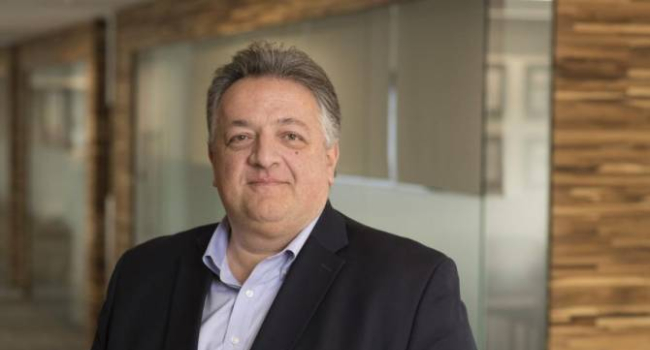
Noubar Afeyan: Poly-intelligence will unite AI, nature, and humanity for a world without disease
The future of artificial intelligence (AI), according to Noubar Afeyan — founder and CEO of the biotechnology company Flagship Pioneering and co-founder and chairman of Moderna — lies in what he calls poly-intelligence: a symphony of human, machine, and natural minds. Speaking at DigiConf 2025, Afeyan said that without ethical oversight, such systems could deepen global inequality, but with the right approach they could lead to “minimal, if not zero, disease,” as well as abundant access to clean water and energy. He stated that humanity, equipped with the technologies it has created, now stands “on the threshold of something extraordinary.”
Nature as Computational Intelligence
Afeyan argued that science had long been mistaken in viewing nature as static. He said that researchers had tried to analyze it as a finished blueprint, while in reality, nature embodies multiple forms of intelligence. As an example, he referred to the COVID-19 virus — a “tiny virus” that nearly collapsed global healthcare systems, mutating and evading defenses. He suggested that this adaptability itself was a form of intelligence. Similarly, the human immune system destroys micro-cancers every day, protecting us from birth until it fails — which is when cancer arises. If such a system were a computer program, he added, its ingenuity would be admired.
Afeyan proposed seeing DNA as “nature’s language” — a dynamic, adaptive system encoding billions of years of evolutionary learning. This learning, he explained, is carried out through trial and error, embodied in molecules. Nature, therefore, is not fixed but continuously reactive and adaptive. This perspective, he argued, changes the scientific approach: rather than dissecting nature as a collection of laws, humanity should view it as a partner with its own form of computational power, one that interacts with the world in millions of ways.
Poly-Intelligence: How AI, Nature, and Humans Work Together
The central concept of Afeyan’s address was poly-intelligence — the integration of three kinds of minds: natural, machine, and human intelligence.
He explained that this synthesis represents the emergence of a modern technological renaissance — one in which human intelligence and nature’s intelligence evolve to coexist and integrate with artificial intelligence. In this model, human and artificial intelligence would both inform and be informed by nature’s problem-solving capacity, while machine intelligence would help decode nature and propose solutions that allow humanity to thrive. Poly-intelligence, he said, powerfully combines human creativity and imagination, nature’s adaptive genius, and the scope, scale, and speed of machine intelligence.
This system of symbiosis, according to Afeyan, relies on continuous mutual exchange. Natural intelligence, encoded in DNA and evolutionary processes, reflects nature’s adaptive genius — accumulated over billions of years through variation and selection. Nature generates vast data streams, such as genetic sequences and mutations, which serve as the raw material for learning. AI, in turn, analyzes these data on a massive scale, decoding nature’s “rules” to generate new solutions. Human intelligence then contributes creativity, imagination, and ethical governance — setting goals, interpreting results, and ensuring that technological development aligns with moral principles.
Through this constant exchange, nature provides models of adaptation, AI amplifies and extends them, and humans direct these processes toward practical goals while preventing misuse through ethical oversight.
Afeyan suggested that as machines evolve, they will acquire the complexity of natural systems and begin to emulate one another. Yet, he cautioned, humanity will never fully comprehend either natural or computational intelligence, and must therefore accept that some phenomena defy mathematical reductionism.
Ethical Challenges and the Call for Global Dialogue
Afeyan warned that those with access to poly-intelligence would accelerate ahead, while others could be left behind — a divide that might lead to new forms of inequality or oppression. To prevent this, his teams at Lion Lab and Flagship Pioneering are developing self-governance principles for emerging technologies. He emphasized that if scientists do not set these rules themselves, others will, and insisted that the scientific community must speak openly about these challenges.
According to Afeyan, poly-intelligence requires not only technical innovation but also a global conversation about equitable access and ethical responsibility.
He acknowledged that the concept might sound “absurd or surreal,” yet maintained that it is real and already taking shape. While humanity may never understand it completely, he said, it can still shape the world through the alliance of human, machine, and natural intelligence. The greatest promise of AI, he concluded, lies in partnership — with nature and with humanity — opening the way to solutions once unimaginable, from breakthroughs in health to advances in climate sustainability.
- Related News
- 50,000 subscriptions and AI for schools: How Armenia plans to use artificial intelligence in education
- How to work with neural networks properly: 5 rules that actually help
- Why Bill Gates is no longer an AI optimist: Three major threats of AI
- Firebird AI Joins UATE as a Strategic Member
- Neural networks can't read minds: 4 key rules for working effectively with AI
- OpenAI prepares to go public in 2027
- Tech Jobs
- Most read
month
week
day
- Top tablets of August 2026: Experts name the best five 893
- Top flagships of August 2026: Experts name the five best smartphones 843
- From Excel to AI: A startup by specialists who relocated from Iran to Armenia helps businesses make sense of their data 830
- The anniversary iPhone 20 will be as thin as the Air: what the insider revealed 701
- Why Bill Gates is no longer an AI optimist: Three major threats of AI 638
- Robot knocks out teeth of five year old girl: Incident at Chinese museum leads to lengthy compensation dispute 594
- How NASA's primary training centre is changing in the era of commercial space stations 590
- 10,000 tiny probes to Saturn's rings and robots in lunar caves: NASA funds 18 visionary ideas 575
- Apple prepares to raise iPhone prices following Samsung and Google 546
- How to make your new smartphone more secure: expert tips 498
- Archive