


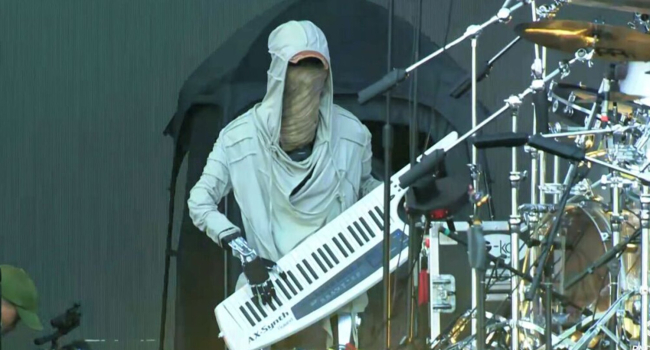
Humanoid robot keyboardist Adam performs at VOYAGEX music festival in China
At the VOYAGEX music festival in Changchun, China, an event captured the attention of both tech enthusiasts and music lovers: a humanoid robot named Adam, developed by PNDbotics, took the stage as the keyboardist in Hu Yutong’s band. This was reported by New Atlas.
A Robot Musician on Stage
Dressed in a hoodie, cap, and mask to resemble a real performer, Adam played a keytar — a keyboard in the shape of a guitar. While his movements were pre-programmed and managed by a team of engineers, the robot blended seamlessly into the performance. Adam’s playing became a highlight of the show, illustrating how robotics can complement creative expression. Posts on social media platform X noted that the robot’s movements were surprisingly human-like and its stage presence was described as “smooth, like a real musician.”
Technical Specifications of Adam
Adam is a prototype humanoid android with impressive specifications:
- Height: 1.67 meters
- Weight: 62 kilograms
- Manipulators: Five-fingered hands with 44 degrees of freedom, capable of executing complex tasks such as playing musical instruments
- AI and Software: Supports advanced artificial intelligence algorithms and features an open-source SDK available on GitHub, making it a developer-friendly platform
The version that performed at the festival is likely the SP configuration, though specific details weren’t disclosed. The prototype is valued at around $100,000, but PNDbotics is preparing a commercial version called Adam U, set to debut in September 2025 at the World Artificial Intelligence Conference, with an expected price of $45,000.
Significance of the Performance
Adam’s appearance at VOYAGEX was not only a spectacle but a major step toward the integration of robotics into daily life. As New Atlas highlights, such demonstrations show the potential of humanoid robots in the entertainment industry and beyond — from manufacturing to home use. Many observers on X noted that Adam “didn’t just play notes — he seemed to feel the music,” sparking both admiration and conversation about the future of robotics in art.
Opportunities and Challenges
PNDbotics emphasizes accessibility: the open-source code and relatively low price (especially compared to competitors like Boston Dynamics’ Atlas) give developers a chance to experiment with the platform. However, Adam’s success comes amid safety concerns. At another event in China, a Unitree H1 robot reportedly attacked an attendee during the Spring Festival, raising debates about AI safety. Expert Roman Dushkin commented that such incidents underscore the urgent need for strict testing and safeguards to prevent unpredictable behavior.
Conclusion
Adam’s performance at VOYAGEX is both a technological milestone and a glimpse into a future where robots participate in cultural experiences. With its blend of AI, human-like design, and musical talent, Adam stands out as a unique innovation. The upcoming launch of the commercial version in September 2025 could unlock new possibilities for developers and reshape how we experience entertainment and robotics alike.
- Related News
- 50,000 subscriptions and AI for schools: How Armenia plans to use artificial intelligence in education
- How to work with neural networks properly: 5 rules that actually help
- Why Bill Gates is no longer an AI optimist: Three major threats of AI
- Firebird AI Joins UATE as a Strategic Member
- Neural networks can't read minds: 4 key rules for working effectively with AI
- OpenAI prepares to go public in 2027
- Tech Jobs
- Most read
month
week
day
- Top tablets of August 2026: Experts name the best five 893
- Top flagships of August 2026: Experts name the five best smartphones 843
- From Excel to AI: A startup by specialists who relocated from Iran to Armenia helps businesses make sense of their data 830
- The anniversary iPhone 20 will be as thin as the Air: what the insider revealed 701
- Why Bill Gates is no longer an AI optimist: Three major threats of AI 638
- Robot knocks out teeth of five year old girl: Incident at Chinese museum leads to lengthy compensation dispute 594
- How NASA's primary training centre is changing in the era of commercial space stations 590
- 10,000 tiny probes to Saturn's rings and robots in lunar caves: NASA funds 18 visionary ideas 575
- Apple prepares to raise iPhone prices following Samsung and Google 546
- How to make your new smartphone more secure: expert tips 498
- Archive