


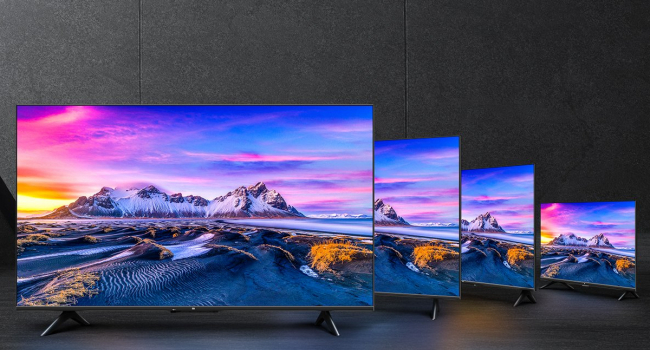
How to choose a good TV: 3 key criteria
Choosing a TV in 2025 can be a real challenge due to the overwhelming number of models on the market. From budget options to premium devices, not every model lives up to expectations. To avoid ending up with a disappointing TV, it’s enough to focus on three essential criteria: RAM, screen brightness, and resolution.
Here’s what to look for in order to choose a TV that’s truly worth your money—and how much it might cost.
1. RAM: The Foundation of Smooth Performance
Modern smart TVs are more than just screens for watching movies—they’re full-fledged multimedia hubs with apps, streaming services, and smart features. However, budget models often cut corners by offering minimal RAM to reduce costs.
- Why it matters: TVs with just 1 GB of RAM or less tend to lag, load apps slowly, and may even fail to run demanding services like Netflix or YouTube in 4K. This results in a frustrating user experience.
- What to choose: A good TV should have at least 5–2 GB of RAM. For instance, Samsung and LG models running on Tizen or webOS—like the Samsung Crystal UHD 2025 or LG QNED MiniLED—often include 2–3 GB of RAM, ensuring smooth performance even during multitasking.
Tip: Avoid models with only 1 GB of RAM, even if they seem like a bargain. Always check the specs on manufacturer websites or trusted review platforms like iXBT or 4PDA.
2. Screen Brightness: The Key to Picture Quality
Brightness directly affects how vibrant and visible the image looks—especially in daylight or when watching HDR content. Budget TVs often use low-quality backlighting, resulting in dull, washed-out visuals.
- Why it matters: TVs with 180–200 nits of brightness won’t deliver vivid colors or a proper HDR experience. In bright rooms, the image may be hard to see, and in dark environments, you’ll miss important details.
- What to choose: The minimum acceptable brightness is 250 nits, but for optimal viewing comfort, aim for 300 nits or more. Mid-range models like the Xiaomi QLED Q2 55" (350 nits) or TCL C855 (400 nits) provide a bright and rich picture.
Tip: Look for brightness ratings in product specs or reviews. For true HDR content, you’ll want HDR10+ or Dolby Vision support, which generally requires 400 nits or more.
3. Resolution: Sharpness That Matters
Screen resolution determines how detailed the picture appears—especially important on larger screens. Picking the wrong resolution can lead to blurry visuals and eye strain.
- Why it matters: For small TVs (under 32"), HD+ (1366x768) may suffice, like in a kitchen. But for TVs 43” and larger, HD+ is inadequate—images will appear soft and pixelated. Full HD (1920x1080) or 4K (3840x2160) ensures clarity and viewing comfort.
- What to choose: For TVs 43” and up, go for at least Full HD, though 4K is recommended—especially from 50” onwards. 4K models like the Samsung QN90D or Hisense U8N offer excellent detail and are ideal for modern content on platforms like Netflix and YouTube.
Tip: If your budget allows, choose 4K even for 43" models. Most streaming platforms and games are moving toward 4K anyway. Pay attention to upscaling technology too—it enhances lower-resolution content on 4K screens.
How Much Does a Good TV Cost?
Prices vary depending on screen size and specs, but here’s a general guide:
- 50 inches: A solid model with Full HD or 4K, 2 GB RAM, and 300+ nits of brightness typically costs from $380. Good value picks include the TCL 50C647 or Xiaomi A Pro 55".
- 55–65 inches: Mid-range models like the LG UR78 or Samsung BU8500 start around $500–600.
- Premium class: TVs with OLED or MiniLED panels—such as the LG OLED C4 or Sony Bravia 9—start from $1200, offering up to 1000 nits of brightness and perfect color accuracy.
Note: As screen size increases (especially beyond 65”), the number of truly weak models decreases. Still, check the specs carefully. Some budget brands—like Haier or KIVI—offer large screens at low prices, but often skimp on brightness and RAM.
- Related News
- How to choose a TV and not overpay for features you'll never use
- 4 key differences between modern washing machines and models from 5–10 years ago
- Why do modern TVs break faster than older ones?
- Direct sunlight can damage your TV: Why does this happen?
- Five gadgets that could change how we work in the kitchen
- A dream for office workers: Lenovo introduces the Yoga Silent Mouse — the quietest mouse on the market
- Tech Jobs
- Most read
month
week
day
- From Excel to AI: A startup by specialists who relocated from Iran to Armenia helps businesses make sense of their data 633
- The anniversary iPhone 20 will be as thin as the Air: what the insider revealed 615
- How NASA's primary training centre is changing in the era of commercial space stations 574
- Top flagships of August 2026: Experts name the five best smartphones 559
- Why Bill Gates is no longer an AI optimist: Three major threats of AI 546
- Robot knocks out teeth of five year old girl: Incident at Chinese museum leads to lengthy compensation dispute 541
- 10,000 tiny probes to Saturn's rings and robots in lunar caves: NASA funds 18 visionary ideas 484
- How to make your new smartphone more secure: expert tips 475
- Apple prepares to raise iPhone prices following Samsung and Google 464
- "Dark photons" back in play: scientists revise constraints on dark matter 460
- Archive