


Jony Ive’s anti-smartphone: A curious project backed by Laurene Powell Jobs and supported by OpenAI
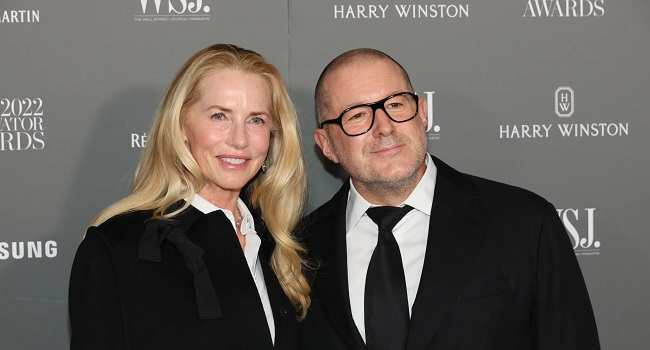
Laurene Powell Jobs, widow of Apple co-founder Steve Jobs, has confirmed her significant investment in a startup led by former Apple chief designer Jony Ive. In collaboration with OpenAI, Ive is developing an AI-powered device positioned as an alternative to traditional smartphones. The Verge reported this based on an interview Ive and Powell Jobs gave to The Financial Times.
A Mission to Correct Past Mistakes
In the interview, Ive and Powell Jobs reflected on their time working with Steve Jobs at Apple and discussed their goal of minimizing the "unintentional harm" caused by past innovations like the iPhone. Ive noted that society’s dependence on screens and social media is one of the issues he aims to address.
“Our relationship with technology is complicated right now. Humanity deserves better,” Ive said, emphasizing that his collaboration with OpenAI CEO Sam Altman is motivated by a desire to build something genuinely beneficial.
He acknowledged that innovations like the iPhone had unforeseen consequences: “Some of them are wonderful, and some are harmful. I feel a responsibility and a resolve to do something useful.” This echoes his earlier statement in May, where he spoke about the need to take responsibility for the effects of widespread smartphone use.
Powell Jobs, a close friend of Ive since 2011, shares his vision and sees the project as having the potential for “great impact.” Her investments through Emerson Collective have been a key source of support for the startup.
What Is Known About the AI Anti-Smartphone?
Details remain scarce, but the project has already attracted attention:
- The Team: Ive, Altman, and a small group of about 10 people are working on the device, including former Apple designers Tang Tan and Evans Hankey. The design is being developed by Ive’s studio, LoveFrom.
- Funding: Ive’s startup, io Products, has received investment from Powell Jobs’ Emerson Collective and attracted up to $1 billion from other investors including Thrive Capital. In May 2025, OpenAI acquired io for $6.5 billion, with $5 billion paid in stock.
- The Concept: The device won’t be a conventional smartphone. Insiders describe it as a “personal AI companion” with no screen, voice-operated, and built on ChatGPT technology. It may be wearable (rumored to be worn around the neck, according to Ming-Chi Kuo) or serve as a home assistant.
- The Goal: To rethink how we interact with technology, reducing distractions and screen dependency.
Ive emphasized that this project is different from failed attempts like the Humane AI Pin or Rabbit R1, calling those “bad products.” Altman, who has tested a prototype, called it “the coolest technological thing” he has ever seen.
Laurene Powell Jobs’ Role
Powell Jobs is not just an investor but an ideological supporter of the project. Her Emerson Collective, founded in 2004, backs innovation in education, social justice, and technology. In the FT interview, she noted that without her financial support, Ive’s ventures—including LoveFrom and io—might not have happened. Her trust in Ive is rooted in their long friendship and shared vision of using technology as a force for good.
Reactions and Expectations
On the platform X, opinions are divided. Some users are calling the project “the future of tech” and believe in Ive’s brilliance. Others are skeptical of the “anti-smartphone” idea, citing past flops like Humane and Rabbit. Some have raised eyebrows at the high valuation ($6.5 billion for a startup with no product) and doubt the device will arrive before 2027.
Project Outlook
- Timeline: Production is not expected before 2027, with a release planned for 2026.
- OpenAI’s Role: After acquiring io, 55 of Ive’s engineers will join OpenAI. LoveFrom will become a key design partner, contributing to software and future versions of ChatGPT.
- Competition: The project faces stiff challenges in a market dominated by smartphones, where AI devices have yet to prove widespread appeal.
Ive and Altman are confident that their device will redefine how people interact with computers, much like the iPhone did in 2007. “The world is on the verge of a new generation of technology,” said Ive, while Altman described their mission as building a “family of AI devices for creativity.”
In Conclusion…
Jony Ive’s AI anti-smartphone, backed by Laurene Powell Jobs and OpenAI, aims to address the shortcomings of modern tech. Powell Jobs’ investment and belief in Ive’s mission highlight the ambition behind the project, which strives to offer not just a new gadget, but a new way of engaging with AI. While details are sparse and launch is years away, the collaboration between a legendary designer and an AI industry leader is already generating buzz. Stay tuned to see whether this “personal AI companion” will echo the success of the iPhone—or become another bold but unsuccessful experiment.
- Related News
- Top flagships of August 2026: Experts name the five best smartphones
- A simple way to spend less time on your phone: Choosing your own goals?
- Foldable iPhone appeals to almost no one: Three-quarters of Americans don't want one
- The anniversary iPhone 20 will be as thin as the Air: what the insider revealed
- Apple prepares to raise iPhone prices following Samsung and Google
- What you must do before disposing of or selling your smartphone: useful tips
- Tech Jobs
- Most read
month
week
day
- Top tablets of August 2026: Experts name the best five 893
- Top flagships of August 2026: Experts name the five best smartphones 843
- From Excel to AI: A startup by specialists who relocated from Iran to Armenia helps businesses make sense of their data 830
- The anniversary iPhone 20 will be as thin as the Air: what the insider revealed 701
- Why Bill Gates is no longer an AI optimist: Three major threats of AI 638
- Robot knocks out teeth of five year old girl: Incident at Chinese museum leads to lengthy compensation dispute 594
- How NASA's primary training centre is changing in the era of commercial space stations 590
- 10,000 tiny probes to Saturn's rings and robots in lunar caves: NASA funds 18 visionary ideas 575
- Apple prepares to raise iPhone prices following Samsung and Google 546
- How to make your new smartphone more secure: expert tips 498
- Archive