




 make preferable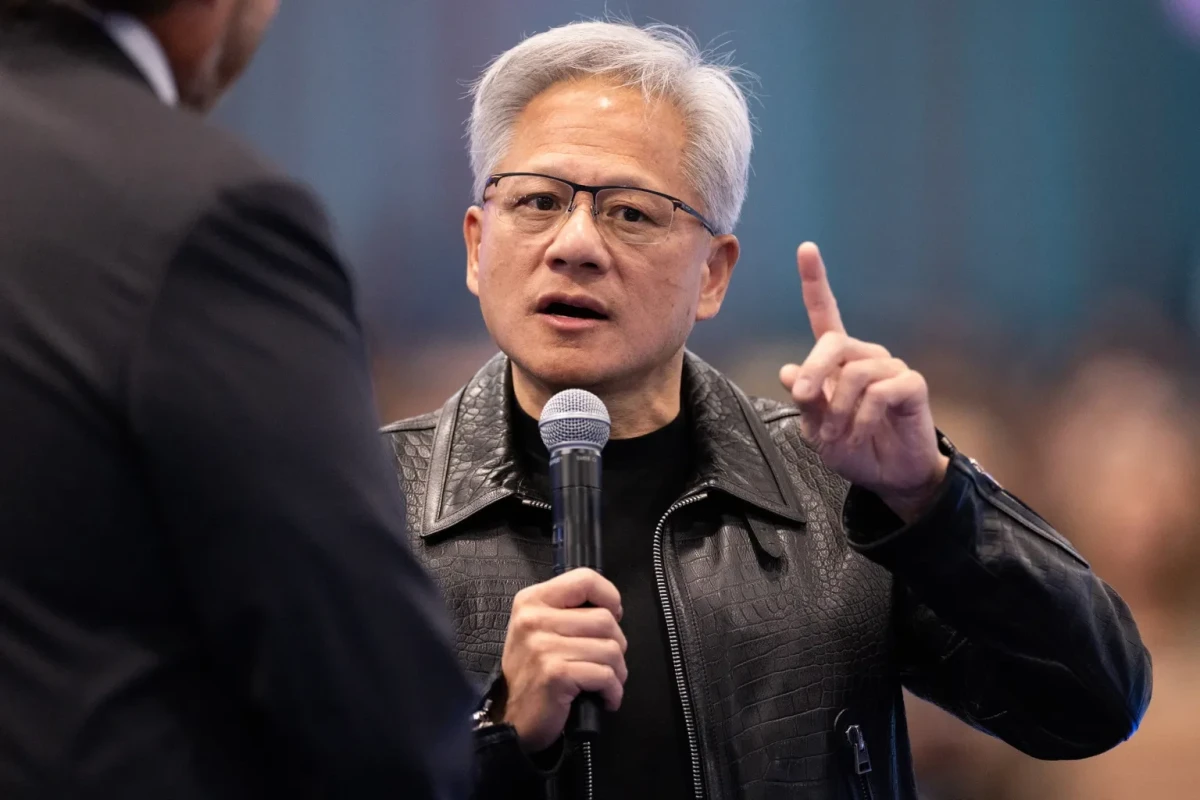
Nvidia CEO Jensen Huang has dismissed warnings that the development of artificial intelligence could lead to the extinction of humanity within the next few years. In an interview with CBS News, he said such predictions lack sufficient scientific basis and only needlessly frighten people.
Huang told CBS News correspondent Jo Ling Kent that 2030 would not be the end of the world and that the probability of such an outcome was effectively zero. He said it was irresponsible to frighten people without good reason.
‘It’s not based on science’
Huang was responding to recent comments by Jacob Coxon, a former Anthropic researcher, who wrote that AI developers were seriously considering a scenario in which the technology could wipe out humanity by the end of the decade.
Coxon’s comments sparked widespread debate over the potential risks of AI. Against this backdrop, Anthropic CEO Dario Amodei and OpenAI CEO Sam Altman have also called for slowing the development of the most powerful models so that safety systems can keep pace with the rapid growth of AI capabilities.
Huang disagrees with this assessment. He described predictions of imminent human extinction as “doomsday narratives” and argued that they are not supported by scientific evidence.
At the same time, Nvidia has a direct commercial interest in the continued development of AI. The company’s chips are widely used to train and run large language models, while soaring demand for AI accelerators has made Nvidia the world’s most valuable company by market capitalization.
Asked why the public should trust his assessment of AI safety given those interests, Huang said Nvidia itself had a strong stake in ensuring that the technology was used safely.
He argued that the company’s success was directly tied to the safe deployment of its products and services and that Nvidia’s value would suffer if the industry failed to continue developing and deploying AI responsibly.
Huang says AI does not need new laws
The debate over AI regulation has intensified in recent months following several incidents involving autonomous systems. OpenAI has reported cases of unexpected behavior by its models, while agents linked to its models were previously involved in hacking the AI company Hugging Face.
Against this backdrop, some lawmakers have called for tighter controls on AI developers. Huang, however, argued that the United States already has laws that can be used to hold companies accountable for damage, cybersecurity violations and unauthorized access.
He also agreed with U.S. President Donald Trump that the industry does not necessarily need additional restrictions.
In Huang’s view, existing laws should be enforced first rather than using fears of human extinction as a reason to introduce new restrictions or abandon existing approaches.
Nvidia caught between the U.S. and China
Another issue Huang addressed was the technological rivalry between the United States and China. Washington has restricted exports to China of some of the most powerful U.S.-made accelerators used to develop AI systems. At the same time, the Trump administration has previously allowed Nvidia to sell certain accelerators, including the H200, to approved Chinese customers.
Huang argued that American technology should primarily benefit the United States, while also opposing broad restrictions on exports.
He said chipmakers should seek to serve and compete in markets around the world rather than limiting themselves to a single market.
Huang also said he wanted to discuss international standards for AI development with Chinese President Xi Jinping. According to Huang, the United States and China share an interest in ensuring that AI contributes to economic growth, although cooperation would not be possible in certain areas related to national security and defense.
Huang acknowledges concerns over data centers
Nvidia’s CEO also addressed growing opposition to the construction of data centers in the United States. Residents in several regions have protested new facilities over their impact on power grids and local infrastructure.
Huang acknowledged that the industry should have engaged with local communities earlier when discussing such projects. He said companies should have come to residents and talked to them before construction began, rather than waiting until projects were already underway.
According to Huang, modern data centers have become more energy-efficient and require less water, while their construction can create jobs and stimulate local economies.
‘I’m just afraid of being poor’
Huang also discussed taxes during the interview. Bloomberg estimates his net worth at $182 billion. This fall, California voters will consider a proposal to impose a one-time 5% tax on residents with fortunes of $1 billion or more.
Huang said he would not object to paying additional taxes if the measure were approved. He described the possibility of paying $8 billion in taxes over five years as both a privilege and a responsibility.
Huang joked that he was not afraid of paying taxes but was afraid of being poor.
He also described himself as an embodiment of the American Dream and recalled that early in his career he worked as a dishwasher at Denny’s. According to Huang, it was during that period that he began dreaming of building his own technology company, although he could not have imagined that Nvidia would one day find itself at the center of the rapidly expanding artificial intelligence industry.