




 make preferable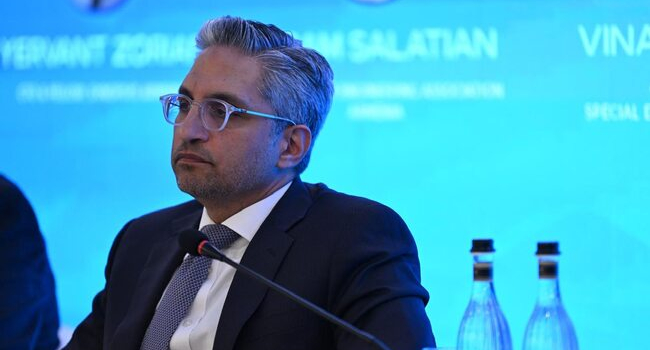
TRIPP could transform from a mere transport project into a powerful economic "backbone." This view is shared by Vinay Chawla, Director of the Office of the U.S. Special Envoy for Middle East Peace.
TRIPP: Infrastructure as a "Backbone"
Speaking at the panel discussion "Critical Minerals, Semiconductors, and the South Caucasus as an Investment Frontier" on the sidelines of Yerevan Dialogue 2026, Chawla noted that regarding TRIPP, the American side would like to see the development of railway, digital, and energy infrastructure. "Armenia has significant opportunities in mineral extraction—the country possesses rich geology. If we link the extraction of these resources to TRIPP, viewing it as a backbone and its branches as road or rail transport, a real potential for commercial freight growth emerges," he stated. Chawla noted that the U.S. does not view "these things in isolation." "TRIPP is a backbone, but if no cargo moves through it, it becomes an inefficient asset. Similarly, if there are critical minerals but no infrastructure to transport them, it is simply an untapped resource," he noted. In this context, Washington sees a real opportunity to deepen cooperation with Armenia—linking critical minerals to chip production.
Why Armenia is Especially Interesting to Washington
Chawla noted that U.S. engagement in Armenia has significantly intensified over the past year. According to him, the country possesses several important competitive advantages that make it an attractive partner in American strategy. These include the possibility of 100% foreign ownership of companies, rich geology, high potential for critical mineral extraction, and years of experience in technological cooperation. Chawla specifically mentioned collaboration with Synopsys, the Firebird projects, and the active participation of Armenian specialists in high-tech initiatives.
U.S. Global Strategy Behind TRIPP
The prospects of the TRIPP corridor appear directly linked to Washington's new foreign policy agenda. According to Chawla, in the current U.S. administration, supply chain issues for artificial intelligence and critical minerals have become a key axis of foreign policy. To implement this strategy, the U.S. is launching two major complementary mechanisms that open opportunities for Armenia.
PAX Silica — a vertically integrated initiative covering the entire value chain for AI: from mineral extraction to chip production and their use in data centers.
"This is our initiative aimed at developing AI and managing supply chains. We view this process vertically — from mineral extraction to chip production and their implementation in data centers. Within this program, we have already begun bringing together countries and strategic partners. It is a platform of sorts, with $250 million allocated to finance projects and ideas that help strengthen these supply chains".
The second direction is FORGE (Forum for Research Resource Geostrategic Engagement), our framework program for critical minerals."Its key element is the so-called Project Vault with a budget of $12 billion. For the first time, the U.S. is creating a strategic reserve of critical minerals — similar to how it was done with oil. These $12 billion also open opportunities for markets like Armenia, as we now have tools such as the DFC and EXIM that allow for financing all stages — from resource extraction to integration into supply chains. This, in turn, creates investment opportunities to replenish this strategic reserve."