RISE-2026: Military-industrial complex development cycles have shortened sharply, we are already in a new engineering reality
 10:13 4 June, 2026
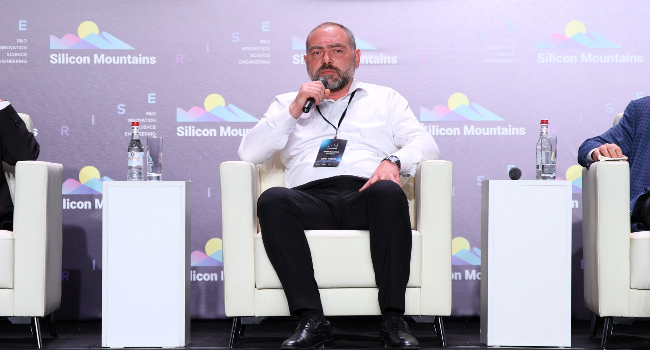
The global defense industry is undergoing rapid changes, and the development cycle of military products has shortened several times over. This was stated by David Galoyan, founder and CEO of Davaro, during panel discussions organized on the sidelines of the first Armenian military-industrial exhibition RISE-2026 (photo report).
Development cycles have shortened to months
According to him, while just a few years ago creating a new model of weapon or military system could take about five years, today development timelines have shortened to six or even four months.
As Galoyan noted, the pace of change is so high that in the future, development cycles will only accelerate. According to him, engineering teams and defense industry enterprises face the task of not only developing new solutions, but also conducting strategic analysis, forecasting future needs, and choosing the most promising directions for product creation.
He emphasized that a crucial condition for success is close interaction with military structures. This is necessary so that the created products do not remain at the development stage, but subsequently find practical application in the troops.
An important step: transition to automation
According to the head of Davaro, engineering teams must ensure the fastest and most efficient realization of their developments so that the final product is created in the shortest possible time and without significant problems. At the same time, after the development is completed, the products must promptly move to the mass production stage.
"The production phase has also undergone major changes: production in very large volumes in a short time is now required, and for this, reforms are necessary," Galoyan noted. According to him, this refers primarily to the automation of production processes, design automation, and the revision of engineering approaches to solving tasks.
As an example, Galoyan cited the activities of his company, which simultaneously implements several different processes. He explained that one of the reasons for this parallel approach is the desire to maintain high efficiency and offer the end user a wide range of products capable of covering all currently existing needs in the shortest possible timeframe.
Localization of chains and dependence on imports
Speaking about the localization of production chains, Galoyan noted that the ideal option is to create the entire production chain directly in Armenia through the efforts of local enterprises. However, the real situation currently requires purchasing certain components.
"In reality, we are forced to purchase commercially available simple devices, raw materials, and components from abroad. However, the part that is of critical importance in forming the system is implemented locally to avoid a large dependence on foreign suppliers," he noted.
Galoyan expressed confidence that over time, more and more links in the production chain will be localized within the country. In his opinion, this is precisely how Armenia's technological independence can be ensured.
A number of technologies have not yet been formed
He also drew attention to the fact that a number of technologies have not yet been formed and are not produced by Armenian companies, but he considers this a matter of time. According to him, with consistent work and concentration of efforts, the necessary solutions will gradually appear in both small and large companies.
"Over time, all technologies can be created. If we work systematically and maintain focus on the set tasks, both small and large companies will be able to offer solutions that will integrate into larger systems and turn into serious, high-level, and quality products," Galoyan noted.
According to his assessment, it is precisely this development model that will allow the creation of competitive products capable of successfully competing not only in the domestic market, but also on a global level.