“Military certification” for gadgets: What it is and whether it really works
 18:49 4 February, 2026
Today, nearly every other manufacturer of smartphones, tablets, and laptops proudly displays the MIL-STD-810 (or MIL-STD-810G/H) label on the box or in the specifications. It is presented as proof that the device is a real “tank” — capable of surviving drops, freezing temperatures, heat, backpack vibrations, and even sandstorms. But how accurate is that claim? Let’s take a closer look at what lies behind this trendy label and whether it is worth relying on when choosing a gadget.
What MIL-STD-810 Really Is
MIL-STD-810 is a United States military standard developed by the Department of Defense. It outlines laboratory testing methods designed to evaluate how equipment withstands various extreme conditions it might encounter during its service life.
Important: it is not a single certification and certainly not proof that a gadget is used by the U.S. military or has passed “combat” testing. It is simply a collection of dozens of separate test procedures — around 30 in the latest MIL-STD-810H version. Manufacturers decide for themselves which tests to perform and how extensively to conduct them.
The standard has existed since the 1960s, but consumer electronics have actively adopted it only since the 2010s. The most recent versions are MIL-STD-810G (2008) and MIL-STD-810H (2019), with the latter considered more modern and closer to real-world scenarios.
Which Tests Gadgets Typically Undergo
For smartphones, tablets, and laptops, manufacturers usually highlight the most “popular” procedures:
- Extreme temperatures (both high and low) and rapid changes
- High humidity (prolonged exposure to moisture)
- Shock and drops (from specific heights onto various surfaces)
- Vibration (simulating transportation or off-road travel)
- Dust and sand (testing the sealing of the body and ports)
- Sometimes low pressure (altitude), solar radiation, or even fungus/salt exposure
The key point is that manufacturers choose which tests to run. One brand may limit testing to temperature and vibration, while another adds drops from 1.2–1.5 meters. Formally, both can claim “MIL-STD-810H,” yet the actual level of protection may differ significantly.
Testing is conducted in laboratories — sometimes independent ones — but there is no mandatory government oversight or unified certification body for consumer devices.
MIL-STD for Smartphones and Tablets: What It Means in Practice
In smartphones and tablets, “military certification” usually indicates improved resistance to:
- Accidental drops from about human height
- Long exposure to cold weather or a hot car interior
- Vibrations in a pocket while riding a motorcycle or driving on rough roads
- Dust in pockets or construction environments
This does provide an extra margin of durability compared to typical flagship devices without such labeling. However, MIL-STD is not a substitute for an IP rating. Protection against water and dust immersion (IP67/IP68) is a separate matter. The military standard focuses more on dry dust, sand, and humid air rather than submersion.
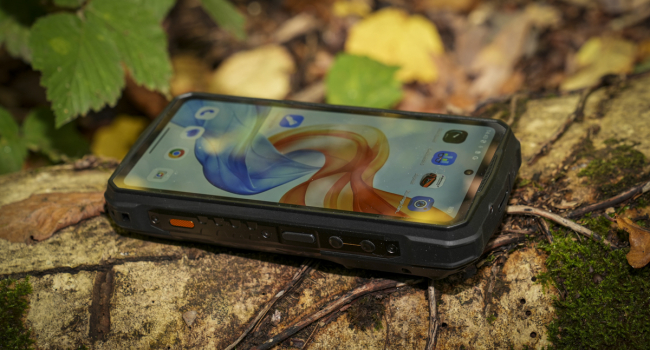
In real-world reviews and user feedback, devices with MIL-STD — especially rugged models from brands like Blackview, Ulefone, and Doogee — do tend to survive drops and harsh conditions more often without critical damage.
MIL-STD for Laptops: Where It Is Truly Useful
For laptops, certification is often more meaningful, particularly in business and highly mobile product lines (such as ASUS ExpertBook, Dell Latitude Rugged, Panasonic Toughbook, and Getac). Tests typically examine:
- Display hinges
- Chassis resistance to twisting and pressure
- Keyboard and touchpad functionality after shocks or drops
- Reliability during transportation (for example, vibration in an aircraft cargo hold or train)
A laptop with MIL-STD-810H generally handles frequent travel, flights, and fieldwork better. It is not indestructible, but the likelihood of failure due to shaking or accidental impact is noticeably lower.
Marketing vs. Reality: The Main Caveats
- No universal standard level — one manufacturer may pass five tests, another fifteen, yet both use the same label.
- Self-assessment is common — testing is often done by the brand or its contractor without independent auditing (though some companies publish third-party reports).
- Not a guarantee of durability — even a fully tested device can break from a single unlucky drop onto a concrete edge.
- Outdated versions — many products still cite MIL-STD-810G even though version H is the current one.
Ultimately, MIL-STD is not empty marketing — it is a real set of tests that adds confidence. But it should be viewed as a bonus rather than the primary reason to buy a device.
In Brief
MIL-STD-810 is a U.S. military testing standard that evaluates resistance to heat, cold, drops, vibration, dust, and more. Because manufacturers choose which tests to perform, protection levels vary widely between devices. For smartphones, it is a welcome boost to everyday durability; for laptops, it can offer tangible benefits for travel and field use. However, it does not replace IP-rated protection and does not promise indestructibility. Pay attention to build materials, reviews, and brand reputation — MIL-STD should be a helpful extra, not the deciding factor when making a purchase.