Compact smartphones to buy in 2026: 4 Current options
 10:31 29 January, 2026
Even though the market has long shifted to large-screen devices, demand for compact smartphones hasn’t disappeared. Many people still prefer phones that fit comfortably in one hand, slide easily into any pocket, and don’t feel like a “brick.” In 2026, the selection of truly compact models has narrowed, but there are still some worthy options—from premium flagships to simple “basic” phones. Here are four of the most relevant compact smartphones you can actually buy today.
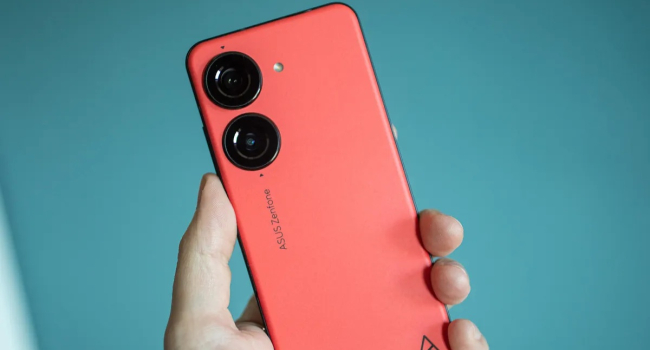
ASUS Zenfone 10 — the best compact flagship
Despite being released in 2023, the ASUS Zenfone 10 remains one of the most powerful and well-designed compact smartphones on the market. It features a 5.92-inch Super AMOLED screen with Full HD+ resolution and a 144 Hz refresh rate. The phone is powered by a Snapdragon 8 Gen 2 processor, with up to 16 GB of RAM and up to 512 GB of storage. Cameras include a 50 MP main and a 13 MP ultra-wide, plus a 32 MP front camera. The 4,300 mAh battery offers solid autonomy.
Dimensions are 146.5 × 68.1 × 9.4 mm, and it weighs 172 g. It’s one of the few modern flagships that is genuinely comfortable to hold and use with one hand. Performance matches top models of 2025–2026, and its size makes it a rare find for anyone who doesn’t want a “tablet-sized” phone.
iPhone 13 mini — compact premium from Apple
For those invested in the Apple ecosystem, the iPhone 13 mini remains the best small option. It has a 5.4-inch OLED screen with a resolution of 2340×1080 (60 Hz). It runs on the A15 Bionic chip, which still handles any task effortlessly. RAM is 4 GB, with up to 512 GB of storage. The camera setup includes dual 12 MP lenses (main + ultra-wide) and a 12 MP front camera. Its 2,406 mAh battery lasts a full day thanks to iOS optimization.
The phone measures 131.5 × 64.2 × 7.65 mm and weighs only 141 g. It is the smallest and lightest currently relevant iPhone. Apple seems to have abandoned the “mini” format, making the 13 mini the last true compact iPhone. The newer iPhone 16e and 17 are significantly larger (6.1–6.3 inches), while the iPhone SE 3, with a 4.7-inch screen, has thick bezels and is bulkier overall.
Google Pixel 4a — the best budget compact
The Google Pixel 4a remains one of the last truly small Android smartphones. It has a 5.8-inch AMOLED screen with Full HD+ resolution (60 Hz), a Snapdragon 730G processor, 6 GB of RAM, and 128 GB of storage. Its single 12.2 MP rear camera delivers excellent photos, thanks to Google’s software processing. The 3,140 mAh battery provides good autonomy, aided by clean Android and system optimization.
Dimensions are 144 × 69.4 × 8.2 mm, with a weight of 143 g. The Pixel 4a is still praised for its photography, clean interface, and long-term software support. It’s ideal for anyone who wants a small phone without paying for flagship features.
Itel A27 — the simplest and cheapest option
For basic use—calls, messaging, and light browsing—the Itel A27 is a simple and affordable choice. It has a 5.45-inch IPS screen (960×480, 60 Hz), a Spreadtrum SC9832E processor, 2 GB of RAM, and 32 GB of storage. Cameras are 5 MP rear and 2 MP front. The 4,000 mAh battery runs Android 11 Go Edition (a lightweight version).
Its size is 153 × 74.6 × 11 mm. Large bezels reduce the advantage of its small screen, but it’s sufficient for calls and messaging. If you need a compact phone on a tight budget, this is one of the few available options.
In brief
Truly compact smartphones are rare in 2026, but there are still four solid options:
- ASUS Zenfone 10 — the most powerful and modern compact flagship (5.92 inches, Snapdragon 8 Gen 2)
- iPhone 13 mini — the best small iPhone (5.4 inches, A15 Bionic, excellent cameras and battery life)
- Google Pixel 4a — budget Android with a great camera and clean system (5.8 inches)
- Itel A27 — simplest and cheapest choice for calls and messaging (5.45 inches)
If you specifically want a small phone, these are the ones to consider—after them, options only get bigger.