By 2050 the number of humanoid robots will reach 930 million: Robots will do the work, not humans
 13:20 27 November, 2025
In the coming decades, robots that resemble humans and can perform a wide range of tasks may become a familiar part of daily life and work. According to analysts, by 2050 their number may reach almost one billion, and the global humanoid market will exceed 5 trillion dollars.
A market that will change the world
According to forecasts from Morgan Stanley, mass adoption of humanoids will begin in the late 2030s, when technologies become more advanced and society and regulators begin to actively support new solutions. The majority of robots, about 90 percent or more than 930 million units, will be used for industrial and commercial purposes: in factories, shops, and warehouses.
The forecast for home use is more modest. By 2050 there will be about 80 million humanoids in households, and creating a universal robot for domestic tasks will require at least another decade of technological progress and cost reduction. Currently humanoids remain expensive. In 2024 one robot cost about 200 thousand dollars in high-income countries. By 2028 the price may drop to 150 thousand, and by 2050 to 50 thousand dollars. In lower-income countries such as China, the price may fall to 15 thousand dollars, making robots widely accessible.
Will China dominate the humanoid market
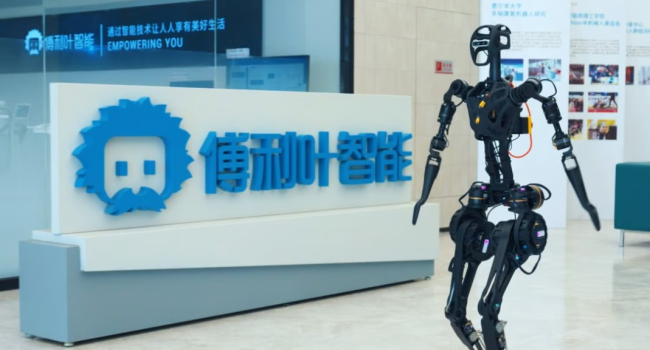
China appears to fully understand its future competitive advantages, and therefore pays great attention to this sector. China is already confidently leading the global race to create humanoid robots. The heart of this industry has become Shenzhen, which is already being called the Robotics Valley. It concentrates major production facilities and research centers developing both industrial and service humanoids.
Companies such as UBTECH, DIGIT, Lumos Robotics, EngineAI, and PUDU Robotics are creating robots capable of working in factories, shops, and hotels, and are investing billions of dollars into improving technologies and production lines.
Shenzhen, with its startup ecosystem, government support, and proximity to component suppliers, creates unique conditions for the rapid growth of the industry. It is here that the future of the global humanoid market is being shaped.
Competitors acknowledge China’s breakthrough advantage
According to a 2025 Morgan Stanley Research report, which includes analysis of Humanoid 100, a list of 100 key companies in the humanoid robot supply chain, 56 percent of these companies are based in China, and 45 percent of integrators are also located in China. Among the top 20 global manufacturers, about 70 percent are Chinese companies, confirming their dominant position. Industry leaders include BYD, UBTECH, and Unitree, which set production and development standards.
Other research supports this as well. Forbes earlier this year also highlighted China as the main player among 16 leading humanoid manufacturers, including Xiaomi and UBTECH, while the United States is represented by Tesla, Figure AI, and Boston Dynamics. A report from Research And Markets emphasizes the scale of Chinese companies’ ambitions, which plan to produce from 1.5 to 20 thousand units of robots already in 2025.