Air cooler vs. air conditioner: How they work and what’s the difference
 16:18 17 September, 2025
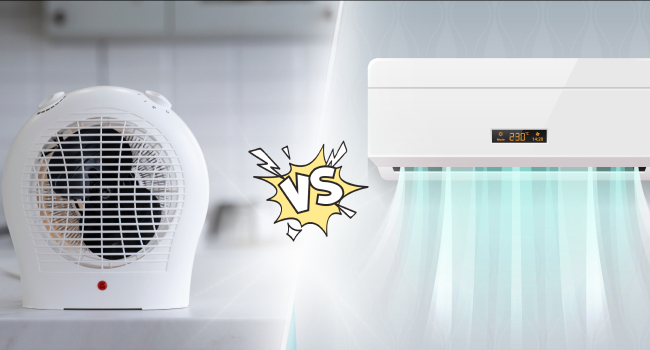
Autumn has officially arrived, but in Yerevan it’s still quite hot, and some people are still considering buying a cooling device. Especially since next year the need will remain just as relevant. Air coolers and air conditioners are often confused, as both promise to lower the room temperature. But in fact, they are different devices with different operating principles. If an air cooler is like a refreshing breeze with a fan, an air conditioner is a full-fledged climate control system. Let’s look at how they function and which one is better.
How an Air Cooler Differs from an Air Conditioner
Both devices aim to make indoor air more comfortable. But their approaches to cooling differ drastically. An air cooler creates the illusion of coolness, while an air conditioner provides actual cooling. Here are the main differences in a table:
|
Parameter |
Air Cooler (Evaporative) |
Air Conditioner (Split System) |
|
Cooling principle |
Evaporation (water cools the air) |
Refrigerant + compressor (heat expelled outside) |
|
Temperature reduction |
3–8 °C (only when humidity <60%) |
Down to set temperature (regardless of humidity) |
|
Effect on humidity |
Increases (humidifies air) |
Decreases (dehumidifies) |
|
Power consumption |
30–150 W (like a fan) |
700–2000 W and higher |
|
Air exhaust |
Not needed |
Required (via hose or outdoor unit) |
|
Best use case |
Dry, hot climates; open spaces |
Any indoor space with temperature control |
Conclusion: an air cooler is a budget option for dry air, while an air conditioner provides real comfort in any climate.
How an Air Cooler Works: The Evaporation Principle
An air cooler is essentially a fan with a “smart” evaporator. Inside, there is a water tank that moistens a special filter or pad. Air passing through this wet element cools down through evaporation — much like human sweating. The water absorbs heat from the air, producing a cooler flow at the outlet.
- Pros: compact, mobile, humidifies the air (useful in dry rooms), low energy consumption.
- Cons: ineffective in rainy weather (high humidity reduces effect), requires regular refilling and cleaning.
Air coolers are ideal for verandas, garages, or regions with a continental climate where humidity is below 60%. But in a stuffy apartment, they can make the air feel even “heavier.”
How an Air Conditioner Works: The Classic Refrigeration Cycle
An air conditioner is a full cooling system. Air passes through an evaporator filled with refrigerant (Freon). The compressor compresses the gas, which absorbs heat from the room, and then expels it outdoors via the external unit. Inside, the air becomes cooler, while humidity drops.
- Pros: real temperature reduction (by 15–20 °C), dehumidification, precise control (thermostat).
- Cons: more expensive to buy and run, requires installation, can dry the air too much.
Split systems are the “gold standard” for apartments, offices, and bedrooms. They handle heat effectively even in tropical climates.
When to Choose an Air Cooler, and When an Air Conditioner
An air cooler is suitable if:
- You want a cheap, mobile option (from about 5,000 RUB).
- The air indoors is dry (steppe, desert climates).
- You also need a humidifier.
- Installing an outdoor unit isn’t possible.
An air conditioner is the better choice if:
- Heat comes with high humidity (urban summers).
- You want stable, round-the-clock cooling.
- Your budget allows it (from 20,000 RUB for a portable, 30,000+ RUB for a split system).
- Dehumidification is important.
Remember: an air cooler is a “cool breeze,” while an air conditioner is a “refrigerator for your room.” The right choice depends on climate and your needs.
In Brief…
An air cooler works by evaporating water, creating a feeling of freshness without actually removing heat, while an air conditioner uses a refrigerant and compressor to provide real cooling along with dehumidification. Air coolers are economical and portable but only effective in dry air; air conditioners are universal but require installation. In 2025, with rising energy costs, air coolers are gaining popularity as a budget-friendly alternative — but for true comfort in the heat, a split system has no competition.