Miami’s 70-story tower to be first high-rise partially powered by solar
 14:07 5 May, 2025
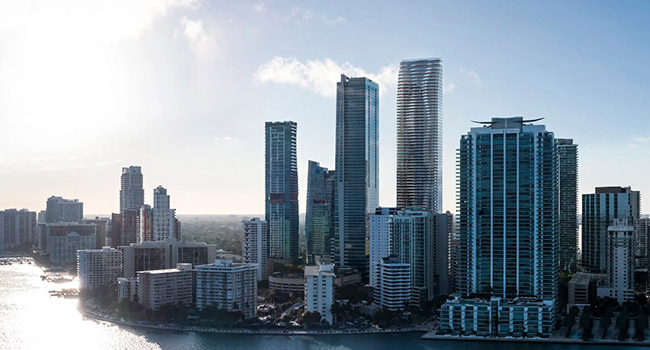
A striking 70-story skyscraper under construction in Miami's Brickell district is set to become the world's first high-rise partially powered by solar energy, featuring 500 photovoltaic-integrated windows along its west-facing facade that create a "Solar Backbone" capable of producing up to 175 megawatt-hours of clean energy annually, writes New Atlas.
The 20,000 Square Foot Solar Backbone
The innovative "Solar Backbone" spans nearly 20,000 square feet (approximately 1,850 square meters) of energy-producing glass integrated into the west-facing facade of The Residences at 1428 Brickell. This pioneering system features 500 photovoltaic-integrated windows where solar cells are embedded directly into the glass, effectively extending the lifespan of the panels to match that of the windows themselves.
With its strategic orientation and permanently installed generating capacity, the Solar Backbone is expected to produce up to 170,000 kilowatt-hours of clean energy annually-enough to power about six average US homes. This sustainable innovation is projected to reduce approximately 4,700 tons of CO₂ emissions and save the equivalent of 3,000 barrels of oil each year, seamlessly blending environmental responsibility with the building's striking architectural aesthetic.
500 Photovoltaic-Integrated Windows
The 500 photovoltaic-integrated windows that comprise the Solar Backbone represent a groundbreaking application of building-integrated photovoltaic (BIPV) technology in luxury residential architecture. Unlike conventional solar installations that are added to existing structures, these windows serve dual purposes-functioning as standard glazing while simultaneously generating electricity. The solar cells are seamlessly embedded within the glass itself, creating an aesthetically pleasing facade that maintains the tower's sculptural design while harnessing Miami's abundant sunshine.
This innovative approach transforms what would typically be an energy-intensive glass tower into a partial power plant. The technology allows the building to utilize its western exposure to maximum advantage, capturing afternoon sunlight when energy demand typically peaks. Research from the National Renewable Energy Laboratory suggests that such photovoltaic glazing can reduce energy use and carbon emissions by up to 40% in highly glazed buildings, demonstrating how the Residences at 1428 Brickell is pioneering a new direction for sustainable urban architecture that doesn't sacrifice luxury or aesthetic appeal.
175 MWh Annual Clean Energy Production
The Solar Backbone at The Residences at 1428 Brickell is projected to generate 175 megawatt-hours (MWh) of clean electricity annually, equivalent to the full energy consumption of approximately 17 families living in the building. This substantial energy output represents a significant achievement in sustainable high-rise design, particularly for a luxury residential tower in Miami's urban landscape.