Мore yields with less effort: Why implement modern technologies in agriculture? Interview with Aftab Alam
 19:04 31 July, 2024
Many farmers adhere to traditional practices passed down through generations. However, evolving environmental conditions, population growth, and other contemporary challenges mean that relying solely on these traditional methods is increasingly insufficient.
Why are modern technologies so necessary for the agricultural sector? How can they affect farmers' work, income, and export prospects? NEWS.am Tech has discussed these questions with Dr Aftab Alam, an expert invited to Armenia by the USAID Economic Foundations for a Resilient Armenia Activity.
Why is the adoption of new technologies in agriculture important?
Modern agriculture faces challenges that did not exist in the past, such as climate change, soil degradation, and the need for higher yields to feed a growing global population. In these circumstances, innovative agricultural practices are becoming even more critical to ensure food security, protect natural resources, and minimize environmental impact.
Using modern technologies also brings many benefits to farmers themselves: with reduced effort and resources, they can achieve better harvests, ultimately increasing their income.
As Dr. Alam noted, in "traditional" agriculture, people put in too much effort and resources (including water and chemical fertilizers) – and in most cases, this is not necessary. Another significant issue with traditional agriculture is the disposal of large amounts of agricultural waste into the environment. These problems, among other factors, worsen climate change.
"Modern technologies can address both issues. They enable smarter agriculture by allowing farmers to invest only the necessary effort and resources, achieving better results while minimizing environmental impact," the expert noted.
Which of those technologies would you highlight?
Quite a few modern technologies have already been developed for the agricultural sector, and many exciting innovations are still in the pipeline.
For example, in many countries, including Armenia, drones have been increasingly used in recent years to water trees and plants, as well as to distribute fertilizers and pesticides. These drones significantly reduce the amount of water and chemicals needed for plants. Another modern technology, Dr. Alam noted, is the use of special sensors placed in the soil.
"The roots of some plants extend to a depth of one meter. When we water the soil, the water often penetrates deeper than necessary, beyond the reach of the plant roots, resulting in wasted water. We can optimize water usage by placing a special humidity sensor in the root zone at the appropriate depth. When the water reaches this zone, the sensor automatically turns off the irrigation, preventing excess water usage. When moisture levels drop, the sensor reactivates the irrigation. This technology allows us to use less water while producing the same amount of crops," the specialist explained.
Modern technologies can also assist with pollination. In traditional agriculture, pollination is often a lengthy and complex process. However, using drones, pollination can be efficiently conducted over a large area in just an hour.
What is the reason that these technologies are not widespread today?
If modern technologies save resources and simplify life for farmers, why haven’t they become widespread yet?
According to Dr. Alam, the issue is not their high cost, as it might seem at first glance. The primary problem is that farmers are not well informed; many simply do not know about these technologies or the benefits they offer. Additionally, some farmers do not trust modern technologies and prefer to stick with familiar and traditional methods.
"Most farmers are far from modern technologies and continue to do things the traditional way, resistant to change. This issue is prevalent worldwide. Our task is to educate farmers, conduct training sessions, and explain the benefits of these technologies. Most of these technologies are neither very expensive nor difficult to use, but they can help achieve higher yields with less effort," the specialist noted.
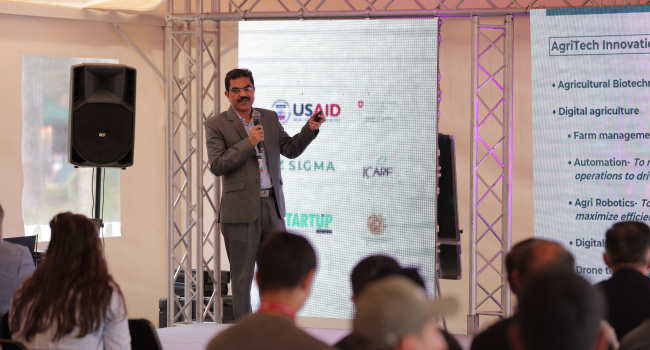
Dr. Aftab Alam was an invited expert at the Sevan Agritech Summit, held from June 24 to 27 as part of the Sevan Startup Summit 2024. His participation was facilitated by the USAID Economic Foundations for a Resilient Armenia Activity.
During the presentation titled "New Trends in Agritech to Support Efficiency, Productivity, and Sustainability in Agriculture," he discussed the opportunities that modern technologies offer to the new generation of entrepreneurs in agriculture. He also took part in discussions on how technology can enhance the sustainability and efficiency of the agricultural sector and impact the export of products from Armenia to other countries.
Sevan Agritech Summit was organized by Startup Armenia Foundation, USAID Economic Foundations for a Resilient Armenia Activity, Sustainable and Inclusive Growth in Mountainous Armenia (SIGMA) project funded by the Swiss Agency for Development and Cooperation (SDC), in cooperation with the International Center for Agribusiness Research and Education (ICARE) Foundation.