


Why the race for the Moon risks turning Earth's satellite into a dumping ground
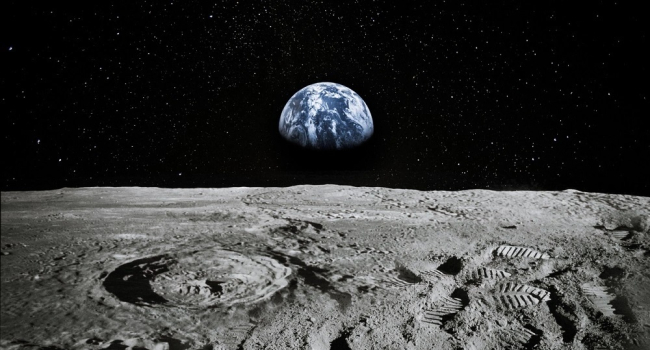
On 5 August 2026, a Falcon 9 rocket stage weighing about four tonnes crashed into the lunar surface. The impact threw up a huge cloud of dust that was visible even from Earth. The incident has once again raised the question: is our planet's nearest neighbour destined to become a cosmic landfill amid the new lunar race?
How much is already on the Moon
Since the dawn of the space age, about 200 tonnes of terrestrial material have ended up on the lunar surface. These include the landing modules from all six Apollo missions, the Soviet Lunokhod rovers, and the Chinese Yutu rovers. But there are also objects that nobody intentionally sent to the Moon: spent rocket stages and other fragments left in lunar orbits.
According to astronomer and space historian Jonathan McDowell, many such objects eventually fall to the surface. Four years ago, for example, a Chinese Long March 3C rocket stage crashed onto the far side of the Moon. With the number of missions increasing, such incidents are likely to become more frequent.
Laws exist, but there are few rules
Activity on the Moon is regulated by the 1967 Outer Space Treaty. Article IX obliges states to avoid "harmful contamination." However, there is no clear definition of what exactly constitutes harm, nor is there dedicated "waste" legislation, limits on debris, or mandatory disposal zones.
"There are international legal frameworks that address contamination, but there is no dedicated international 'waste law' or a comprehensive waste‑management system," noted Marietta Valdivia Lefort of the Royal Astronomical Society in the UK.
Why this is a problem
The Moon is vast—its surface area is comparable to that of Asia. However, because of the low gravity, dust from impacts spreads far and settles slowly. McDowell emphasises that this is not a local event but a phenomenon on a continental scale. In the future, when permanent bases and scientific experiments are established on the Moon, regular falls of heavy rocket stages could contaminate instruments and interfere with sensitive research.
In addition, artificial objects and new craters alter the Moon's natural environment and could destroy as‑yet‑unstudied scientific material.
Accident, not planning
The Falcon 9 stage that fell on 5 August had been left on a high Earth orbit in January 2025 after launching lunar probes. Due to the Moon's gravitational influence, its orbit gradually became unstable, and the object crashed into the surface.
Space law expert Gregory Radisich noted that so far there have been no serious consequences, but only because of good luck. In his view, the industry will only start taking the risks seriously after real losses—human lives or expensive infrastructure.
McDowell added that after that launch, SpaceX began sending its stages further away—into orbits around the Sun. He hopes this will become the new norm.
"I hope we will see an evolution of norms, and that what we have observed now will not be the way rocket stages are disposed of in the future," he said.
In brief
The crash of a Falcon 9 stage on the Moon has once again drawn attention to the problem of space debris around Earth's satellite. About 200 tonnes of terrestrial material have already accumulated on the surface, and with the growing number of missions, the risk of further impacts is increasing. Existing international treaties require avoiding harmful contamination but provide no clear disposal rules. Experts are calling for new norms to be established before permanent bases and sensitive scientific experiments appear on the Moon.
- Related News
- BepiColombo begins arrival at Mercury after nearly eight years of flight
- Asteroid dust may have intensified the lethal heat that killed the dinosaurs
- Astrophysicist connects modern science with the traditions of South Africa's indigenous peoples
- Rogue Planets: Lonely worlds wandering through the Galaxy
- MIT study: building blocks of life could survive in the acid clouds of Venus
- Cosmonaut Harutyun Kiviryan passes pre-flight exam on ISS simulator
- Tech Jobs
- Most read
month
week
day
- DeepSeek or ChatGPT: Which is better in 2026? 1246
- Cosmonaut Harutyun Kiviryan passes pre-flight exam on ISS simulator 712
- Anthropic teaches AI to control real-world machines 685
- Scientists have learned to transmit data by laser through atmospheric disturbances 678
- BepiColombo begins arrival at Mercury after nearly eight years of flight 667
- Beijing opens "Kindergarten" for robots: Machines learn from their own mistakes 663
- What will happen to the human body on Mars? 649
- Do white holes exist, and what does the Big Bang have to do with it? 616
- What Claude can do: A complete overview of one of the most popular AI assistants 596
- Dark matter detector captures the weakest neutrinos ever detected 592
- Archive