


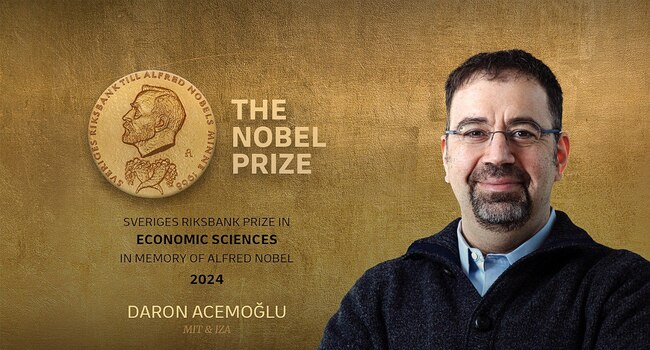
Daron Acemoglu: AI Could Exacerbate Global Inequality
The mass adoption of artificial intelligence could lead to more than just technological shifts; it may result in serious social consequences — including chaos and a sharp rise in inequality. This warning comes from Nobel laureate in economics Daron Acemoglu. In his view, AI risks widening the gap between labor and capital rather than becoming the "democratizer" of opportunity often portrayed in public rhetoric. This is reported by the Financial Times.
"The rhetoric that these tools will be democratizing is not true," the economist noted. He explains that the effective use of AI requires a certain level of education, advanced abstract and quantitative reasoning, as well as computer and programming skills. Consequently, these technologies are likely to significantly boost the productivity of workers at the top of the career ladder while offering little help to others — thereby widening the income gap.
The Digital and Gender Gap in AI Adoption
The scholar’s concerns are indirectly supported by research from Focaldata. A survey revealed a stark "digital divide" among professionals in the US and UK: more than 60% of high-earning employees use AI daily, whereas that figure is only 16% among low-earning workers.
Interestingly, the most active users are not the youngest specialists, but individuals in their 30s. Furthermore, the study identified a persistent gender gap: men use AI significantly more often than women — regardless of the field, whether it be technology, education, or retail.
Google’s Chief Economist, Fabien Curto-Millet, noted that women are, on average, 20% less likely to use AI. However, the situation is not hopeless; his data shows that targeted training can substantially close this gap. Specifically, after taking specialized courses, the frequency of daily AI use among women over 55 tripled.
Erosion of the Career Pyramid and Educational Challenges
As the Financial Times highlights, these findings heighten fears of a deeper transformation in the labor market. AI is already beginning to "erode" the base of the career pyramid: tasks previously performed by junior specialists are now increasingly automated or handled by more experienced employees using technology.
This means newcomers have fewer opportunities to gain practical skills and professional growth. In the long run, this dynamic could undermine the very mechanism for developing a skilled workforce.
OpenAI’s Chief Economist, Ronnie Chatterji, believes the education system must respond to these challenges by creating incentives for deep knowledge rather than encouraging the superficial use of technology. According to him, it is crucial to prevent people from "outsourcing their thinking to the machine."
Meanwhile, Fabien Curto-Millet emphasizes that corporate training remains the strongest factor influencing AI use in the workplace. Yet, in practice, only a small percentage of employees report that their employers offer any training programs for these technologies — another factor that could reinforce existing inequalities.
- Related News
- Beijing opens "Kindergarten" for robots: Machines learn from their own mistakes
- Anthropic teaches AI to control real-world machines
- DeepSeek or ChatGPT: Which is better in 2026?
- What Claude can do: A complete overview of one of the most popular AI assistants
- 50,000 subscriptions and AI for schools: How Armenia plans to use artificial intelligence in education
- How to work with neural networks properly: 5 rules that actually help
- Tech Jobs
- Most read
month
week
day
- Two comets will be visible in Autumn 2026 1252
- DeepSeek or ChatGPT: Which is better in 2026? 1026
- NASA successfully launches Nancy Grace Roman space telescope – "Hubble's successor" 666
- Anthropic teaches AI to control real-world machines 650
- New Apple CEO to refresh top management team: What we know 634
- Scientists have learned to transmit data by laser through atmospheric disturbances 620
- Cosmonaut Harutyun Kiviryan passes pre-flight exam on ISS simulator 620
- Beijing opens "Kindergarten" for robots: Machines learn from their own mistakes 600
- What will happen to the human body on Mars? 585
- Dark matter detector captures the weakest neutrinos ever detected 544
- Archive