


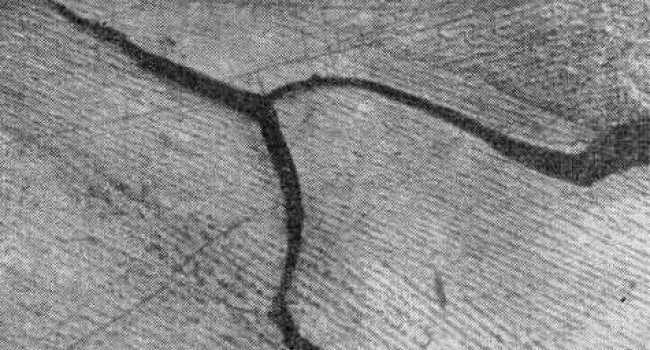
AI learned to detect dangerous cracks in metal directly on the assembly line
Engineers from Moscow Polytechnic University have created a neural network that automatically detects cracks and other critical defects in cast metal parts directly during production. The system promises to replace exhausting manual inspection, improve quality control accuracy, and minimize the risk of accidents in aviation, automotive manufacturing, and the energy sector. The developers discussed the project in an interview with Gazeta.Ru.
Why manual inspection no longer works
At modern factories, cast parts (housings, brackets, turbine blades, etc.) typically undergo visual quality inspection by human inspectors. A person examines the hot or cooled surface and evaluates cracks, pores, cavities, and oxidation marks. The method is simple, but extremely unreliable:
- the human eye becomes tired after 1–2 hours of intensive work;
- lighting conditions change and glare interferes;
- on complex textures or oxidized surfaces, a thin hot crack can easily go unnoticed.
A missed crack in a critical component can lead to serious consequences: structural failure in flight, a road accident, or a shutdown of a power unit. Meanwhile, production volumes are so large that checking every part with microscopic precision manually is physically impossible.
Classical computer vision algorithms also struggle. They work well in ideal conditions (clean surfaces, uniform lighting) but fail when dealing with real-world issues such as material irregularities, oxidation, blurred defect boundaries, or cracks blending into the natural relief of the casting. The result is either false rejections (production losses) or missed defects (safety risks).
How the new system works
The developers combined two technologies:
- A convolutional neural network (CNN) analyzes images of the part, identifies suspicious areas, and classifies defects.
- Fuzzy logic processes uncertainty — such as oxidation levels, surface type, material properties, and image context. Instead of a strict “defect/no defect” decision, the system produces a weighted assessment of danger.
“We combine a convolutional neural network that analyzes images of the part with fuzzy logic that can handle uncertainty. The system doesn’t just detect a crack — it evaluates its level of danger while considering the context: the nature of the surface, the degree of oxidation, and the type of material. This represents a fundamentally different level of diagnostics compared to current approaches,”
explained project author Sergey Kuzovov.
The neural network is trained using a large labeled dataset. Researchers collect thousands of photographs of real defective castings, manually marking every defect (cracks, pores, cavities) and specifying their shape, size, and location. The more diverse the dataset — including different alloys, lighting conditions, and shooting angles — the better the model can generalize to new parts.
Fuzzy logic becomes especially useful in borderline cases, where traditional algorithms would produce an incorrect binary decision.
What comes next
According to the developers, the system will eventually become a full industrial module:
- cameras installed directly on the conveyor line,
- real-time image processing,
- integration with factory production management systems,
- automatic marking of defective parts,
- reports and documentation generation.
Data collection and model training are already underway, and industrial testing at a real factory is expected to begin soon.
If successful, the technology could:
- reduce the number of false defect detections,
- nearly eliminate missed dangerous defects,
- accelerate quality inspection many times over,
- reduce the human factor and related risks.
In brief
Scientists at Moscow Polytechnic University developed a hybrid AI system combining a convolutional neural network and fuzzy logic. It automatically detects and evaluates the danger of cracks and defects in cast metal parts directly on the production line. The technology could replace unreliable manual inspection, handle the uncertainty of real industrial surfaces, and significantly improve safety in aviation, automotive manufacturing, and the energy industry. The development is now moving toward industrial implementation.
- Related News
- Beijing opens "Kindergarten" for robots: Machines learn from their own mistakes
- Anthropic teaches AI to control real-world machines
- DeepSeek or ChatGPT: Which is better in 2026?
- What Claude can do: A complete overview of one of the most popular AI assistants
- 50,000 subscriptions and AI for schools: How Armenia plans to use artificial intelligence in education
- How to work with neural networks properly: 5 rules that actually help
- Tech Jobs
- Most read
month
week
day
- Two comets will be visible in Autumn 2026 1253
- DeepSeek or ChatGPT: Which is better in 2026? 1028
- NASA successfully launches Nancy Grace Roman space telescope – "Hubble's successor" 666
- Anthropic teaches AI to control real-world machines 650
- New Apple CEO to refresh top management team: What we know 634
- Scientists have learned to transmit data by laser through atmospheric disturbances 620
- Cosmonaut Harutyun Kiviryan passes pre-flight exam on ISS simulator 620
- Beijing opens "Kindergarten" for robots: Machines learn from their own mistakes 600
- What will happen to the human body on Mars? 585
- Dark matter detector captures the weakest neutrinos ever detected 545
- Archive